Maldives
Malé, Maldives
The dense, scooter-filled counterweight to private resort atolls
Plan & book
Sort your Malé, Maldives trip in one place.
We point you to the booking tools we'd actually use — live prices, no markup. Or let us build the day-by-day plan around you first, then book.
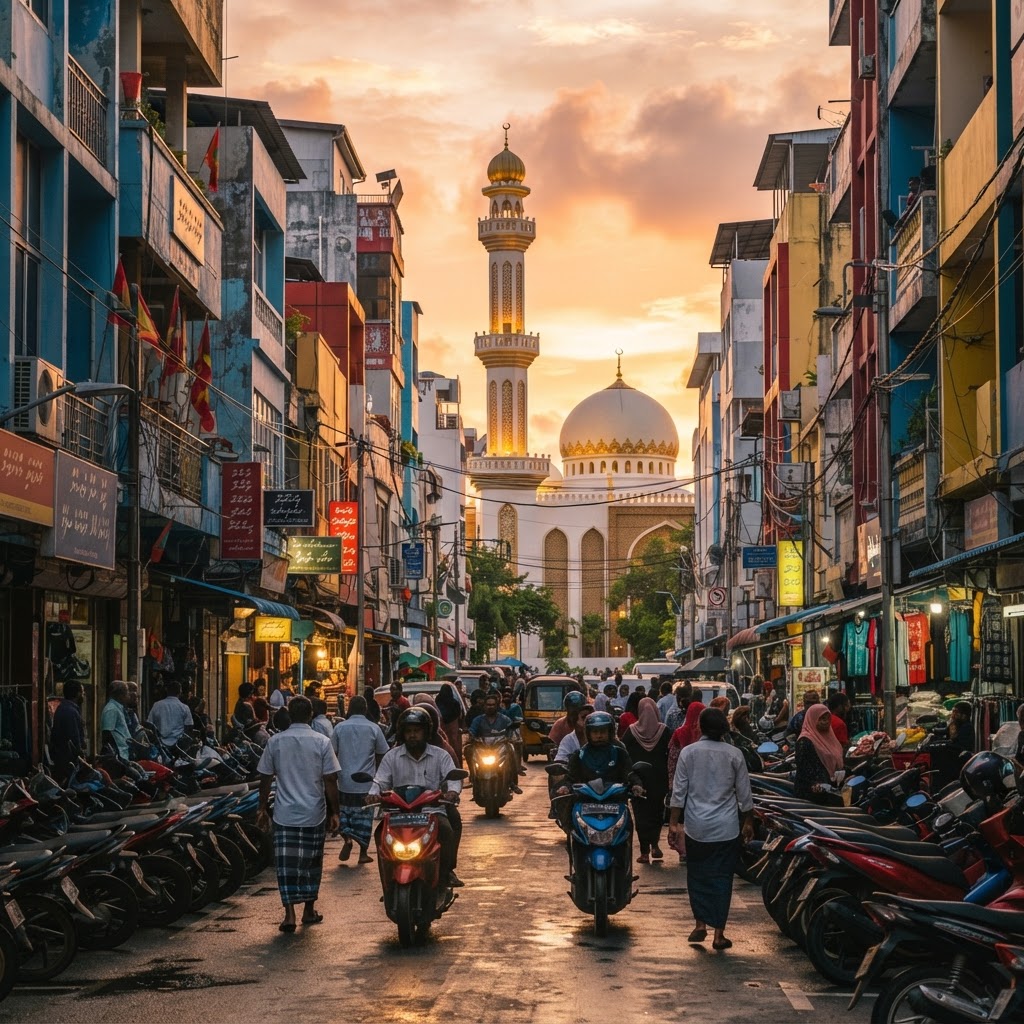
Malé is one of the most densely populated islands on earth, packing over 200,000 residents into roughly eight square kilometers of coral fill and high-rise concrete. It is the polar opposite of the glossy overwater bungalow fantasy: a kinetic grid of narrow alleys, buzzing motorbikes, fishmongers gutting yellowfin tuna, and centuries-old coral-stone architecture. Most visitors treat it solely as an airport transit zone, but spending 12 to 24 hours here delivers an indispensable grounding in modern Maldivian life, national history, and Dhivehi culture before retreating into resort seclusion.
24 hours
Best time
January to April for dry weather, calm boat transfers, and optimal street walking conditions.
Build your own trip with these prebuilt itineraries
Each one is a tested, day-by-day plan for Malé, Maldives — start here, then make it yours.
2 Days Greater Malé & Maritime Life in Malé
In-depth maritime heritage and modern urban pulse spanning historic Malé and nearby planned Hulhumalé
1 Day Layover & Cultural Walking Tour in Malé
Transit passenger highlights covering historic coral stone mosques, the bustling fish market, and local tea houses
Half-Day Capital Express in Malé
Quick walking route tailored for travelers with a brief seaplane connection or flight transit window
Malé is the only place in the country where you experience authentic contemporary Maldivian society outside the curated confines of tourist bubbles. It offers a compressed dive into marine trade, Islamic heritage, and vibrant café life, anchored by 17th-century coral mosques and thriving local markets.
Where to stay
Getting there
Getting around
Food & drink
What it costs
Things to do
Book tours & tickets in Malé, MaldivesSkip it if
Skip staying overnight in Malé if your international flight arrives with ample daylight to transfer directly to your private resort or liveaboard via seaplane or speedboat, or if your primary trip goal is tranquil beach lounging, swimming, and luxury nightlife.
When to go
Malé is an intense, high-density walking city where midday heat and tropical downpours quickly wear down pedestrians. The dry northeast monsoon brings lower humidity and minimal rain, making neighborhood exploration comfortable, though hotel rates throughout the atoll reach peak pricing.
Peak (December to April)
Lowest rainfall, calm seas for ferry transfers, and clear skies, but high hotel rates and crowded airport connections.
Shoulder (May and November)
Monsoon shift bringing alternating downpours and bright sun; lodging prices drop and the city moves at a calmer pace.
Low (June to October)
Southwest monsoon delivers heavy squalls and rough seas, complicating outer island ferry links, but accommodation is cheapest.
Neighborhoods
Where you stay shapes the trip. Here's how to think about it.
Henveiru
Diplomatic, breezy seaside quarter with harbor views and leafy residential lanes.
Best for:First-time stopovers and harbor walks
Don't miss:Watching local bodyboarders at Artificial Beach followed by an espresso on the Boduthakurufaanu Magu waterfront.
Maafannu
Working-class maritime hub defined by cargo quays, timber workshops, and industrial energy.
Best for:Port watchers and travelers seeking unvarnished urban life
Don't miss:The bustling Male Commercial Harbor docks where cargo dhonis unload produce from outer atolls.
Machangoalhi
High-density retail grid filled with narrow alleyways, tea shops, and buzzing motorbike queues.
Best for:Local café culture and everyday bargain hunting
Don't miss:Sampling tuna-filled short eats at modest neighborhood tea houses along Majeedhee Magu.
Galolhu
Dense, traditional residential quarter anchored by sports pitches and quiet domestic life.
Best for:Architectural wandering and escaping tourist corridors
Don't miss:Catching an evening football match at the National Stadium alongside cheering neighborhood residents.
Hulhumalé (Adjacent Island)
Spacious, planned reclaimed island with paved wide boulevards and quiet beachfront hotels.
Best for:Airport transit passengers and travelers with heavy luggage
Don't miss:A sunset stroll along Central Park's manicured promenade before catching a flight.
Destination intelligence
Updated 9/14/2026The structured record we plan every Malé, Maldives itinerary from.
Walkability
high
Transit quality
moderate
Car needed
no
Ideal duration
24 hours
Minimum useful
4 hours
Peak season
December to April (dry northeast monsoon, sunny weather, calm seas, and lowest humidity)
Shoulder season
May and November (transition months bringing intermittent downpours mixed with extended sunny spells)
Low season
June to October (southwest monsoon delivering higher rainfall, choppy ocean conditions, and wind)
Best for
Common mistakes
- Treating Malé as a beach resort destination: there are no bikini-friendly resort beaches here (dress codes require covered shoulders and knees), and the only swimming spot is the rocky public Artificial Beach.
- Expecting alcohol availability: Malé is governed by strict local Islamic law; alcohol and pork are completely illegal and strictly unavailable outside of licensed floating safari boats offshore or resort islands.
- Taking expensive private boat charters for airport connections when the Sinamalé Bridge bus or scheduled public ferry costs mere pocket change.
- Planning mosque sightseeing during active daily prayer times, when interior access is strictly restricted to worshippers.
Best nearby
How to plan it
- Stay in Henveiru if you want walkable access to harbor ferries, or base yourself in Hulhumalé if you have an early morning flight.
- Visit the Malé Fish Market between 2:00 PM and 5:00 PM to watch the dhonis unload massive yellowfin tuna fresh off the reef.
- Do not attempt a standalone multi-day holiday here; treat Malé as a 24-hour cultural grounding before transferring to a local guesthouse island or resort atoll.
- Check Friday prayer schedules in advance, as businesses, tea shops, and transport close between 11:00 AM and 2:00 PM.
Questions
More in South Asia
Readymade itineraries
Start from a tested template — then make it yours.
Ready to book
Lock in your Malé, Maldives trip
Everything in one place. We may earn a small commission — it never costs you more.
Plan a trip to Malé, Maldives
Pick a length and we'll build a day-by-day plan around how you travel — neighborhoods clustered, budget-aware, and editable.
Get better at planning trips like this
Occasional notes on planning smarter — no spam, unsubscribe anytime.
Plan a trip to Malé, Maldives
Turn this guide into a day-by-day plan built around your pace, your group, and your budget.
Build my Malé, Maldives trip