Peru
Lake Titicaca & Puno
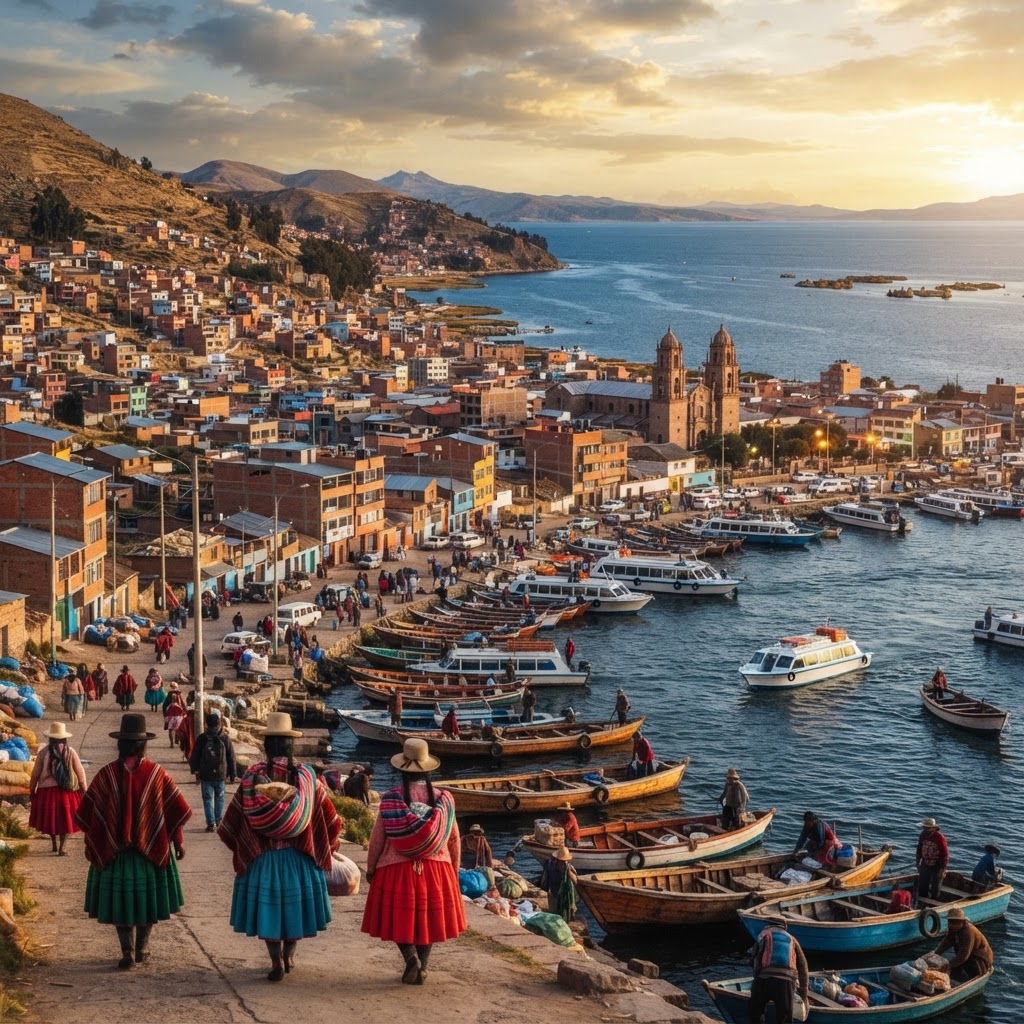
A high-altitude inland sea where Quechua and Aymara maritime traditions outlast the bustling transit hub ashore.
Plan & book
Sort your Lake Titicaca & Puno trip in one place.
We point you to the booking tools we'd actually use — live prices, no markup. Or let us build the day-by-day plan around you first, then book.
Perched at 3,812 meters on the windswept Collao plateau, Lake Titicaca is the world's highest navigable lake and the mythic birthplace of the Inca sun god. Most travelers approach it through Puno—a gritty, energetic regional transit hub and Peru's folkloric capital. While Puno itself is primarily a staging ground rather than a postcard colonial center, the true magic opens the moment you clear the harbor reeds and venture toward the open water. Out on islands like Taquile and Amantaní, or along the quiet headlands of the Capachica Peninsula, life proceeds according to textile traditions, agricultural calendars, and community assemblies that predate modern tourism by centuries.
3 days
Best time
May to September for crisp, brilliant blue skies, calm waters, and virtually zero rainfall.
Build your own trip with these prebuilt itineraries
Each one is a tested, day-by-day plan for Lake Titicaca & Puno — start here, then make it yours.
4 Days in Lake Titicaca: Sacred Landscapes & Sillustani in Lake Titicaca/Puno
Slow-paced exploration focusing on high-altitude photography, archaeological chullpas, and secluded peninsula hikes
3 Days in Lake Titicaca: Living Traditions & Island Homestay in Lake Titicaca/Puno
Immersive cultural deep dive featuring an overnight community homestay on Amantaní and Taquile textile traditions
2 Days in Puno: Altiplano & Lake Highlights in Lake Titicaca/Puno
Express transit route taking in classic lake islands and mainland pre-Inca ruins without rushing altitude adjustment
Go for an elemental high-altitude landscape and living indigenous maritime heritage that feels completely detached from the rest of the Andean tourist circuit. Stepping onto the floating totora reed islands or walking the stone paths of Taquile—where male master weavers create UNESCO-recognized textiles against a backdrop of deep cobalt water and snow-capped Bolivian peaks—offers a cultural grounding that urban Lima and archaeological Cusco cannot replicate.
Where to stay
Getting there
Getting around
Food & drink
What it costs
Things to do
Book tours & tickets in Lake Titicaca & PunoSkip it if
Skip Lake Titicaca if your Peru itinerary is under seven days and already includes Lima, Cusco, and the Sacred Valley; spending two precious transit days just to tick off the lake will leave you exhausted. Travelers seeking polished colonial architecture, bustling nightlife, or luxury boutique dining in town should also look elsewhere—Puno's townscape is practical and rough-hewn.
When to go
Dry winter offers exceptional visibility across the Altiplano and smooth boat crossings, but nighttime temperatures regularly drop below freezing. Shoulder months like April, May, and October deliver greener hillsides and fewer tour groups at the port, while rainy season brings cloudy afternoons and rougher lake transport.
Dry Season (May–September)
Crystal-clear days with intense UV, cold winds, and near-freezing nights; peak crowds hit the lake islands between June and August.
Shoulder Season (April–May & September–November)
Comfortable balance of mild weather and lighter crowds; April and May offer scenic green shorelines following summer rains.
Rainy Season (December–March)
Frequent afternoon downpours, occasional lake fog, and fewer visitors, interrupted in early February by the massive, raucous Fiesta de la Candelaria.
Neighborhoods
Where you stay shapes the trip. Here's how to think about it.
Centro Histórico (Plaza de Armas & Jr. Lima)
High-altitude urban hub centered on a pedestrian stone promenade lined with alpaca shops, travel agencies, and roaring pizzerias.
Best for:First-timers, short 1-night transits, and travelers prioritizing flat walking and immediate restaurant access.
Don't miss:Wandering the pedestrian stretch of Jr. Lima toward Parque Pino, stopping inside the 18th-century baroque Puno Cathedral.
Isla Esteves & Bahia de Puno
A quiet, windswept lakeside causeway insulated from urban traffic, dominated by reed-bed panoramic vistas and luxury resort grounds.
Best for:Splurge seekers, couples, and travelers wanting restorative sleep and lakefront sunrises away from city noise.
Don't miss:Watching the early morning light filter over the totora reeds from the private peninsula trails at GHL Hotel Lago Titicaca.
Puerto de Puno
A utilitarian, breezy maritime fringe bustling with tour-bus arrivals, ferry dock ticket booths, and souvenir stalls.
Best for:Pragmatic travelers boarding dawn boats or those wanting quick, unpretentious access to the lakefront promenade.
Don't miss:The early-morning bustle at the passenger embarkation docks as wooden lanchas load supplies bound for remote islands.
Capachica Peninsula (Llachón & Chifrón)
A tranquil rural headland of eucalyptus groves, red earth terraces, and authentic rural homestays untouched by day-boat fleets.
Best for:Slow travelers, cultural immersion seekers, and hikers wanting genuine community-run tourism on the mainland shore.
Don't miss:A sunset hike above the village of Llachón overlooking the vast open channel toward Amantaní.
Isla Taquile
A tranquil, car-free Quechua island plateau ringed by Inca terracing, known for quiet footpaths and male textile master weavers.
Best for:Textile enthusiasts, day-trippers seeking strenuous scenic walks, and travelers eager to support collective community tourism.
Don't miss:The steep climb up stone stairways to the central plaza to see master knitters crafting elaborate, symbolic chullo caps.
Isla Amantaní
A peaceful, agrarian island of stone paths, earth-walled family homes, and dramatic pre-Inca ceremonial mountain sanctuaries.
Best for:Immersive cultural homestays, stargazers, and travelers wanting deep isolation from motorized modernity.
Don't miss:The late-afternoon hike up to the twin summit temples of Pachamama and Pachatata for panoramic views across the Altiplano basin.
Destination intelligence
Updated 9/14/2026The structured record we plan every Lake Titicaca & Puno itinerary from.
Walkability
Moderate within the compact downtown pedestrian spine (Jr. Lima to Plaza de Armas), but steep hillside terrain and intense 3,800m altitude make uphill walking exhausting.
Transit quality
Basic locally; rely on pedestrian paths, cheap taxis, and scheduled public or charter passenger boats at the port. Intercity connections by bus and luxury train are well-organized.
Car needed
No. Driving yourself through high-elevation rural roads and congested Altiplano intersections adds unnecessary stress, and island destinations are boat-only.
Ideal duration
3 days
Minimum useful
2 days
Peak season
June through August: dry, crisp winter weather with brilliant blue skies and clear water, though nighttime temperatures often drop below freezing.
Shoulder season
April to May and September to November: mild weather, green post-rain landscapes in May, fewer crowds at the docks, and comfortable conditions.
Low season
December through March: the Andean wet season brings frequent afternoon showers, cloud cover over the lake, and rougher ferry conditions, punctuated by February's massive Candelaria festivities.
Best for
Common mistakes
- Arriving directly from sea-level Lima without prior acclimatization; Puno sits at 3,812m (higher than Cusco), making altitude sickness severe if rushed
- Booking a rushed two-hour Uros tour and calling it a day, which reduces the lake experience to a commercialized novelty gift show
- Underestimating night drops in temperature: while midday sun on the water burns quickly, unheated island homestays plunge near freezing after sunset
- Attempting to catch an early morning lake tour immediately after a red-eye flight or late-night bus arrival instead of resting the first night in town
Best nearby
See what a trip to Peru actually costs. Travel Budget Co.
How to plan it
- Arrive from Arequipa or Colca Canyon rather than flying straight up from Lima to Juliaca, letting your body naturally adjust to 3,800m.
- Stay within two blocks of Plaza de Armas or along Jr. Lima if you have an early morning boat or train departure; it eliminates taxi stress in the dark.
- Pair Puno with Copacabana and Isla del Sol across the Bolivian border if you are overland-traveling south toward La Paz.
- Don't try to cram Uros, Amantaní, and Taquile into an ordinary day boat; book a 2-day slow boat loop with an overnight on Amantaní to experience the lake after day tours leave.
- Pack a high-SPF sunscreen, polarized sunglasses, and a windproof fleece in your daypack—the high-elevation UV and cold lake wind will surprise you.
Questions
Readymade itineraries
Start from a tested template — then make it yours.
Ready to book
Lock in your Lake Titicaca & Puno trip
Everything in one place. We may earn a small commission — it never costs you more.
Plan a trip to Lake Titicaca & Puno
Pick a length and we'll build a day-by-day plan around how you travel — neighborhoods clustered, budget-aware, and editable.
Get better at planning trips like this
Occasional notes on planning smarter — no spam, unsubscribe anytime.
Plan a trip to Lake Titicaca & Puno
Turn this guide into a day-by-day plan built around your pace, your group, and your budget.
Build my Lake Titicaca & Puno trip