Kenya
Lake Nakuru, Kenya
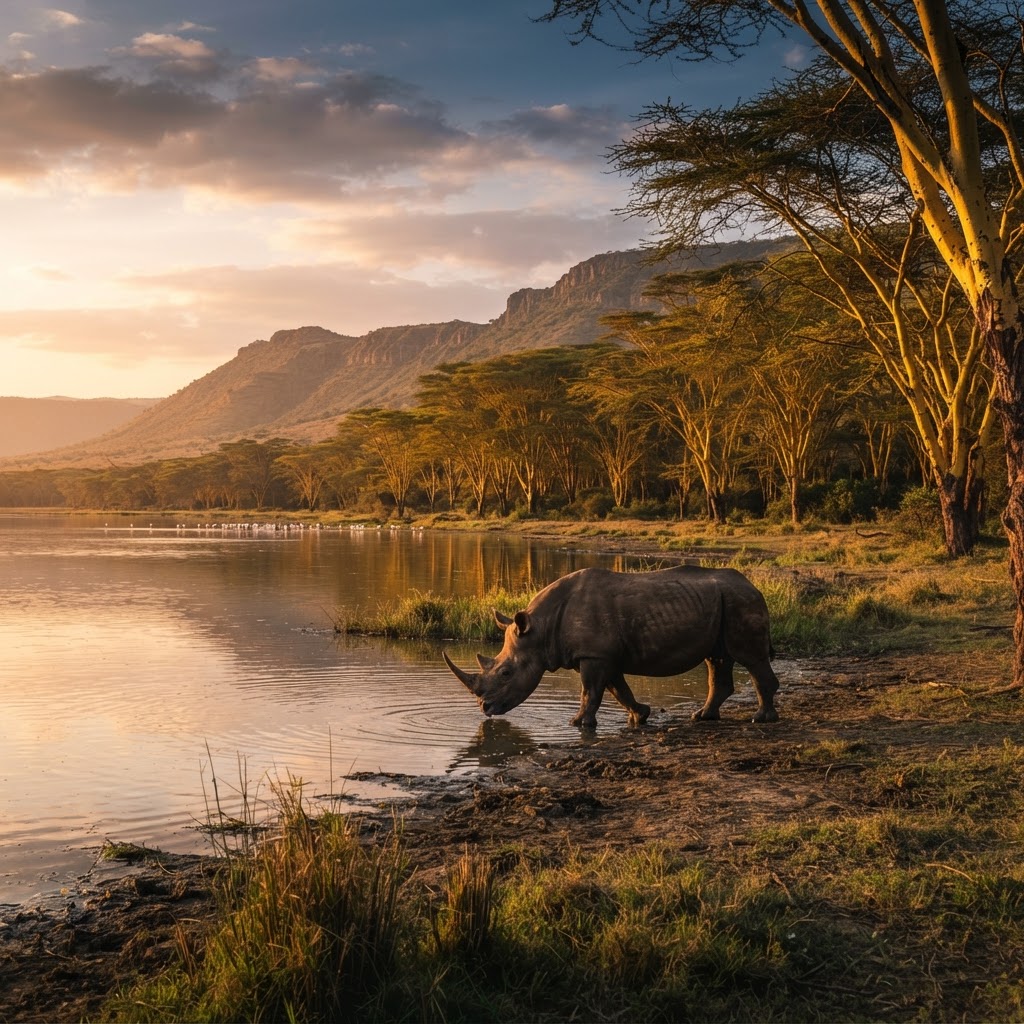
A compact Great Rift Valley sanctuary for guaranteed rhino sightings and yellow-barked acacia forests.
Plan & book
Sort your Lake Nakuru, Kenya trip in one place.
We point you to the booking tools we'd actually use — live prices, no markup. Or let us build the day-by-day plan around you first, then book.
Perched on the floor of the Great Rift Valley roughly three hours northwest of Nairobi, Lake Nakuru is an intensively protected sanctuary defined by its shallow alkaline lake, dramatic euphorbia ridges, and fever-tree woodlands. Unlike Kenya's vast, unfenced savannahs, Nakuru is fully enclosed, which concentrates its wildlife. While fluctuating water levels have pushed the iconic million-strong flamingo flocks north toward Lake Bogoria, Nakuru remains East Africa's most reliable outpost for spotting both black and white rhinoceroses alongside endangered Rothschild's giraffes.
2 days
Best time
July to September and January to February for dry tracks, thinned foliage, and the highest concentration of rhinos around central springs.
Build your own trip with these prebuilt itineraries
Each one is a tested, day-by-day plan for Lake Nakuru, Kenya — start here, then make it yours.
3 Days Lake Nakuru & Rift Valley Lakes in Lake Nakuru
Dedicated wildlife photography and Rift Valley birding route linking Nakuru with nearby flamingo hotspots
2 Days in Lake Nakuru in Lake Nakuru
Comprehensive first-time safari covering early-morning rhino tracking, Makalia Falls, and Rift Valley birding
1 Day Lake Nakuru Express Safari in Lake Nakuru
Overland stopover focused on big game circuits, Baboon Cliff, and rhino tracking between Nairobi and the Mara
Go for virtually guaranteed encounters with endangered southern white and critically endangered black rhinos across a compact, easily navigated footprint. Nakuru delivers dense wildlife viewing in 24 to 36 hours that would require multiple days to track in sprawling reserves like the Maasai Mara.
Where to stay
Getting there
Getting around
Food & drink
What it costs
Things to do
Book tours & tickets in Lake Nakuru, KenyaSkip it if
Skip if you demand an untamed, unfenced wilderness feel, as the park is perimeter-fenced and borders Nakuru's urban sprawl, or if your sole priority is witnessing massive flamingo super-colonies.
When to go
Dry seasons keep the volcanic clay tracks navigable and force grazing rhinos, buffalo, and Rothschild's giraffes out of thick euphorbia scrub into open shoreline meadows. Wet months bring dramatic skies and fewer vehicles, but seasonal downpours turn dust roads into slippery black-cotton mud and disperse birds.
Peak (July–October & December–February)
Expect clear morning skies, low vegetation that makes tracking rhinos straightforward, and packed viewpoints at Baboon Cliff. Book inside-park lodges 3–4 months in advance.
Shoulder (June & November)
Intermittent showers and vibrant green landscapes with moderate vehicle density. November welcomes migratory European bird species, making it premier for birdwatchers.
Low (March–May)
The long rains cause localized flooding along low-lying shoreline tracks; 4x4 capability is mandatory. Rates drop, and you will share rhino sightings with very few other vehicles.
Neighborhoods
Where you stay shapes the trip. Here's how to think about it.
Inside the National Park (East & South Ridges)
Secluded wilderness living with sunrise game views right off the veranda.
Best for:Wildlife photographers and luxury safari travelers wanting direct morning access without gate queues.
Don't miss:The cliffside vistas near Sarova Lion Hill Game Lodge or Lake Nakuru Lodge overlooking the soda lake flats.
Nakuru CBD & Commercial Core
Bustling, chaotic provincial commercial hub filled with transit matatus and street-side markets.
Best for:Budget travelers, overland backpackers, and logistics-first stopovers.
Don't miss:Picking up fresh roasted maize and samosas along Kenyatta Avenue before morning gate entry.
Milimani & Section 58
Green, breezy suburban enclave set on the hills overlooking the city and lake.
Best for:Mid-range self-drivers and families seeking comfortable, quiet boutique guesthouses.
Don't miss:Quiet sundowner drinks on hillside terraces with elevated panoramic glimpses of the Rift Valley escarpment.
Lanet & Main Gate Outskirts
Functional safari gateway blending roadside hotels with park perimeter fencing.
Best for:Road trippers aiming for a fast 10-minute dash to the park entrance at dawn.
Don't miss:Early breakfast stops near Lanet Gate to catch ranger opening hours sharp at 6:00 AM.
Destination intelligence
Updated 9/14/2026The structured record we plan every Lake Nakuru, Kenya itinerary from.
Walkability
Low. Walking is prohibited inside the park except at designated, ranger-guarded viewpoints (Baboon Cliff, Out of Africa, and Makalia Falls).
Transit quality
Limited. Matatus connect Nairobi to Nakuru town, but independent exploration of the national park requires a dedicated private vehicle or safari operator.
Car needed
Yes. A 4x4 vehicle with high ground clearance is mandatory for navigating the park's game circuits.
Ideal duration
2 days
Minimum useful
1 day
Peak season
July to October and December to February, offering dry tracks, sparse foliage for better animal sightings, and minimal road washouts.
Shoulder season
June and November, characterized by manageable visitor numbers and mild weather despite short seasonal showers.
Low season
April to May (the long rains), when high rainfall turns volcanic dust into heavy mud and tracks frequently flood.
Best for
Common mistakes
- Expecting millions of flamingos; rising water levels have significantly lowered alkalinity, sending the massive flocks to Lake Bogoria and Lake Elementaita
- Booking a self-drive in a compact sedan; park tracks turn to deep, rutted volcanic mud after brief rains
- Staying deep in Nakuru town center, which adds urban traffic delays when clearing park gates at dawn
Best nearby
How to plan it
- Pair Lake Nakuru with Lake Naivasha (for walking safaris at Crescent Island) and the Maasai Mara to assemble a varied, low-transit wildlife circuit.
- Enter through Lanet Gate or Main Gate right at 6:00 AM opening; big cats and black rhinos retreat deep into the dense fever-tree forest once the midday sun heats up.
- Do not book a day trip from central Nairobi on a weekend; three to four hours of highway gridlock each direction leaves you exhausted with minimal actual game-drive time.
- Pack fleece layers and windbreakers for dawn game drives; the Rift Valley floor sits above 1,750 meters and mornings are consistently chilly.
- If flamingos are your primary photographic target, allocate a half-day detour 2.5 hours north to Lake Bogoria National Reserve where flock concentrations are significantly denser.
Questions
Readymade itineraries
Start from a tested template — then make it yours.
Ready to book
Lock in your Lake Nakuru, Kenya trip
Everything in one place. We may earn a small commission — it never costs you more.
Plan a trip to Lake Nakuru, Kenya
Pick a length and we'll build a day-by-day plan around how you travel — neighborhoods clustered, budget-aware, and editable.
Get better at planning trips like this
Occasional notes on planning smarter — no spam, unsubscribe anytime.
Plan a trip to Lake Nakuru, Kenya
Turn this guide into a day-by-day plan built around your pace, your group, and your budget.
Build my Lake Nakuru, Kenya trip