South Africa
Kruger National Park
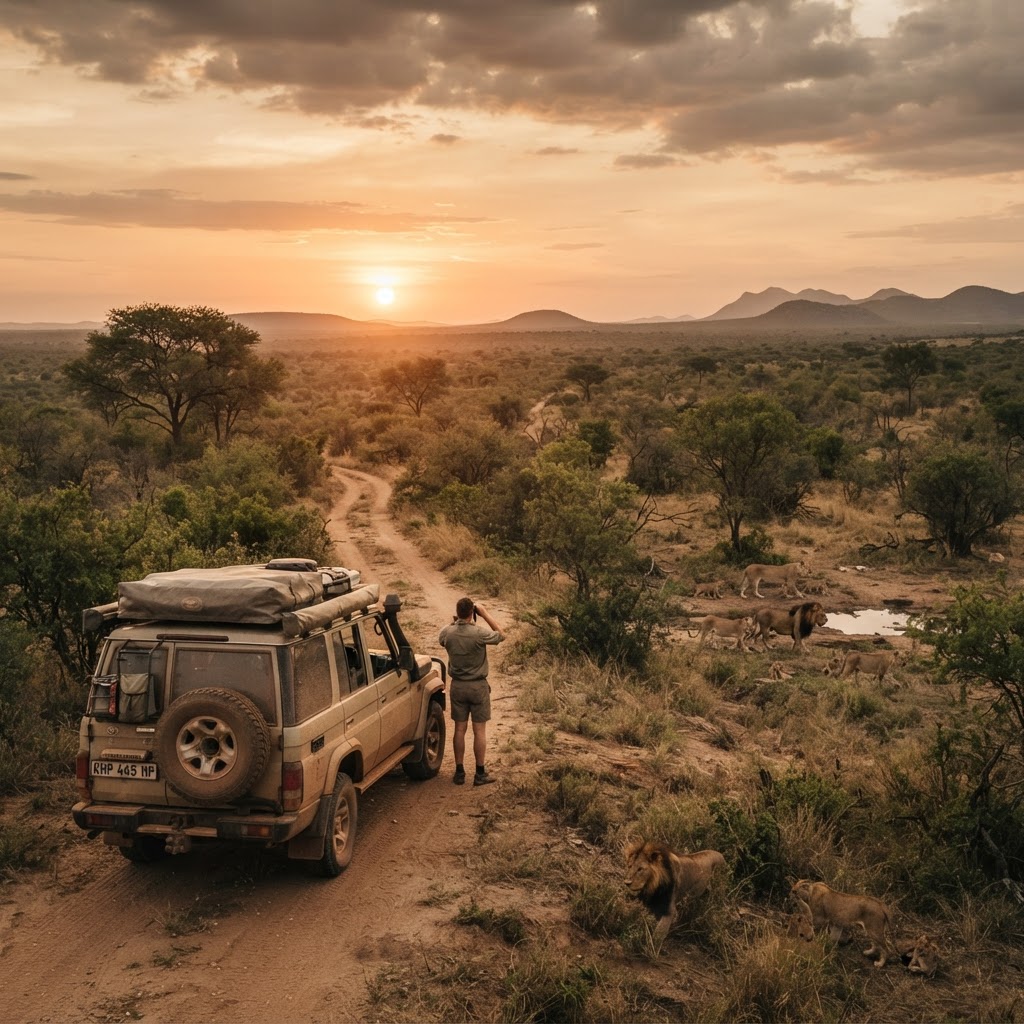
A raw, self-navigable wilderness where predator encounters happen on your terms
Plan & book
Sort your Kruger National Park trip in one place.
We point you to the booking tools we'd actually use — live prices, no markup. Or let us build the day-by-day plan around you first, then book.
Covering nearly two million hectares along South Africa's eastern boundary, Kruger National Park is one of the world's most accessible apex predator ecosystems. Unlike East African reserves that demand chartered flights and fixed group safari itineraries, Kruger pairs wilderness with sealed highway access, well-maintained gravel loops, and comfortable government rest camps. You can track leopards along riverbeds in a rented sedan at dawn and braai outside a rondavel by twilight.
4 to 5 days
Best time
July through September for peak predator viewing around drying water sources with crisp, malaria-low conditions.
Build your own trip with these prebuilt itineraries
Each one is a tested, day-by-day plan for Kruger National Park — start here, then make it yours.
5 Days in Kruger: Central Plains to Riverfront Wilderness in Kruger National Park
An immersive regional road trip transitioning between diverse biomes, waterholes, and quiet river camps
4 Days in Kruger: Slower Pace for Families & Photographers in Kruger National Park
A relaxed, hide-focused itinerary centered on patient waterhole observation and comfortable enclosed rest camps
3 Days in Southern Kruger: The Classic Big Five Safari in Kruger National Park
First-time self-driver highlights focused on high-density wildlife loops and dawn-to-dusk predator tracking
Kruger delivers self-determined wildlife viewing at an unmatched scale and price point. Here, game viewing is not mediated exclusively by a luxury lodge schedule: you control the ignition, choose the track along the Sabie or Olifants rivers, and manage your own sightings without tourist vehicle scrums. If you prefer high-touch luxury, adjacent private concessions provide off-roading, open-sided trackers, and uncrowded night drives across unfenced frontiers.
Where to stay
Getting there
Getting around
Food & drink
What it costs
Things to do
Book tours & tickets in Kruger National ParkSkip it if
Skip Kruger if you dislike long hours sitting in a vehicle or become anxious without walkable urban areas. If you are traveling with toddlers who struggle with quiet drives or require strict zero-malaria zones, choose Eastern Cape reserves (like Addo) or Madikwe instead.
When to go
Winter brings sparse bushveld and shrinking water supplies, forcing wildlife out into open riverbeds and dams. Summer delivers vibrant green backdrops and newborn impalas, but dense scrub and soaring 35°C afternoon heat make spotting difficult.
Peak (July to October)
Crisp mornings, bone-dry bush, high predator visibility, and busy southern road loops. Reserve rest camps up to 11 months ahead.
Shoulder (April to May & September to October)
Comfortable daytime temperatures, shifting landscape tones, and lighter gate traffic outside South African school holidays.
Low (November to March)
Intense summer heat, frequent afternoon thunderstorms, lush greenery, summer bird migrants, and newborn herbivores, balanced against harder wildlife spotting.
Neighborhoods
Where you stay shapes the trip. Here's how to think about it.
Lower Sabie & Sabie River Corridor
Waterfront drama, dense riverine woodland, and hyper-active game trails.
Best for:First-timers, wildlife photographers, and travelers who want maximum predator density quickly
Don't miss:Sunset drinks over the river at Lower Sabie Rest Camp's viewing deck followed by an early morning crawl along the H4-1 road.
Satara & Central Grasslands
Wide-open savannah, sweeping horizons, and classic big-cat stalking country.
Best for:Big-cat enthusiasts, experienced self-drivers, and minimalist wildlife tracking
Don't miss:Driving the S100 gravel road along the Nwanetsi River at sunrise to spot resting lion prides.
Skukuza Hub
Bustling safari capital with extensive amenities, historic grounds, and heavy vehicle traffic.
Best for:Families needing dependable conveniences, short stays, and travelers without bush experience
Don't miss:The Stevenson-Hamilton Memorial Museum to see Harry Wolhuter's lion-fighting knife before driving the H1-2 river loop.
Berg-en-Dal & Southwest Granite Hills
Rugged, boulder-strewn topography that feels secluded from the standard flat savannah.
Best for:Hikers, scenery-focused road-trippers, and travelers interested in white rhinos and San rock art
Don't miss:A guided bush walk from camp to explore ancient San rock art sites among the granite koppie ridges.
Letaba & Olifants River Basin
Quiet, elevated cliffside vistas and serene, sandy riverbeds shaded by giant fig trees.
Best for:Slow travelers, birdwatchers, elephant watchers, and repeat visitors avoiding southern crowds
Don't miss:The panoramic cliff view over the Olifants River gorge from the restaurant deck at Olifants Rest Camp.
Destination intelligence
Updated 9/14/2026The structured record we plan every Kruger National Park itinerary from.
Walkability
none
Transit quality
none
Car needed
yes
Ideal duration
4 to 5 days
Minimum useful
3 days
Peak season
July to October (Dry winter season with bare vegetation, concentrated waterholes, and easiest predator viewing).
Shoulder season
April to May and September to October (Mild weather, changing bush colors, fewer vehicles).
Low season
November to March (Summer wet season; dense greenery, intense heat, afternoon storms, baby animals, and prime birding).
Best for
Common mistakes
- Trying to drive across the entire length of the park in one trip, turning a wildlife experience into a frustrating transit marathon.
- Starting drives at 09:00 after sleeping in; the bush shuts down when temperatures rise, so you miss prime hunting activity.
- Exiting your vehicle outside designated picnic sites and enclosed camp areas, which violates strict park law and carries grave danger.
- Forgetting to start anti-malarial medication regimens ahead of time during the wet summer months (October to April).
Best nearby
See what a trip to South Africa actually costs. Travel Budget Co.
How to plan it
- Split your stay between two zones: base 2 nights around Lower Sabie or Berg-en-Dal for rhino and big cat density, then move 2 nights north to Satara or Letaba for open plains and reduced vehicle volume.
- Don't try to cross the entire park from south to north in one trip; Kruger is over 350 kilometers long, and driving speeds average under 30 km/h while scanning the bush.
- Book an official SANParks morning guided walk on your third day to leave the vehicle behind and learn foot-tracking and bush botany with armed rangers.
- Pair Kruger with a 2-day driving loop through the Blyde River Canyon and God's Window along the Panorama Route before returning toward Johannesburg.
- Download offline maps via Maps.me and buy a hard-copy Kruger road atlas at the entry gate, as mobile cell coverage drops frequently on the gravel tracks.
Questions
Readymade itineraries
Start from a tested template — then make it yours.
Ready to book
Lock in your Kruger National Park trip
Everything in one place. We may earn a small commission — it never costs you more.
Plan a trip to Kruger National Park
Pick a length and we'll build a day-by-day plan around how you travel — neighborhoods clustered, budget-aware, and editable.
Get better at planning trips like this
Occasional notes on planning smarter — no spam, unsubscribe anytime.
Plan a trip to Kruger National Park
Turn this guide into a day-by-day plan built around your pace, your group, and your budget.
Build my Kruger National Park trip