Taiwan
Jiufen, Taiwan
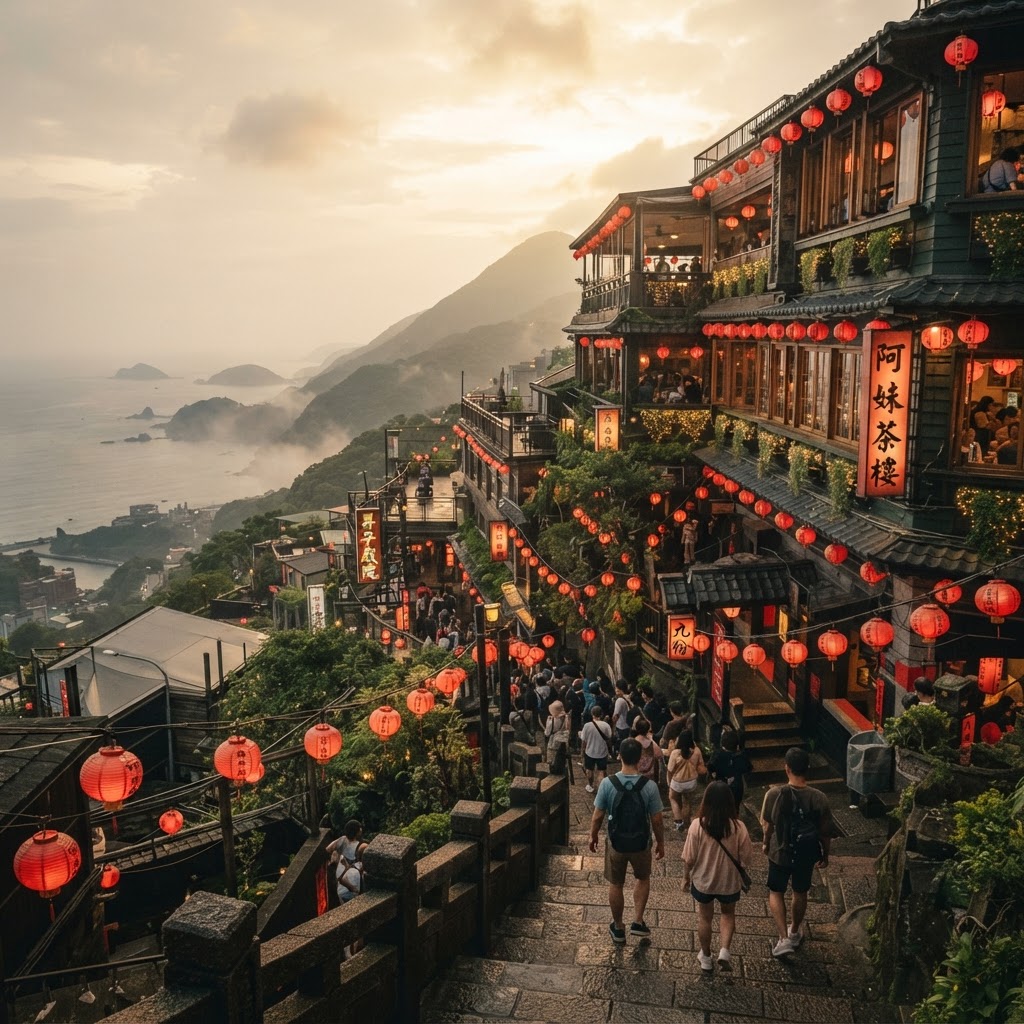
Steep stone stairways, coastal mist, and lantern-lit historic tea culture perched high above the Pacific.
Plan & book
Sort your Jiufen, Taiwan trip in one place.
We point you to the booking tools we'd actually use — live prices, no markup. Or let us build the day-by-day plan around you first, then book.
Carved into the rugged seaside slopes of northern Taiwan, Jiufen evolved from an isolated Qing dynasty camphor settlement into a booming Japanese-era gold-mining hub, and ultimately into an atmospheric cultural village. Defined by the tiered stairways of Shuqi Road, the sensory food stalls of Jishan Street, and wooden teahouses facing the East China Sea, it delivers dramatic topography and nostalgic ambiance. Because it is overwhelmed by tour coaches during the middle of the day, visiting Jiufen successfully requires understanding its rhythm: stay overnight or arrive at dawn to trade midday overcrowding for misty mountain solitude and evening lantern light.
24 to 36 hours (1 overnight stay)
Best time
Mid-October through November for comfortable hiking temperatures, fewer typhoon washouts, and crisp evening views.
Build your own trip with these prebuilt itineraries
Each one is a tested, day-by-day plan for Jiufen, Taiwan — start here, then make it yours.
3 Days Coastal Peaks & Gold Rush History in Jiufen
Rugged outdoor scrambles including Teapot Mountain combined with Jinguashi mining relics and coastal rail excursions
2 Days Atmospheric Overnight & Heritage in Jiufen
Overnight mountain retreat beating midday tour crowds, twilight lantern walks, and quiet sunrise alley exploration
1 Day Jiufen Day Trip from Taipei in Jiufen
Essential Old Street street food, historic lantern photography, and traditional Gongfu tea ceremony
Jiufen offers one of Taiwan’s most dramatic architectural landscapes—a vertical labyrinth of narrow alleys clinging to mountain slopes that plunge into Keelung Harbor. Beyond the photogenic red lanterns outside A-Mei Tea House and Skyline Teahouse, it provides genuine access to century-old Gongfu tea ceremonies, traditional mining-town street foods like chewy taro balls and herbal rice cakes, and direct access to dramatic coastal ridge hikes including Mount Keelung and the Teapot Mountain trail.
Where to stay
Getting there
Getting around
Food & drink
What it costs
Things to do
Book tours & tickets in Jiufen, TaiwanSkip it if
Skip Jiufen if you have significant knee mobility issues, use a wheelchair, or require stroller access, as the settlement is built almost entirely on hundreds of steep, uneven stone steps. Also reconsider if you despise dense crowds, high humidity, or frequent drizzle.
When to go
Summer brings oppressive humidity and frequent coastal typhoons that close mountain roads, while deep winter brings weeks of unrelenting cold rain and slippery cobblestones. Late autumn balances manageable daytime temperatures with clear evening visibility over the Pacific.
Peak (October to February)
Expect dense weekend foot traffic, glowing evening lantern displays, and persistent winter mist and drizzle that require waterproof boots.
Shoulder (March to May & September to November)
Pleasant temperatures for climbing stone stairways and scrambling coastal trails, paired with lighter weekday crowds.
Low (June to August)
Muggy heat, heavy afternoon showers, and constant disruption risk from Pacific tropical storm systems.
Neighborhoods
Where you stay shapes the trip. Here's how to think about it.
Jishan Street (Old Street Market)
Narrow, bustling covered market alley packed with street food vendors, souvenir stalls, and constant foot traffic.
Best for:Street food sampling, souvenir shopping, and first-time daytime visitors
Don't miss:Freshly boiled sweet taro and sweet potato balls from Grandma Lai's Yuyuan or Ah Gan Yi Taro Balls at the top of the stairs.
Shuqi Road (Stairway Spine)
Steep, iconic stone stairway illuminated by glowing red lanterns and flanked by multi-story wooden teahouses.
Best for:Night photography, Gongfu tea ceremonies, and heritage architecture lovers
Don't miss:The architectural terrace view looking directly across at A-Mei Teahouse from the patio of Skyline Teahouse.
Qingbian Road
Quieter, horizontal pedestrian pathway running beneath the main market street with panoramic Pacific Ocean views.
Best for:Escaping midday crowds, relaxed cafe lounging, and sunset vistas
Don't miss:Catching late afternoon sea mist roll in from the outdoor observation deck near Shengping Theater.
Jinguashi (Gold Ecological Park)
Sprawling, breezy former gold mining settlement ten minutes up the ridge with leafy Japanese-era residences.
Best for:Hikers, industrial heritage buffs, and travelers wanting space away from tour bus crowds
Don't miss:The ridge ascent to Teapot Mountain (Wuerchashan) for unbroken 360-degree views of the coastline.
Destination intelligence
Updated 9/14/2026The structured record we plan every Jiufen, Taiwan itinerary from.
Walkability
Low-to-moderate; compact footprint but intensely vertical, requiring continuous stair climbing on stone paths that get slick when raining.
Transit quality
High; regular direct highway coach buses from central Taipei and frequent feeder buses connecting through Ruifang Railway Station.
Car needed
No; driving is strongly discouraged due to narrow switchbacks, zero public core parking, and strict weekend traffic controls.
Ideal duration
24 to 36 hours (1 overnight stay)
Minimum useful
4 to 5 hours (half-day trip)
Peak season
October to February (cooler hiking weather and glowing lantern atmosphere, though winter sees persistent drizzle and fog).
Shoulder season
March to May and September to November (mild temperatures, vibrant mountain foliage, and moderate rainfall).
Low season
June to August (intense summer heat, elevated afternoon humidity, and vulnerability to western Pacific typhoon closures).
Best for
Common mistakes
- Visiting purely as a midday tour bus excursion between 11:00 AM and 4:30 PM when pedestrian congestion peaks.
- Dragging full-sized roller suitcases up Shuqi Road instead of leaving luggage in storage lockers at Ruifang or Taipei Main Station.
- Failing to carry a waterproof rain jacket or umbrella—Jiufen experiences rapid mountain weather shifts and heavy rainfall.
- Assuming restaurants and stalls stay open late; most food shops close promptly by 7:00 PM to 8:00 PM.
- Renting a car to drive up; narrow mountain roads and severely limited parking make driving frustrating.
Best nearby
See what a trip to Taiwan actually costs. Travel Budget Co.
How to plan it
- Arrive before 9:30 AM or after 4:30 PM; midday midday arrivals run straight into wall-to-wall tour groups along Jishan Street.
- Pair your visit with neighboring Jinguashi for mining history and Teapot Mountain hiking rather than rushing through Shifen's tourist markets on the same day.
- Store large suitcases at Ruifang Railway Station lockers or your Taipei hotel, taking only a light overnight backpack up Jiufen's stairs.
- Reserve an outdoor terrace table at a teahouse by 5:00 PM to catch twilight as the red lanterns along Shuqi Road switch on.
- Pack a proper rain jacket and non-slip walking shoes—mountain squalls and slick slate steps are the norm, not the exception.
Questions
More in Taiwan

Kenting, Taiwan
Taiwan
Windswept coastal cliffs, coral reefs, and open-throttle peninsula roads at Taiwan’s southernmost tip.
Alishan, Chiayi County
Taiwan
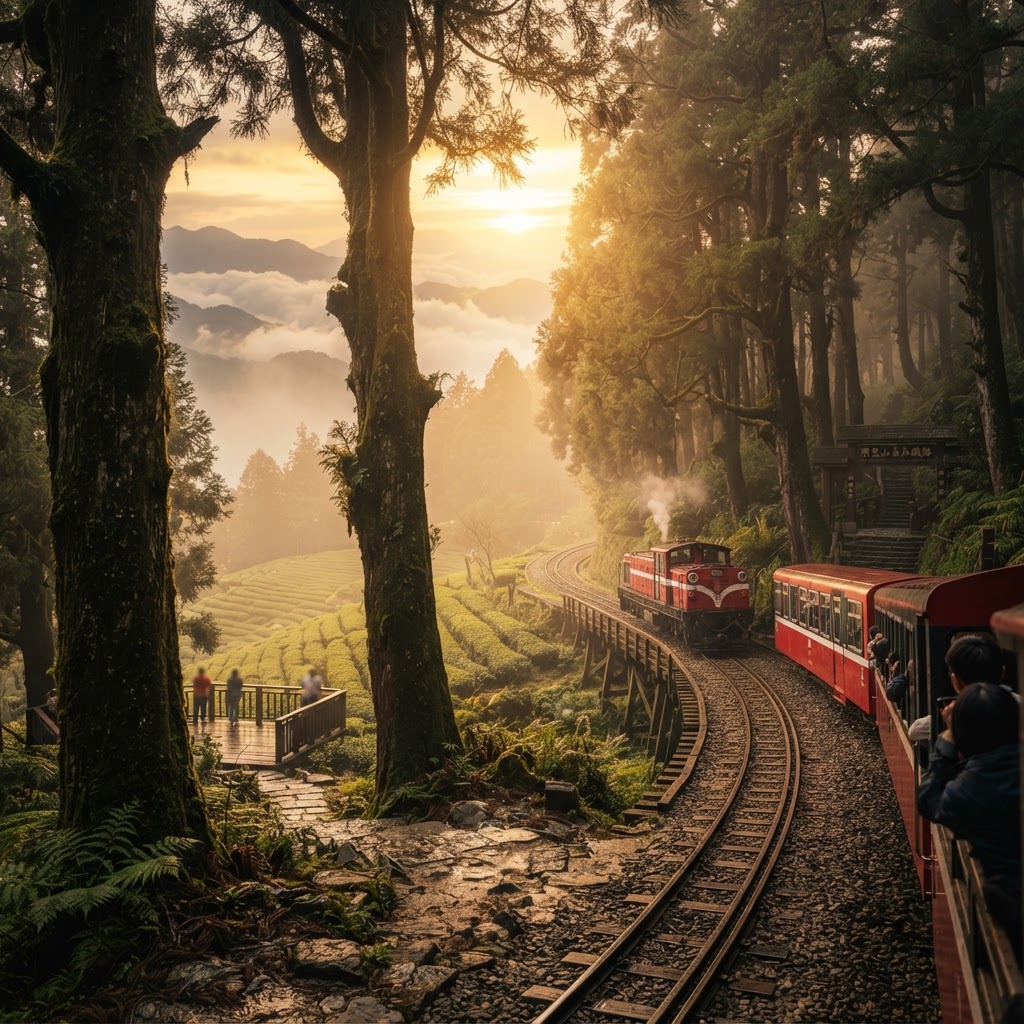
Ancient red cypresses, sunrise railway ascents, and high-mountain oolong shrouded in mist.
Sun Moon Lake, Nantou County
Taiwan
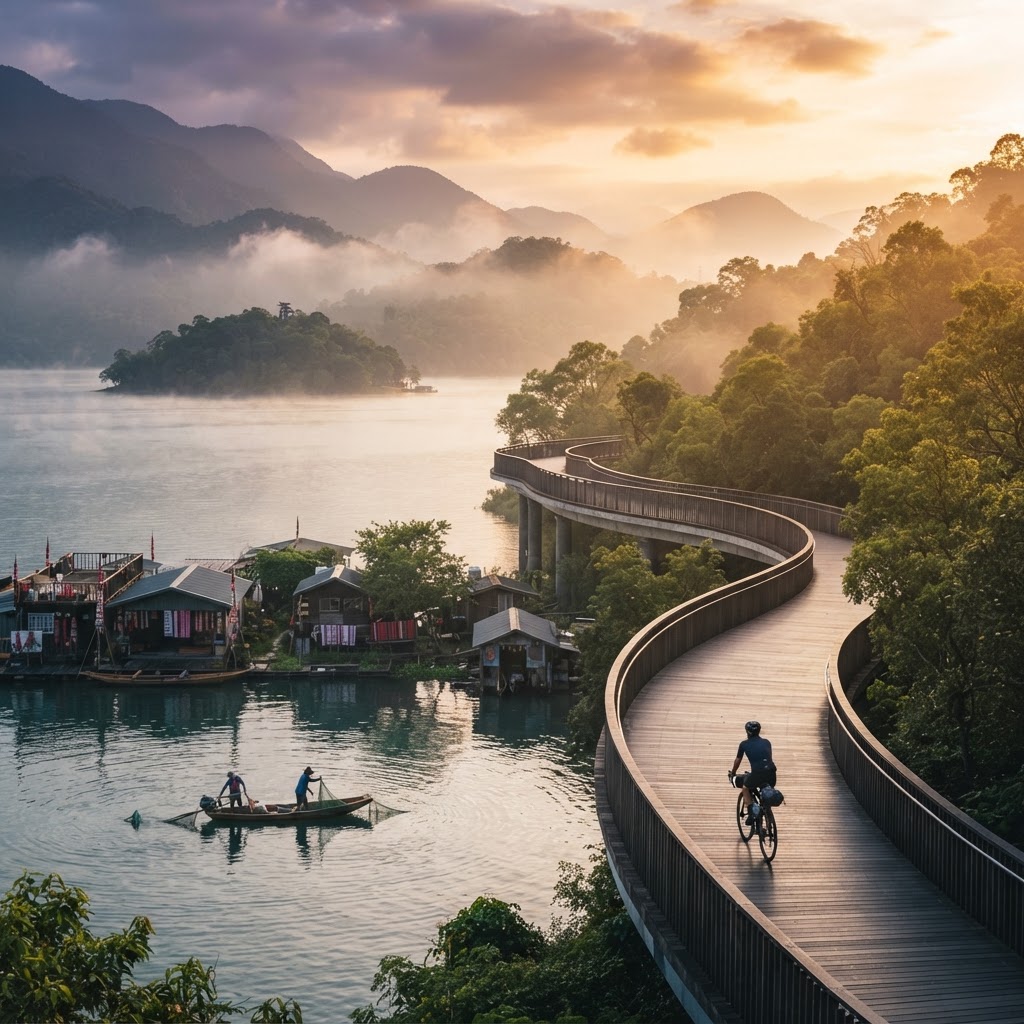
Misty alpine waters, indigenous Thao cuisine, and world-class lakeside cycling without needing a car.
Readymade itineraries
Start from a tested template — then make it yours.
Ready to book
Lock in your Jiufen, Taiwan trip
Everything in one place. We may earn a small commission — it never costs you more.
Plan a trip to Jiufen, Taiwan
Pick a length and we'll build a day-by-day plan around how you travel — neighborhoods clustered, budget-aware, and editable.
Get better at planning trips like this
Occasional notes on planning smarter — no spam, unsubscribe anytime.
Plan a trip to Jiufen, Taiwan
Turn this guide into a day-by-day plan built around your pace, your group, and your budget.
Build my Jiufen, Taiwan trip