Turkey
Izmir, Turkey
Aegean cafe culture, open-air ancient ruins, and Turkey’s most laid-back coastal metropolis
Plan & book
Sort your Izmir, Turkey trip in one place.
We point you to the booking tools we'd actually use — live prices, no markup. Or let us build the day-by-day plan around you first, then book.
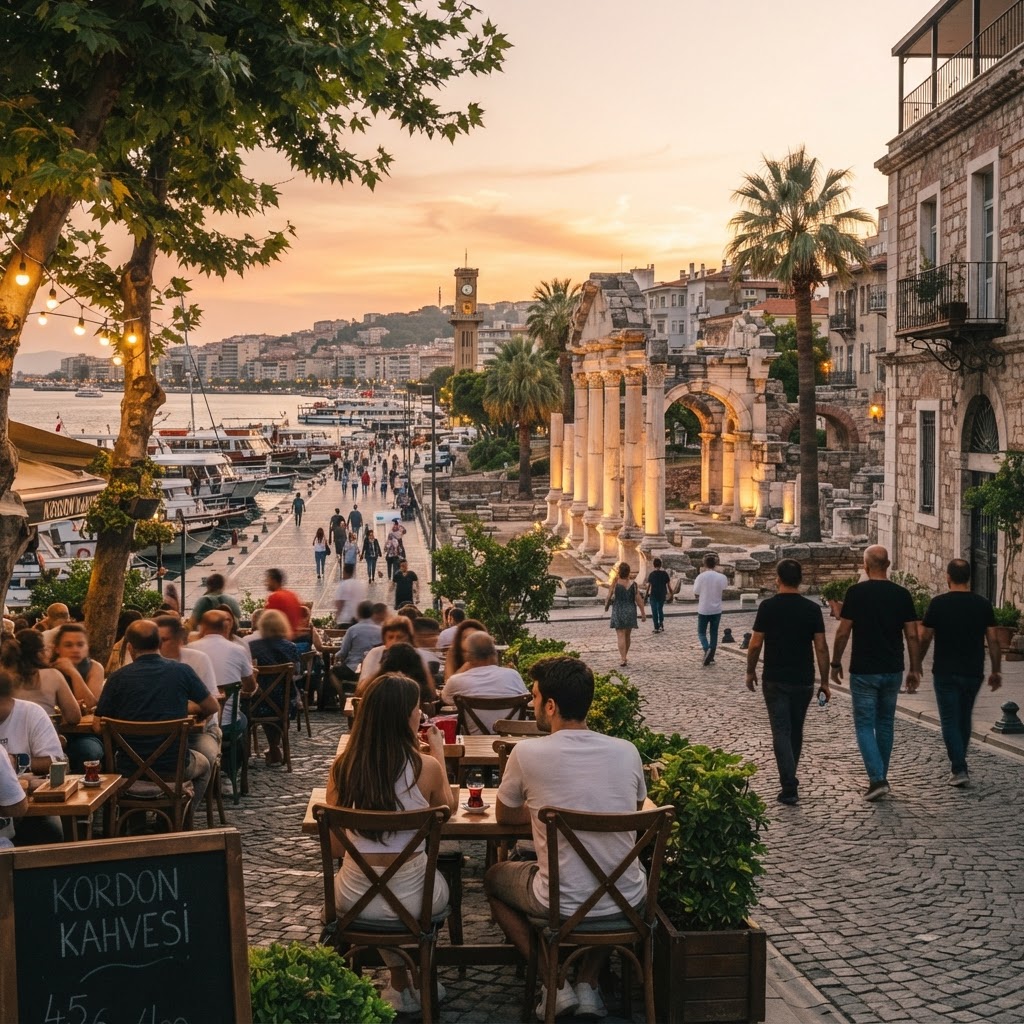
Izmir is Turkey’s third-largest city, yet it operates with the leisurely cadence of an Aegean maritime town rather than the frantic buzz of Istanbul. Rebuilt extensively in the 20th century after the 1922 Great Fire of Smyrna, it lacks the dense layers of Byzantine and Ottoman palaces seen elsewhere in the country, but compensates with palm-lined promenades, incredible market bazaars, and effortless access to world-class ancient sites. It is fundamentally a living, secular port city where life revolves around seaside kordon walks, third-wave cafes, and meze-laden dinners.
3 to 4 days
Best time
Mid-April through May and late September through October provide the ideal balance of warm Aegean breezes and comfortable walking temperatures.
Build your own trip with these prebuilt itineraries
Each one is a tested, day-by-day plan for Izmir, Turkey — start here, then make it yours.
5 Days in Izmir: Ancient Civilizations & Coast Base in Izmir
History-heavy itinerary exploring ancient Smyrna, Ephesus, and Pergamon using Izmir as a strategic transit hub
4 Days in Izmir: Aegean Culinary & Street Food Trail in Izmir
Deep dive into regional olive-oil specialties, boyoz breakfasts, fresh seafood mezes, and local vineyard excursions
3 Days in Izmir: The Classic Aegean Urban Break in Izmir
First-time urban highlights, coastal ferries, bustling Kemeraltı bazaars, and sunset Kordon walks without a car
Go for the authentic Aegean rhythm. Izmir allows you to explore an expansive Ottoman-era bazaar without the aggressive touting found in Istanbul, stroll kilometres of open waterfront along the Kordon, and eat phenomenal regional food—from warm boyoz pastries to sesame-crusted kumru sandwiches—at a fraction of the cost of Turkey's tourist hubs. It is also the most practical, transit-connected jumping-off point for exploring Ephesus and the Çeşme peninsula.
Where to stay
Getting there
Getting around
Food & drink
What it costs
Things to do
Book tours & tickets in Izmir, TurkeySkip it if
Skip Izmir if your heart is set on sprawling Ottoman palace complexes and postcard-perfect imperial skylines, or if you are looking for resort-style sandy swimming beaches right in the downtown core (proper beaches require a 60- to 90-minute drive out to Çeşme, Alaçatı, or Urla).
When to go
Summer pushes afternoon heat above 35°C (95°F), making open-air ruins and market alleys punishing while locals flee to the Çeşme Peninsula. Spring and autumn keep daytime temperatures around 20°C to 26°C with minimal rainfall, ideal for wandering Kemeraltı and taking day excursions to Ephesus or Bergama.
Peak (June to August)
Hot, humid urban days; vibrant nightlife and bustling evening promenades, but sightseeing in unshaded ancient sites requires early morning starts.
Shoulder (April–May & September–October)
Crisp Aegean breezes, comfortable temperatures for walking, manageable bazaar crowds, and warm waters extending through October.
Low (November to March)
Cooler days (10°C–15°C) and periodic Aegean winter rains; outdoor cafe seating thins, but cultural sites are completely uncrowded and hotel rates drop significantly.
Neighborhoods
Where you stay shapes the trip. Here's how to think about it.
Alsancak
Buzzing cafe culture, leafy pedestrian lanes, and late-night seaside promenades.
Best for:First-timers, dining enthusiasts, and walkability lovers
Don't miss:Catching sunset with local craft beer on the grassy lawn along Atatürk Caddesi (the Kordon).
Konak & Kemeraltı
Historic, chaotic bazaar alleyways alive with artisans, spice stalls, and Ottoman courtyards.
Best for:Daytime explorers, history buffs, and street-food grazing
Don't miss:Drinking sand-brewed Turkish coffee in the central stone courtyard of Kızlarağası Hanı.
Karşıyaka & Bostanlı
Breezy, fiercely independent residential waterfront full of neighborhood bistros and cycling paths.
Best for:Travelers seeking local Aegean daily life and peaceful evening dining
Don't miss:A 15-minute public ferry hop across the gulf from Pasaport or Alsancak pier at dusk.
Tarihi Asansör & Karataş
Steep hillside heritage quarters with sleepy narrow lanes and sweeping panoramic bay vistas.
Best for:View seekers, architecture buffs, and boutique cafe goers
Don't miss:Riding the 1907 public elevator (Tarihi Asansör) up from Dario Moreno Street for clifftop panorama views.
Destination intelligence
Updated 9/14/2026The structured record we plan every Izmir, Turkey itinerary from.
Walkability
High within individual central districts like Alsancak and Konak, which are linked by a flat, continuous 5-kilometer waterfront promenade.
Transit quality
High. The city features seamless integration between metro lines, seaside trams, suburban commuter rail (İZBAN), and frequent scenic gulf ferries.
Car needed
No. A rental car is a major liability within central Izmir due to traffic and restricted parking, though helpful if exploring rural vineyards in Urla or coastal ruins further afield.
Ideal duration
3 to 4 days
Minimum useful
2 days
Peak season
June through August. Summers are hot and humid (often topping 35°C/95°F), with urban crowds heading to nearby beach towns on weekends.
Shoulder season
April to May and September to October. Mild temperatures, crisp Aegean breezes, and optimal conditions for walking markets and visiting nearby ruins.
Low season
November through March. Cooler, rainier days with fewer tourists; fully operational local life, but outdoor cafe culture scales back.
Best for
Common mistakes
- Renting a car to explore the city center, where parking is scarce and coastal trams or ferries are vastly superior.
- Expecting grand Ottoman imperial architecture like Istanbul's Blue Mosque, missing that Izmir's charm lies in its 20th-century secular seaside lifestyle and market quarters.
- Attempting a rushed same-day round-trip day trip to Pamukkale by public bus, which consumes 6 hours of travel time alone.
Best nearby
See what a trip to Turkey actually costs. Travel Budget Co.
How to plan it
- Base yourself in Alsancak if you value stepping outside directly into third-wave cafes, tram stops, and walkable dinner options every evening.
- Do not attempt Ephesus and Pergamon on the same day; they sit 180 km apart at opposite ends of the regional transit corridor.
- Tackle Kemeraltı Bazaar and the Agora of Smyrna in the morning while temperatures are cool, saving the seaside Kordon breeze for late afternoon.
- Use public passenger ferries from Pasaport or Alsancak to Bostanlı around sunset rather than booking tourist boat cruises.
- Pair Izmir with a short food-and-wine detour through the Urla olive corridor if your itinerary allows an extra 48 hours.
Questions
Readymade itineraries
Start from a tested template — then make it yours.
Ready to book
Lock in your Izmir, Turkey trip
Everything in one place. We may earn a small commission — it never costs you more.
Plan a trip to Izmir, Turkey
Pick a length and we'll build a day-by-day plan around how you travel — neighborhoods clustered, budget-aware, and editable.
Get better at planning trips like this
Occasional notes on planning smarter — no spam, unsubscribe anytime.
Plan a trip to Izmir, Turkey
Turn this guide into a day-by-day plan built around your pace, your group, and your budget.
Build my Izmir, Turkey trip