Peru
Iquitos & the Peruvian Amazon
The roadless jungle capital where rubber-boom relics meet the raw Amazon basin.
Plan & book
Sort your Iquitos & the Peruvian Amazon trip in one place.
We point you to the booking tools we'd actually use — live prices, no markup. Or let us build the day-by-day plan around you first, then book.
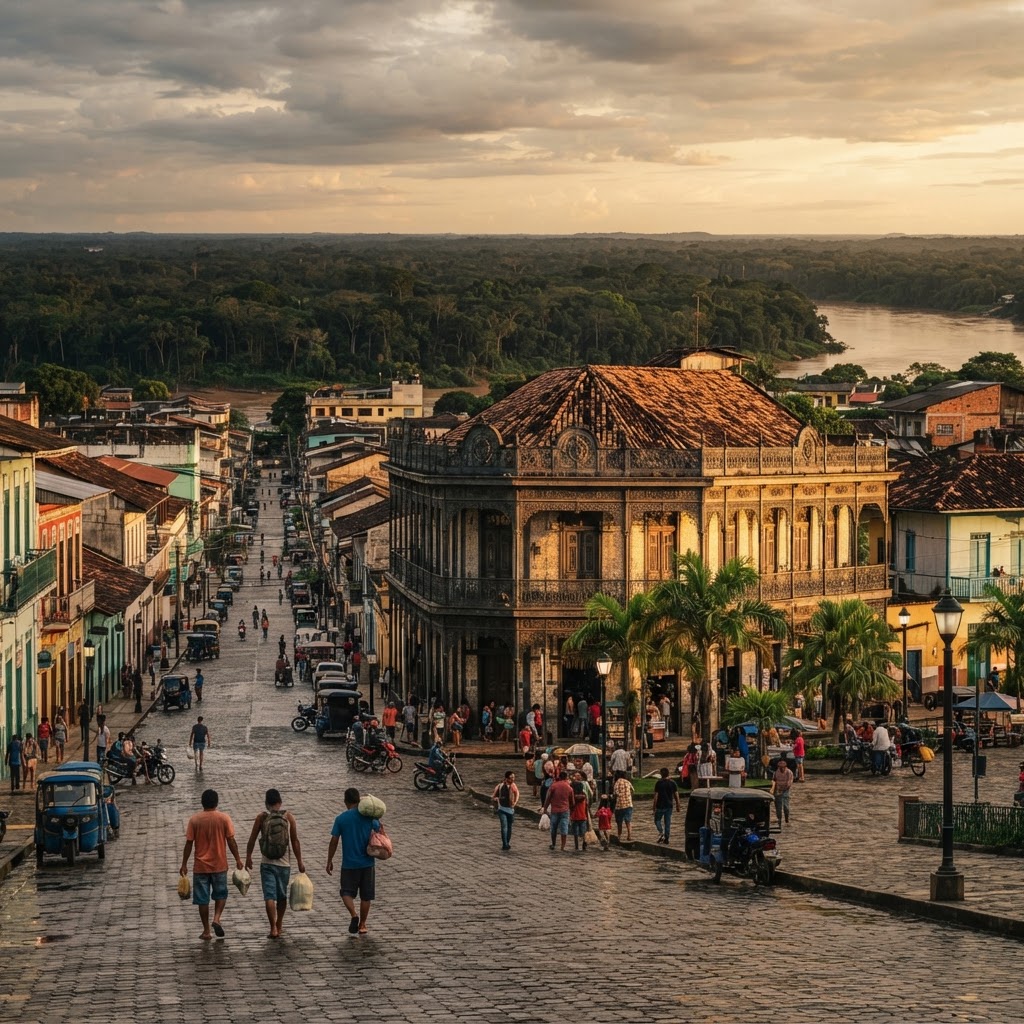
Iquitos is the world's largest city inaccessible by road, anchored deep in the northern Peruvian rainforest where the Nanay and Itaya rivers converge with the mighty Amazon. Once a turn-of-the-century rubber-boom metropolis marked by imported European tiles and an iron house designed by Gustave Eiffel, it operates today as an intense, buzzing staging ground for remote primary rainforest expeditions, floating river settlements, and boat-only eco-lodges.
How long
5 to 6 days (1 night in the city center plus 3 to 4 nights deep in an Amazon eco-lodge or on a luxury river cruise)
Best time
July to September for rainforest trekking and pink dolphin sightings, or February to April for deep skiff navigation into flooded forests.
Build your own trip with these prebuilt itineraries
Each one is a tested, day-by-day plan for Iquitos & the Peruvian Amazon — start here, then make it yours.
6 Days Luxury Amazon River Cruise Expedition in Iquitos/Amazon
High-end small-ship river cruising exploring Pacaya Samiria Reserve with guided skiff excursions and flooded-forest navigation
5 Days Highlights of City & Remote Amazon in Iquitos/Amazon
Classic balance of colonial rubber boom history, Iquitos malecón, and an off-grid river lodge retreat
4 Days Deep Jungle Lodge Immersion in Iquitos/Amazon
Rustic eco-lodge adventure focusing on primary rainforest wildlife tracking and night river safaris
Go for raw access to primary tropical rainforest that feels distinctly untamed compared to manicured ecotourism corridors. Iquitos lets you transition from an energetic jungle river port straight onto motorized skiffs heading deep into the flooded forests of Pacaya Samiria National Reserve to spot pink river dolphins, three-toed sloths, and prehistoric hoatzin birds.
Where to stay
Getting there
Getting around
Food & drink
What it costs
Skip it if
Skip if you are looking for manicured alpine landscapes, cannot tolerate intense humidity and aggressive insects, require constant Wi-Fi connectivity, or find the gritty reality of chaotic river ports and unregulated open-air bushmeat markets uncomfortable.
When to go
Iquitos does not have a typical dry season; instead, you trade river navigation for hiking mobility. Low-water months allow trail access and concentrate wildlife around dwindling lagoons, while high-water months flood the forest floor, allowing small boats to motor at canopy height right next to monkeys and birds.
Peak (June to September)
Low-water season with less frequent rainfall and exposed sandy river beaches. Ideal for walking jungle trails and night hikes, though river levels drop significantly and midday heat is intense.
Shoulder (October to November & April to May)
Transitional river levels with erratic rainfall. Offers fewer visitors at jungle lodges and solid wildlife spotting without peak-season cruise premiums.
Low (December to March)
High-water and maximum rain season. Rivers rise 6 to 10 meters, flooding the forest (várzea) and enabling skiffs to glide deep into tree canopies; trail hiking is almost entirely replaced by boat excursions.
Neighborhoods
Where you stay shapes the trip. Here's how to think about it.
Plaza de Armas & Centro Histórico
Buzzing colonial core dominated by honking mototaxis, rubber-boom tile facades, and lively civic life.
Best for:First-timers, short pre-cruise stays, and architecture buffs
Don't miss:Gustave Eiffel's Casa de Fierro (Iron House) and the intricate Portuguese Azulejo tiles on the 19th-century rubber mansions.
Malecón Tarapacá (The Boulevard)
Breezy pedestrian riverfront promenade with open-air bar terraces, live cumbia, and views of the Itaya River.
Best for:Evenings, solo travelers seeking dinner, and scenic sundowners
Don't miss:Grabbing a camu camu sour on an open-air terrace overlooking the river traffic at dusk.
Belén (Upper Market & Floating Lower District)
Intense, sensory-overload labyrinth transitioning from sprawling street trade down to a stilted, floating river community.
Best for:Culture seekers and intrepid photographers traveling with a licensed local guide
Don't miss:Hiring a traditional peke-peke motorized wooden canoe at the riverbank to navigate between stilted houses and floating shops.
Bellavista-Nanay
Gritty, working-class river port hub that serves as the northern boat departure point for wilder jungle tributaries.
Best for:Adventurous foodies and travelers boarding local river transports
Don't miss:The waterfront street-food market for freshly grilled suri (palm grubs) and patarashca (seasoned fish steamed in bijao leaves).
Destination intelligence
Updated 9/14/2026The structured record we plan every Iquitos & the Peruvian Amazon itinerary from.
Walkability
Moderate within the colonial core and riverfront malecón; completely non-walkable between outer districts, which require mototaxis or boats.
Transit quality
Low. There is no rail or metro; public transit consists of informal wooden-chassis buses and fleets of loud mototaxis with unmetered cash fares.
Car needed
Never. There are no road connections outside the isolated Iquitos-Nauta corridor, and no standard rental car companies operate here.
Ideal duration
5 to 6 days (1 night in the city center plus 3 to 4 nights deep in an Amazon eco-lodge or on a luxury river cruise)
Minimum useful
3 days (1 night in Iquitos and 2 nights at a nearby lodge, though transit eats substantial time)
Peak season
June to September (coincides with the drier Amazon low-water season, festival of San Juan in late June, and North American/European summer holidays).
Shoulder season
October to November and April to May (transitional river levels with lower tourist volumes and moderate rain).
Low season
December to March (peak high-water and wet season, featuring frequent daily downpours but optimal river navigation deep into flooded forests).
Best for
Common mistakes
- Staying entirely in Iquitos city expecting a rainforest wilderness retreat instead of booking a multi-night jungle lodge far upriver.
- Booking unvetted, aggressive street touts who promise cheap jungle tours near the Malecón, often resulting in unlicensed guides, poor safety standards, and unethical captive-wildlife shows.
- Wandering deep into Belén Market or the floating shantytown alone with visible cameras or flashy jewelry.
- Failing to pack high-percentage DEET, breathable quick-dry long layers, and verified proof of yellow fever vaccination.
- Underestimating the oppressive tropical humidity and planning dense midday walking schedules.
Best nearby
See what a trip to Peru actually costs. Travel Budget Co.
How to plan it
- Book an expedition lodge situated at least 3 hours away by boat (such as in the Tahuayo or Yarapa river basins) rather than close-in lodges near the city that suffer from engine noise and secondary growth.
- Schedule your flight into Iquitos with a built-in overnight city stay before your river cruise or jungle lodge pickup; Amazon thunderstorm flight delays frequently cause travelers to miss morning boat departures.
- Pair your city walking loop of the Plaza de Armas and Malecón Tarapacá with an afternoon trip down the Iquitos-Nauta road to the Amazon Rescue Center (CREA) to see orphaned manatees before heading into the wild.
- If taking an Amazon river cruise, reserve 6 to 9 months in advance for luxury vessels (like Aqua Expeditions or Delfin) as cabins are strictly limited to small-capacity boutique boats.
- Never book street-touter jungle excursions on the Malecón; verify operator licensing and safety gear through official agency offices on Calle Putumayo or Plaza Muñoz Hurtado.
Questions
Readymade itineraries
Start from a tested template — then make it yours.
Ready to book
Lock in your Iquitos & the Peruvian Amazon trip
Everything in one place. We may earn a small commission — it never costs you more.
Plan a trip to Iquitos & the Peruvian Amazon
Pick a length and we'll build a day-by-day plan around how you travel — neighborhoods clustered, budget-aware, and editable.
Get better at planning trips like this
Occasional notes on planning smarter — no spam, unsubscribe anytime.
Plan a trip to Iquitos & the Peruvian Amazon
Turn this guide into a day-by-day plan built around your pace, your group, and your budget.
Build my Iquitos & the Peruvian Amazon trip