South Africa
Garden Route
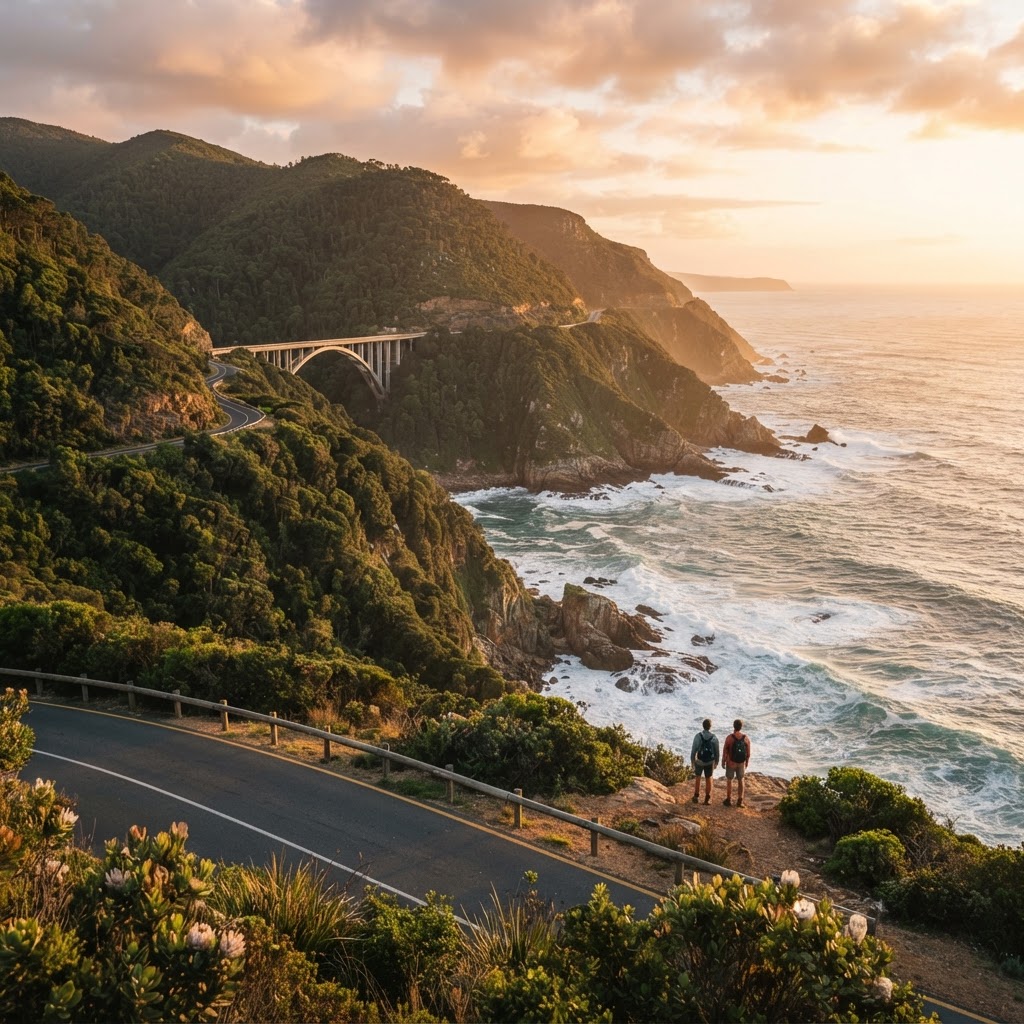
Ancient coastal afro-temperate forests tumbling into dramatic Indian Ocean surf.
Plan & book
Sort your Garden Route trip in one place.
We point you to the booking tools we'd actually use — live prices, no markup. Or let us build the day-by-day plan around you first, then book.
The Garden Route is not an unbroken chain of botanical gardens, nor is it a rigid marathon road trip where you need to switch guesthouses every night. Stretching roughly 200 kilometers along the N2 highway between Mossel Bay and the Storms River mouth, it is a protected coastal corridor defined by towering yellowwood forests, coastal fynbos, tranquil lagoons, and rugged Indian Ocean sea cliffs. Anchored by distinct hubs like Wilderness, Knysna, Plettenberg Bay, and Tsitsikamma, it offers a seamless blend of outdoor adventure and polished culinary comfort.
5 to 6 days
Best time
February to April and October to November for clear hiking weather and mild temperatures without domestic holiday traffic.
It delivers South Africa's most accessible, dramatic intersection of old-growth coastal rainforest and ocean wilderness, supported by an exceptionally reliable self-drive infrastructure. In a single day, you can trail run across the knife-edge sandstone ridges of Robberg Nature Reserve watching cape fur seals, cross the suspension bridge over Storms River Gorge, and dine on fresh wild oysters over Knysna Lagoon.
Where to stay
Getting there
Getting around
Food & drink
What it costs
Things to do
Book tours & tickets in Garden RouteSkip it if
Travelers without a rental car or those unwilling to drive on the left side of the road should skip it, as self-driving is the only viable way to reach trailheads and coastlines. It should also be skipped if you have fewer than 10 total days in South Africa and your absolute priorities are an iconic Big Five safari and Cape Town, as transit days will eat up your trip.
When to go
Peak summer (mid-December to January) brings warm ocean swims but heavy regional traffic, high lodge rates, and crowded trail parking. Shoulder months deliver dry, stable hiking conditions and easier restaurant reservations, while winter trades chilly evenings for prime coastal whale watching.
Peak (Mid-December to January)
South African holidaymakers flood the corridor; beaches are vibrant and warm, but accommodations must be secured 4 to 6 months ahead and N2 town bottlenecks are frequent.
Shoulder (February to April & October to November)
The smartest balance: calm winds, comfortable temperatures for Robberg and Tsitsikamma trails, uncrowded farm stalls, and fair room pricing.
Low (May to September)
Crisp mornings, periodic coastal showers, and cooler seas, offset by low lodge rates and prime shore-based Southern Right whale viewing around Plettenberg Bay.
Neighborhoods
Where you stay shapes the trip. Here's how to think about it.
Wilderness
Laid-back, bohemian village cradled by long wild beaches, lagoons, and tranquil river waterways.
Best for:Couples, nature lovers, and kayakers seeking peaceful, unhurried coastal retreats
Don't miss:Canoeing up the Touw River into Wilderness National Park and taking the boardwalk path to the Kingfisher Waterfall.
Knysna Waterfront & Thesen Island
Maritime chic with nautical boutique canals, polished seafood spots, and timber-town heritage.
Best for:First-timers, oyster seekers, and travelers wanting walkable dining options without night-time driving
Don't miss:Freshly shucked wild oysters paired with local MCC at 34 South, followed by sunset views over the Knysna Heads.
Plettenberg Bay (Central & Lookout)
Upscale resort energy with wide ocean panoramas, white sands, and refined dining terraces.
Best for:Hikers, whale-watchers, and travelers wanting polished guesthouses with ocean views
Don't miss:Hiking the 9-kilometer perimeter loop of the Robberg Nature Reserve trail among Cape fur seals and sea cliffs.
Storms River Village & Tsitsikamma
Dense ancient forest frontier packed with suspension bridges, rocky storm surges, and adrenaline outposts.
Best for:Outdoor purists, hikers, and active families
Don't miss:Walking the suspension bridges across the Storms River mouth where the deep gorge discharges directly into the churning Indian Ocean.
Nature's Valley
Secluded, canopy-shaded off-the-grid coastal hamlet surrounded entirely by national parkland.
Best for:Remote escapism, slow-paced unwinding, and birdwatching
Don't miss:A sunset stroll along the untamed lagoon mouth where the multi-day Otter Trail officially finishes.
Destination intelligence
Updated 9/14/2026The structured record we plan every Garden Route itinerary from.
Walkability
Low. While small village centers like Knysna Waterfront or central Plettenberg Bay have walkable strips, connecting between towns, beaches, and national park trailheads requires driving.
Transit quality
Poor. There is no viable commuter rail or municipal bus system connecting sights. Independent travel relies entirely on private rental cars or organized tour coaches.
Car needed
Yes. A rental car is essential for visiting nature reserves, forest trails, farm stalls, and scenic viewpoints safely and efficiently.
Ideal duration
5 to 6 days
Minimum useful
3 days
Peak season
Mid-December through January (warmest ocean temperatures and longest daylight, but crowded with domestic summer holidaymakers and requiring reservations months ahead).
Shoulder season
February to April and October to November (exceptional weather, mild temperatures, calm winds, great hiking conditions, and uncrowded coastal trails).
Low season
May through August (cooler winter temperatures, brisk ocean breezes, and periodic winter rainfall, though offset by active southern right whale sightings offshore).
Best for
Common mistakes
- Changing accommodations every single night across Mossel Bay, Knysna, and Tsitsikamma instead of choosing one or two central bases like Wilderness or Plettenberg Bay.
- Rushing the drive directly from Cape Town along the N2 in a single day without accounting for scenic mountain pass detours or the heavy holiday traffic around December and January.
- Visiting in late December through early January without realizing high-season domestic holiday crowds pack out coastal beaches, restaurants, and nature reserve parking lots months in advance.
- Assuming the Garden Route is a safari destination; while private reserves exist, it is a temperate forest and marine playground, and authentic big game safaris are better experienced in Addo Elephant National Park or the Greater Kruger.
- Relying on ride-share apps or taxis to get to nature reserve trailheads like Robberg or Storms River.
Best nearby
See what a trip to South Africa actually costs. Travel Budget Co.
How to plan it
- Base yourself in Plettenberg Bay for 3 nights if you want easy access to both Robberg coastal hikes and Tsitsikamma forest adventures without changing rooms.
- Do not attempt to drive from Cape Town all the way to Knysna in one day if you want to enjoy the drive; spend a night in Swellendam or Wilderness along the way.
- Pair your drive with an Eastern Cape safari ending in Gqeberha (Port Elizabeth) and fly back to Johannesburg or Cape Town instead of backtracking on the N2.
- Arrive at Robberg Nature Reserve by 8:00 AM in peak months to secure trail parking before the lot reaches vehicle capacity.
- Book dinner reservations on Thesen Island and central Plett at least 2 weeks ahead if traveling between mid-December and mid-January.
Questions
Readymade itineraries
Start from a tested template — then make it yours.
Ready to book
Lock in your Garden Route trip
Everything in one place. We may earn a small commission — it never costs you more.
Plan a trip to Garden Route
Pick a length and we'll build a day-by-day plan around how you travel — neighborhoods clustered, budget-aware, and editable.
Get better at planning trips like this
Occasional notes on planning smarter — no spam, unsubscribe anytime.
Plan a trip to Garden Route
Turn this guide into a day-by-day plan built around your pace, your group, and your budget.
Build my Garden Route trip