South Africa
Franschhoek
Cape Winelands culinary capital framed by Huguenot heritage and dramatic valley peaks
Plan & book
Sort your Franschhoek trip in one place.
We point you to the booking tools we'd actually use — live prices, no markup. Or let us build the day-by-day plan around you first, then book.
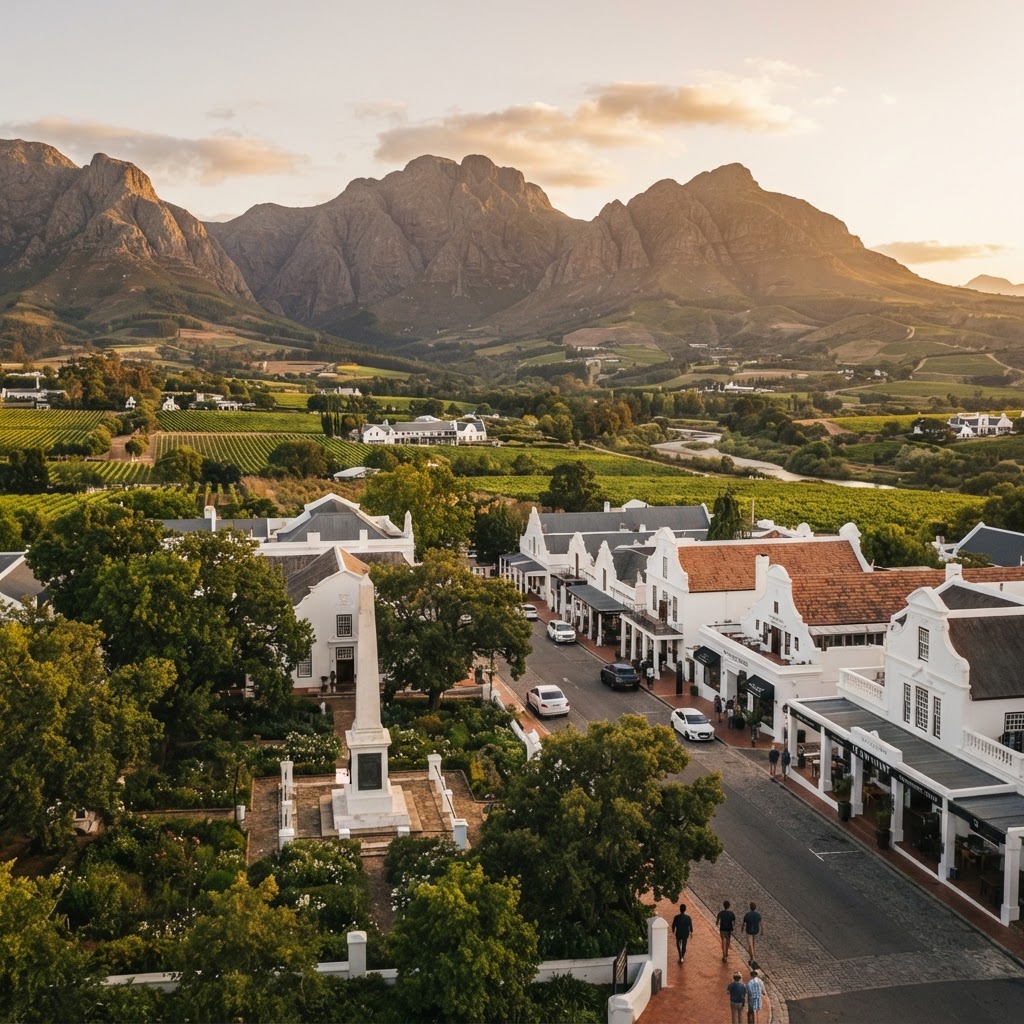
Set in an amphitheater of rugged sandstone mountains just an hour east of Cape Town, Franschhoek is South Africa's undisputed culinary and viticultural epicenter. Originally settled by French Huguenot refugees in 1688, the valley fuses classic Cape Dutch gables, century-old oak-shaded avenues, and some of the continent's most decorated tasting rooms and open-fire kitchens. It offers an indulgent, unhurried contrast to the urban pulse of Cape Town.
3 days
Best time
March to April for golden harvest foliage and perfect dining temperatures without peak-summer crowds.
Build your own trip with these prebuilt itineraries
Each one is a tested, day-by-day plan for Franschhoek — start here, then make it yours.
4 Days of Mountain Trails and Hidden Valleys in Franschhoek
An active self-drive route combining rugged fynbos hiking in Mont Rochelle Nature Reserve with scenic passes and outlying heritage wineries
3 Days of Epicurean Indulgence and Estate Escapes in Franschhoek
An immersive food and wine lovers itinerary pairing world-renowned tasting menus, private cellar tours, and relaxed farm lunches
2 Days of Wine Tram and Village Charm in Franschhoek
A classic boutique getaway focused on Huguenot Road strolls, hop-on hop-off Wine Tram estates, and premier culinary dining
Franschhoek concentrates South Africa’s finest fine dining, Cap Classique sparkling wines, and historic Cape Dutch wine estates into a compact, 10-kilometer strip. Unlike larger regional hubs, you can pair a morning mountain ridge hike with an afternoon of cellar doors without enduring long drives, utilizing the iconic Franschhoek Wine Tram or booking a table at boundary-pushing restaurants that rival Europe’s best at a fraction of the price.
Where to stay
Getting there
Getting around
Food & drink
What it costs
Things to do
Book tours & tickets in FranschhoekSkip it if
Skip Franschhoek if you do not drink wine or care about fine dining and have zero interest in scenic, slow-paced countryside stays. Travelers craving high-energy nightlife, beach access, or dense urban attractions will find the village uncomfortably quiet after 9:30 PM.
When to go
Summer (December to February) brings blistering midday heat and requires restaurant bookings months in advance. Autumn delivers harvest energy, warm afternoon light, and relaxed cellar doors, while winter drops prices at the expense of frequent Atlantic rainstorms.
December to February (Peak)
Hot, dry summer days (often exceeding 30°C) and festive holiday crowds. Essential to book flagship tasting rooms and dining 2–3 months ahead.
March to May (Shoulder / Autumn)
The sweet spot: lingering harvest operations, turning vine leaves, crisp evenings, and comfortable hiking conditions in Mont Rochelle.
June to August (Low / Winter)
Cool and wet (10–18°C) with green hillsides, roaring estate fireplaces, and steep accommodation promotions, though some outdoor tram routes feel chilly.
September to November (Shoulder / Spring)
Blooming fynbos and refreshing spring breezes; pleasant for outdoor exploring before the summer holiday rush begins.
Neighborhoods
Where you stay shapes the trip. Here's how to think about it.
Franschhoek Village (Huguenot Road)
Oak-lined, walkable historic core filled with art galleries, sidewalk bistros, and Cape Dutch architecture.
Best for:First-timers, travelers without a rental car, and diners wanting to walk home after evening wine pairings.
Don't miss:Starting the morning at Terbodore Coffee Roasters before boarding the Franschhoek Wine Tram at the village terminal.
Middagkrans & Valley Slopes
Elevated, quiet vineyard country offering panoramic vistas across the entire valley amphitheater.
Best for:Romantic escapes, sunset drinks, and travelers who prioritize private estate seclusion over foot access to shops.
Don't miss:A long lunch overlooking the valley floor at La Petite Ferme.
Robertsvlei Road & Western Valley
Scenic, rural wine enclave tracing the base of the mountains with family-run boutique cellars.
Best for:Wine collectors, quiet boutique hotel stays, and travelers seeking an unhurried, off-the-strip pace.
Don't miss:Estate tastings and farm-to-table dining along the secluded dirt turn-offs toward GlenWood Vineyards.
Groot Drakenstein Border (R45 Corridor)
Expansive, historic agricultural territory bridging Franschhoek and the Simonsberg mountains.
Best for:Design lovers, families, foodies seeking grand culinary garden estates, and drivers wanting easy routes into Stellenbosch.
Don't miss:The sprawling historic gardens and cellar door at Babylonstoren just minutes down the R45.
Destination intelligence
Updated 9/14/2026The structured record we plan every Franschhoek itinerary from.
Walkability
High within the compact central village grid along Huguenot Road; low for reaching surrounding wine estates without the Wine Tram, car, or driver.
Transit quality
Limited. There is no municipal public transit; transport is dominated by the Franschhoek Wine Tram for vineyard tours, private airport shuttles, and rental cars.
Car needed
Optional if staying directly in town and relying on the Wine Tram and pre-arranged transfers, but strongly recommended if exploring outlying estates, passes, and neighboring valleys.
Ideal duration
3 days
Minimum useful
2 days
Peak season
December to February: hot summer weather, grape harvest starting in late January, bustling village atmosphere, and mandatory dining reservations.
Shoulder season
March to May (crisp autumn weather, harvest conclusion, golden vineyard foliage) and September to November (spring wildflowers and pleasant hiking temperatures).
Low season
June to August: winter rains, cooler temperatures (10–18°C), quiet cellar doors, and roaring estate fireplaces with generous seasonal promotions.
Best for
Common mistakes
- Treating Franschhoek purely as a hurried day trip from Cape Town rather than spending at least two nights to properly enjoy the evenings
- Trying to visit six or more wineries in a single day on the Wine Tram; three to four is the realistic sweet spot for quality tastings and lunch
- Failing to book flagship dinner tables (like La Petite Colombe or Chefs Warehouse at Maison) months in advance during peak season
- Relying on Uber for late-night returns from secluded, outlying farm restaurants where cellular reception is spotty and drivers are unavailable
Best nearby
See what a trip to South Africa actually costs. Travel Budget Co.
How to plan it
- Stay within 1 km of Huguenot Road if you want to walk to dinner every night without arranging drivers.
- Limit your Franschhoek Wine Tram day to 3 wine estates maximum; attempting 5 or 6 turns a leisurely afternoon into a hurried transport checklist.
- Pair Franschhoek with Cape Town or an eastern Garden Route road trip, setting aside 2 to 3 nights for the valley.
- Book your flagship lunches (such as La Petite Ferme or Chefs Warehouse at Maison) for 13:00 to leave your mornings clear for trail walking in Mont Rochelle.
- Do not schedule your Franschhoek arrival on a Sunday afternoon if you plan to shop the village boutiques, as many independent stores close early.
Questions
Readymade itineraries
Start from a tested template — then make it yours.
Ready to book
Lock in your Franschhoek trip
Everything in one place. We may earn a small commission — it never costs you more.
Plan a trip to Franschhoek
Pick a length and we'll build a day-by-day plan around how you travel — neighborhoods clustered, budget-aware, and editable.
Get better at planning trips like this
Occasional notes on planning smarter — no spam, unsubscribe anytime.
Plan a trip to Franschhoek
Turn this guide into a day-by-day plan built around your pace, your group, and your budget.
Build my Franschhoek trip