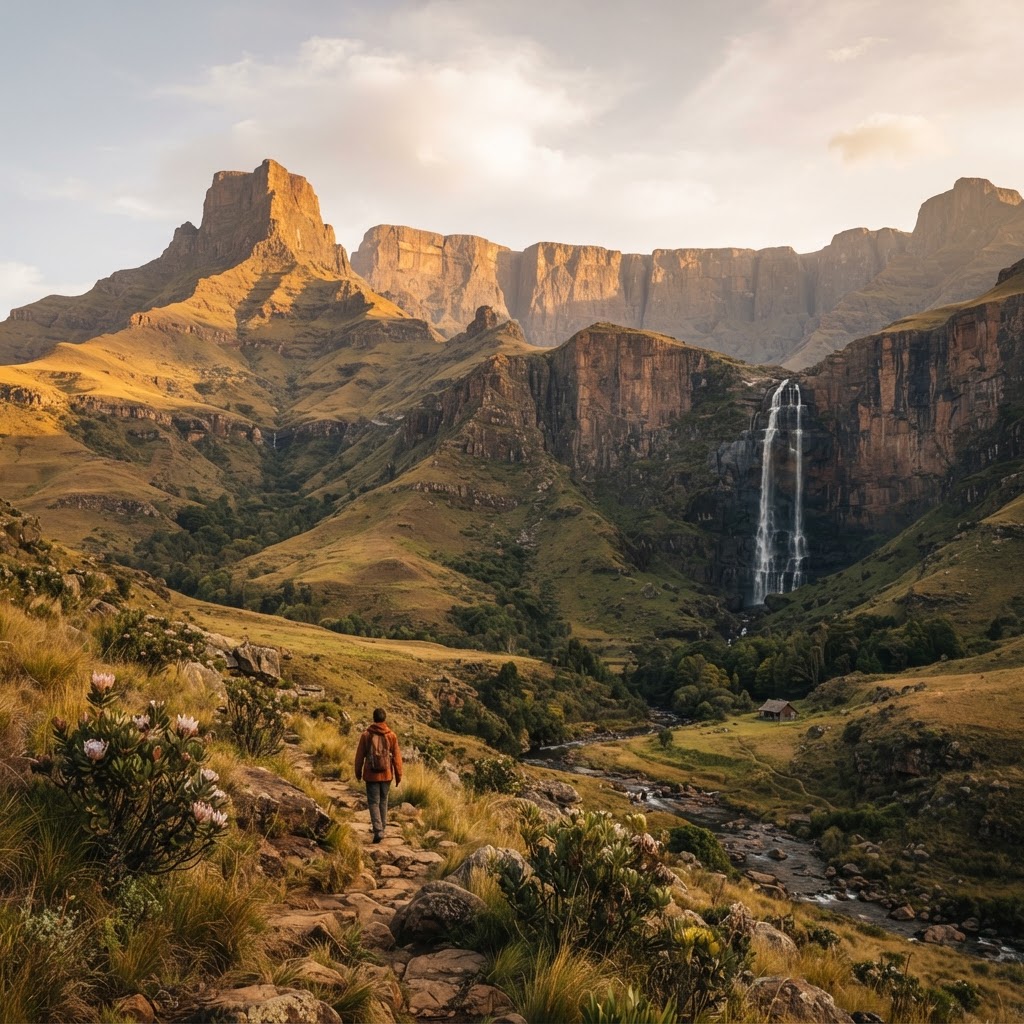
South Africa
Drakensberg, South Africa
Ancient basalt ramparts, plunging waterfalls, and world-class alpine wilderness.
Plan & book
Sort your Drakensberg, South Africa trip in one place.
We point you to the booking tools we'd actually use — live prices, no markup. Or let us build the day-by-day plan around you first, then book.
The Drakensberg (uKhahlamba, meaning 'Barrier of Spears' in Zulu) is a massive UNESCO World Heritage escarpment rising over 3,000 meters along the Lesotho border. Dividing into Northern, Central, and Southern regions, it offers dramatic mountain topography, thousands of ancient San rock art sites, and rugged wilderness, all accessible within a three- to four-hour drive from Durban or Johannesburg.
4 to 5 days
Best time
April to May (Autumn) for pristine hiking conditions and clear, golden weather.
Build your own trip with these prebuilt itineraries
Each one is a tested, day-by-day plan for Drakensberg, South Africa — start here, then make it yours.
7 Days Across Drakensberg: The Grand North-to-South Mountain Road Trip in Drakensberg
A multi-valley expedition splitting time between Northern peaks and Southern passes like Sani Pass
5 Days in Central Drakensberg: Peaks, San Rock Art & Family Outdoors in Drakensberg
A relaxed adventure base covering Cathedral Peak, Didima San rock art, canopy tours, and scenic valley walks
3 Days in Northern Drakensberg: The Amphitheatre & High Peaks in Drakensberg
Iconic day hikes, rugged trail running, and dramatic landscape photography centered on the Northern Escarpment
Go for iconic alpine scenery that rivals the Dolomites at a fraction of the cost and crowd density. From scaling the chain ladders to the summit of the Amphitheatre to viewing 2,000-year-old rock art at Main Caves, the range combines raw trekking with rich cultural heritage.
Where to stay
Getting there
Getting around
Food & drink
What it costs
Skip it if
Skip if you are looking for urban nightlife, luxury walk-to café scenes, or hate driving; it is also not ideal for travelers with limited physical mobility who cannot handle uneven trails.
When to go
Autumn brings stable atmosphere, virtually no afternoon lightning strikes, and crisp daytime temperatures that make long ascents bearable. Summer offers lush green valleys and surging waterfalls but carries severe, dangerous afternoon thunderstorms, while mid-winter brings dry footing paired with sub-zero summit freezes.
Autumn (April to May)
Crisp mornings, clear afternoon horizons, dry trail footing, and minimal thunderstorm danger. Peak conditions for serious routes.
Summer (December to February)
Valleys are violently green and Tugela Falls flows well, but relentless afternoon electric storms and heat necessitate 05:00 trail departures.
Winter (June to August)
Golden, dry grass and zero rain, but biting winds and sub-zero nights on the escarpment; higher passes frequently encounter snow and black ice.
Spring (September to November)
Wildflowers bloom and temperatures soften, but gusty winds and transitional storm systems make weather planning unpredictable.
Neighborhoods
Where you stay shapes the trip. Here's how to think about it.
Northern Drakensberg & Royal Natal
Dramatic vertical walls, amphitheater vistas, and quiet trailhead lodges tucked against the Lesotho escarpment.
Best for:Iconic cliff-face hiking, day trekkers, and landscape photographers
Don't miss:The Tugela Gorge day hike beneath the towering Amphitheatre wall.
Champagne Valley (Central Drakensberg)
The Berg's most developed pocket, balancing active hiking hubs with country farmstalls, breweries, and family resorts.
Best for:First-timers, families, and travelers who want dining options near trailheads
Don't miss:Starting early from the Monk's Cowl entrance gate for the hike up to Blindmans Corner.
Cathedral Peak
Secluded alpine sanctuary centered on a historic mountain resort surrounded by soaring free-standing basalt spires.
Best for:Serious ridge scramblers, peak baggers, and trail runners wanting trailheads right outside the door
Don't miss:The steep scramble up Baboon Rock or Cathedral Peak itself via the contour paths.
Giant's Castle Valley
A quiet, tranquil protected wilderness reserve famous for sheer sandstone overhangs and historical San heritage.
Best for:History and archaeology buffs, birdwatchers, and low-key walkers
Don't miss:The guided hourly walk to the Main Caves San rock art site.
Southern Drakensberg & Underberg
Rural dairy farming country, clear trout streams, and the gateway for climbing into Lesotho via high-clearance gravel passes.
Best for:4x4 adventurers, fly-fishers, and cross-border day trips into Lesotho
Don't miss:A 4x4 expedition up Sani Pass to drink a beer at the Highest Pub in Africa.
Destination intelligence
Updated 9/14/2026The structured record we plan every Drakensberg, South Africa itinerary from.
Walkability
Very low outside of isolated resort compounds; you must drive between trails, trailheads, and dining spots.
Transit quality
Poor / None; no practical public transit systems operate inside the park or valleys.
Car needed
Yes, absolutely essential for reaching trailheads and navigating between valleys.
Ideal duration
4 to 5 days
Minimum useful
2 to 3 days
Peak season
April to May (crisp, stable autumn hiking weather) and December to January (local summer holiday rush).
Shoulder season
September to November (spring wildflowers, warmer days, occasional rain).
Low season
June to August (winter freeze, potential summit snow, dry golden grass) and February (heavy summer thunderstorms).
Best for
Common mistakes
- Attempting to treat the entire Drakensberg as a single region—driving between the Northern and Southern valleys takes 4+ hours despite appearing close on a map.
- Underestimating sudden mountain weather shifts; afternoon thunderstorms bring lightning, plummeting temperatures, and dense fog even in mid-summer.
- Relying on a low-clearance budget rental sedan for trailheads that require gravel and pothole clearance.
- Failing to register in mountain rescue logs at trailheads before setting out on wilderness hikes.
Best nearby
See what a trip to South Africa actually costs. Travel Budget Co.
How to plan it
- Base yourself in Champagne Valley if you want farm stalls, craft bakeries, and multiple trailhead options within a 20-minute drive.
- Do not attempt to day-trip from the Central Berg to the Northern Berg; the detour out to the N3 highway burns 3 hours of daylight each way.
- Start all summer day hikes no later than 06:00 so you are off high ridges before the 14:00 lightning storms roll over the escarpment.
- Book an overnight at Witsieshoek Mountain Lodge if your priority is tackling the Sentinel Peak Chain Ladders at dawn.
- Pack a valid passport if you plan to do the Sani Pass drive, as you must clear South African border control before reaching the top.
Questions
Readymade itineraries
Start from a tested template — then make it yours.
Ready to book
Lock in your Drakensberg, South Africa trip
Everything in one place. We may earn a small commission — it never costs you more.
Plan a trip to Drakensberg, South Africa
Pick a length and we'll build a day-by-day plan around how you travel — neighborhoods clustered, budget-aware, and editable.
Get better at planning trips like this
Occasional notes on planning smarter — no spam, unsubscribe anytime.
Plan a trip to Drakensberg, South Africa
Turn this guide into a day-by-day plan built around your pace, your group, and your budget.
Build my Drakensberg, South Africa trip