Israel
Dead Sea, Israel
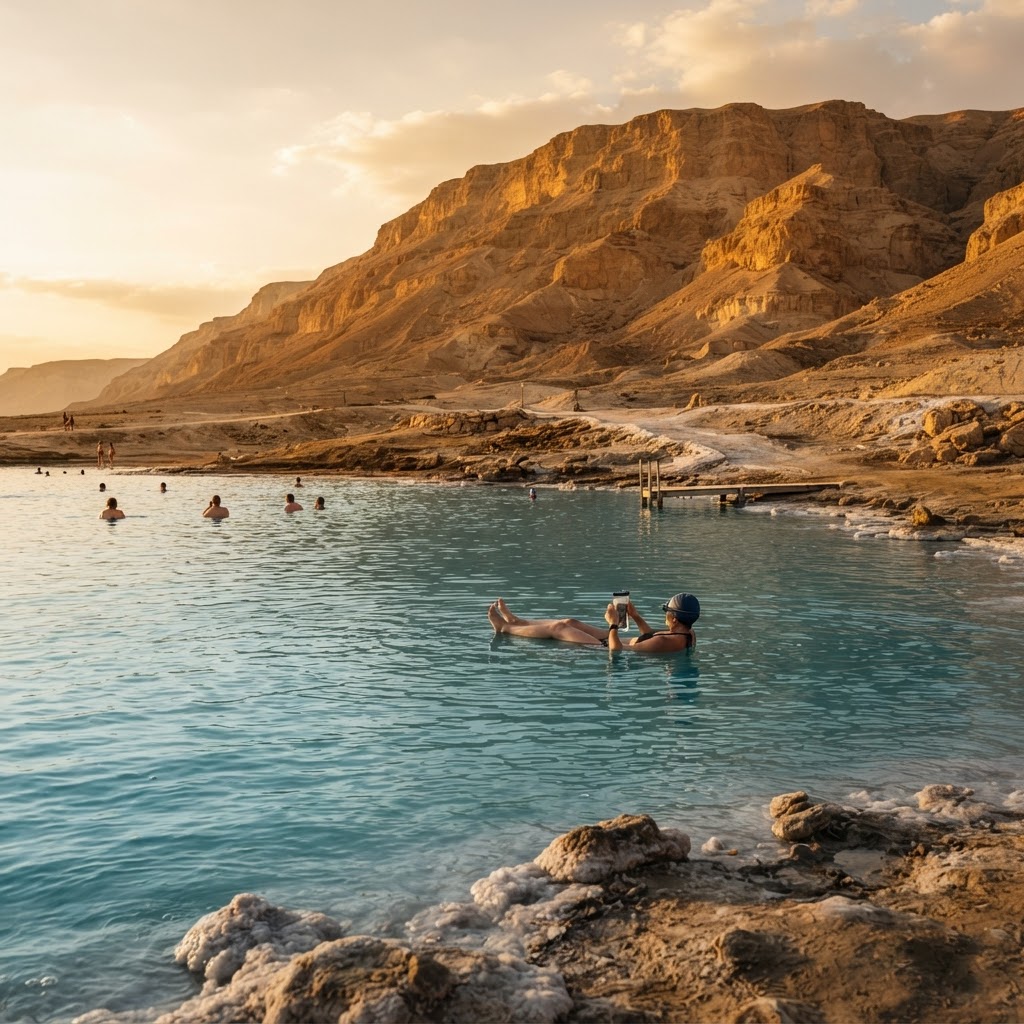
Buoyancy at the lowest elevation on earth, surrounded by harsh Judean cliffs.
Plan & book
Sort your Dead Sea, Israel trip in one place.
We point you to the booking tools we'd actually use — live prices, no markup. Or let us build the day-by-day plan around you first, then book.
The Dead Sea in Israel is a geological anomaly set in the tectonic trough of the Jordan Rift Valley, sitting more than 430 meters below sea level. Its hyper-saline water—roughly ten times saltier than the open ocean—creates total buoyancy where swimming is impossible and effortless floating is the only option. Along Route 90, the destination bifurcates between the developed resort strip of Ein Bokek and the rugged desert nature reserves of Ein Gedi and Masada. It functions best as an immersive, highly tactile 24- to 36-hour desert retreat rather than a conventional beach vacation.
2 days
Best time
March to April and October to November for daytime temperatures between 25°C and 28°C with warm floating conditions.
Build your own trip with these prebuilt itineraries
Each one is a tested, day-by-day plan for Dead Sea, Israel — start here, then make it yours.
3 Days Judean Desert Explorer in Dead Sea, Israel
In-depth desert geology, therapeutic spa relaxation, ancient history, and remote canyon trails via Route 90
2 Days Classic Desert & Wellness in Dead Sea, Israel
The ideal balance of therapeutic mineral soaking, Ein Gedi oasis hiking, and a classic Masada sunrise climb
1 Day Highlights & Float in Dead Sea, Israel
Quick essential stop featuring an iconic morning float at Ein Bokek and an afternoon visit to Masada fortress
To experience the weightlessness of 34% salinity brine, coat your skin in mineral-rich mud, and watch the Judean desert mountains glow pink across the water at dawn. Combining the float with sunrise at the ancient mountain citadel of Masada and fresh-water oasis hikes at Ein Gedi creates one of the most geographically dramatic overnight routes in the Middle East.
Where to stay
Getting there
Getting around
Food & drink
What it costs
Things to do
Book tours & tickets in Dead Sea, IsraelSkip it if
Skip staying overnight if you dislike self-contained, concrete resort compounds or expect a lively town with walkable nightlife and boutique dining. Day-trippers can easily experience the float in 2 hours en route between Jerusalem and the south. Also reconsider if traveling with toddlers who cannot follow strict rules about keeping hands and water away from their eyes.
When to go
Spring and autumn strike the essential balance between tolerable desert air and water warm enough to float comfortably. Summer temperatures regularly exceed 42°C (108°F), turning outdoor hikes into safety risks and the hyper-saline water into a scalding bath.
Peak (Mar–Apr & Oct–Nov)
Pleasant mid-20s Celsius heat, minimal rain, and prime hiking conditions in the wadis; book Ein Bokek hotels 4–6 weeks ahead.
Shoulder (Dec–Feb)
Crisp desert air (18–22°C) with occasional winter flash floods; Dead Sea water is brisk but floatable during sunny midday hours.
Low (Jun–Aug)
Intense thermal heat exceeding 40–44°C; outdoor trails like Masada close ascents as early as 7:00 AM, restricting movement entirely to mornings and air-conditioned spas.
Neighborhoods
Where you stay shapes the trip. Here's how to think about it.
Ein Bokek
Paved resort strip dominated by high-rise spa hotels and manicured mineral beaches.
Best for:Resort comfort, first-timers, spa seekers, and hassle-free beach access
Don't miss:The free lifeguarded public beach and paved promenade at first light before tour buses roll in.
Ein Gedi
Lush desert oasis anchored by an active agricultural kibbutz and rugged canyon reserves.
Best for:Hikers, nature lovers, and travelers wanting botanical quiet away from hotel towers
Don't miss:Wadi David's hidden freshwater waterfall trail within the Ein Gedi Nature Reserve.
Masada / Judean Desert Foothills
Barren, wind-swept cliff edge steeped in dramatic Roman-era history.
Best for:History enthusiasts, sunrise hikers, and road-trippers passing through the rift valley
Don't miss:Climbing the Snake Path at dawn to explore King Herod's Northern Palace before the desert heat hits.
Neve Zohar
Sleepy regional outpost with low-rise zimmers and uncrowded southern beaches.
Best for:Budget-minded travelers, independent drivers, and quiet seekers dodging Ein Bokek's crowds
Don't miss:Neve Zohar (Hamei Zohar) Beach for a significantly calmer, low-commercial float.
Destination intelligence
Updated 9/14/2026The structured record we plan every Dead Sea, Israel itinerary from.
Walkability
Low. Ein Bokek's hotel strip has a pleasant, flat beach promenade, but reaching regional sights like Masada or Ein Gedi requires driving along Route 90.
Transit quality
Moderate. Egged buses connect Jerusalem reliably on weekdays, but intra-region connections are infrequent, and service stops for Shabbat.
Car needed
Recommended. A car gives you the flexibility to reach Masada at sunrise and explore nature reserves without matching rigid desert bus timetables.
Ideal duration
2 days
Minimum useful
1 day
Peak season
October to November and March to April, offering warm 25-28°C desert days, comfortable water temperatures, and low humidity.
Shoulder season
December to February, bringing cooler air (18-22°C) and occasional winter rain, but still mild enough for daytime floating.
Low season
June to August, when blistering summer heat routinely exceeds 40-44°C (104-111°F), restricting all outdoor activity to early morning.
Best for
Common mistakes
- Shaving within 24 to 48 hours of your swim; micro-abrasions will burn intensely in the 34% brine.
- Splashing water or putting your head under; a single drop of Dead Sea water in your eyes causes blinding pain and requires immediate fresh-water flushing.
- Staying submerged too long; local dermatologists recommend limiting each soak to 15-20 minutes to prevent acute skin dehydration and mineral irritation.
- Attempting to swim in wild, unmarked shoreline areas; severe sinkholes (bolanot) make off-trail shorelines structurally dangerous.
- Relying on public transit on Friday afternoon or Saturday, when buses completely shut down for Shabbat.
Best nearby
How to plan it
- Stay in Ein Bokek if you want step-out hotel beach access; choose Kibbutz Ein Gedi if you prioritize botanical quiet and trailheads over resort malls.
- Pair your visit directly with Jerusalem (90-minute drive via Route 1) or as an overnight stop heading south through the Arava toward Eilat.
- Do not try to hike Masada's Snake Path and the full Wadi David trail on the same midday schedule; heat exhaustion sets in fast.
- Book national park trail entry slots online via the Israel Nature and Parks Authority for Ein Gedi reserves during peak spring and autumn weeks.
- Limit your Dead Sea float sessions to 15–20 minutes at a time, followed immediately by freshwater rinsing to prevent mineral irritation.
Questions
Readymade itineraries
Start from a tested template — then make it yours.
Ready to book
Lock in your Dead Sea, Israel trip
Everything in one place. We may earn a small commission — it never costs you more.
Plan a trip to Dead Sea, Israel
Pick a length and we'll build a day-by-day plan around how you travel — neighborhoods clustered, budget-aware, and editable.
Get better at planning trips like this
Occasional notes on planning smarter — no spam, unsubscribe anytime.
Plan a trip to Dead Sea, Israel
Turn this guide into a day-by-day plan built around your pace, your group, and your budget.
Build my Dead Sea, Israel trip