Ecuador
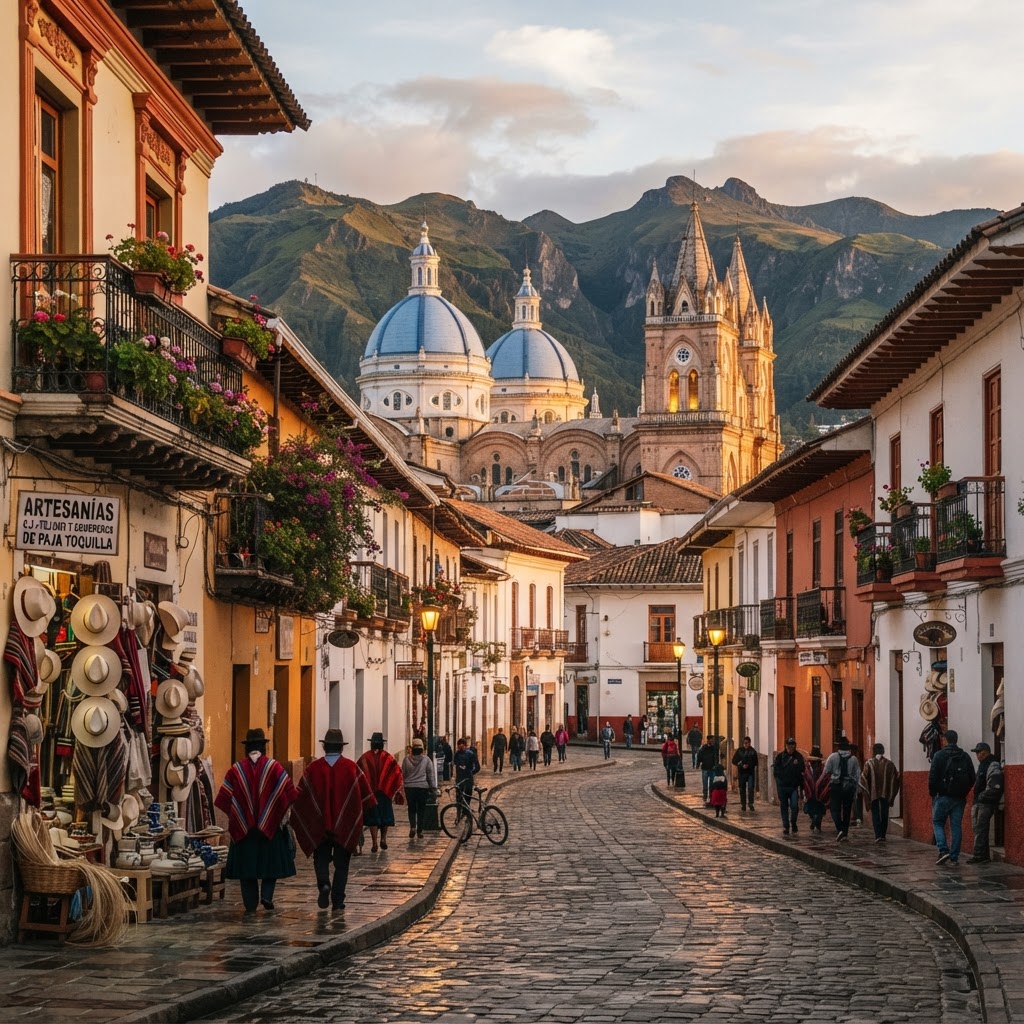
Cuenca, Ecuador
Colonial architecture, highland artisan heritage, and high-altitude páramo nature.
Plan & book
Sort your Cuenca, Ecuador trip in one place.
We point you to the booking tools we'd actually use — live prices, no markup. Or let us build the day-by-day plan around you first, then book.
Perched at 2,560 meters along the Tomebamba River, Cuenca is Ecuador's architectural and cultural centerpiece. Known for its UNESCO-listed historic core of whitewashed colonial façades and blue-tiled cathedral domes, it pairs an unhurried highland pace with sophisticated food and direct access to high-altitude moorlands.
4 days
Best time
June through September for crisp highland trekking, or early November for street festivals and craft fairs.
Build your own trip with these prebuilt itineraries
Each one is a tested, day-by-day plan for Cuenca, Ecuador — start here, then make it yours.
5 Days in Cuenca: Craft Heritage & Slow Highlands Living in Cuenca
Immersive cultural and artisan exploration including silver, toquilla straw weaving, and nearby craft village day trips
4 Days in Cuenca: Alpine Páramo & High-Altitude Trekking in Cuenca
Outdoors and active focus combining city acclimatization with rugged high-altitude hiking in Cajas National Park
3 Days in Cuenca: Colonial Charm & Culture in Cuenca
First-timer highlights focusing on Centro Histórico, cathedral domes, El Barranco river walks, and artisan markets
Cuenca is the rare Andean heritage city where preservation meets everyday livability. It offers architectural grandeur without the chaotic traffic and sprawl of Quito, world-class woven toquilla straw craftmanship, and immediate access to the glacial páramo of Cajas National Park.
Where to stay
Getting there
Getting around
Food & drink
What it costs
Things to do
Book tours & tickets in Cuenca, EcuadorSkip it if
Travelers with under a week in Ecuador who want to prioritize the Galápagos Islands, Amazon basin jungle lodges, or high-octane adventure sports like those in Baños. Skip Cuenca if you dislike slow-paced cultural touring or struggle on cobblestone inclines.
When to go
Highland summer (June–September) brings clear morning skies and dry trails ideal for Cajas National Park, though night temperatures dip toward 45°F. Visiting during the early November Independence holidays yields Ecuador's finest artisan market atmosphere, balanced by midday clouds and premium lodging rates.
Peak (June–September)
Driest months with the most consistent sunshine for exploring páramo trails and historic rooftops, though nighttime gets chilly; book boutique hotels a month in advance.
Shoulder (October–November)
Crisp mornings alternating with afternoon drizzle; the first week of November sees the massive Fiestas de Cuenca artisan celebrations that require booking weeks ahead.
Low (February–April)
Wettest period of the year with routine afternoon downpours; morning sightseeing remains viable, hotel rates dip, and museum corridors are quiet.
Neighborhoods
Where you stay shapes the trip. Here's how to think about it.
Centro Histórico
Cobblestone streets lined with Spanish colonial mansions, baroque church towers, and cloistered plazas.
Best for:First-timers, architecture purists, and travelers prioritizing walkability to major museums and cathedral squares.
Don't miss:Climbing to the terrace of the Catedral de la Inmaculada Concepción for panoramic views across the domes and Parque Calderón.
El Barranco
Hanging gardens, stone staircases, and historic multi-tiered houses overlooking the rushing Tomebamba River.
Best for:Couples, photographers, and visitors wanting old-town access with riverside open space and scenic dining terraces.
Don't miss:Walking Calle Larga above the riverbank down the Escalinatas to Puente Roto and the Pumapungo archeological terraces.
San Sebastián
A quiet, bohemian artisan corner anchored by a tree-shaded square and independent workshops.
Best for:Slow travelers, contemporary art fans, and anyone wanting a low-noise old-town stay.
Don't miss:Browsing cutting-edge regional exhibits at Museo Municipal de Arte Moderno right on the corner of Plaza San Sebastián.
El Vergel & Yanuncay
Leafy, residential modern living centered around linear riverfront greenways and wide avenues.
Best for:Longer-term stays, remote professionals, families, and travelers who need modern elevator hotels over colonial character.
Don't miss:A morning walk through Parque de la Madre followed by artisan coffee along the Yanuncay river corridor.
Destination intelligence
Updated 9/14/2026The structured record we plan every Cuenca, Ecuador itinerary from.
Walkability
High: Centro Histórico and El Barranco are completely pedestrian-navigable, though sidewalks can be narrow and cobblestones require sturdy flat shoes.
Transit quality
High: The modern Tranvía system connects the airport, bus terminal, and city center cleanly and punctually, complemented by abundant, inexpensive registered taxis.
Car needed
No: Having a car in Cuenca is an active inconvenience. Day trips to Cajas or artisan villages are simpler via organized guide, shared shuttle, or private driver.
Ideal duration
4 days
Minimum useful
2 days
Peak season
June through September (dry highland summer with clearer skies for trekking and mountain photography).
Shoulder season
October through November (moderate showers, major city celebrations during Independence of Cuenca festivities in early November).
Low season
February through April (rainiest months, though rain typically takes the form of afternoon showers rather than full washouts).
Best for
Common mistakes
- Underestimating altitude sickness: Cuenca sits at 2,560m (8,400 ft) and Cajas hikes reach over 4,000m (13,100 ft); allow 24 hours of rest before strenuous trekking.
- Renting a rental car to explore the historic quarter: one-way streets, tram restrictions, and absent street parking turn driving into a liability.
- Visiting on a Sunday expecting full market bustle; many mom-and-pop workshops, cafes, and museums operate limited hours or close entirely.
- Packing only warm-weather clothing: highland temperatures drop sharply into the 40s and 50s Fahrenheit (8-12°C) as soon as the sun goes down.
Best nearby
See what a trip to Ecuador actually costs. Travel Budget Co.
How to plan it
- Base yourself in Centro Histórico or El Barranco if you want to walk to dinner and bakeries without ever relying on cabs.
- Do not book a high-altitude hike in Cajas National Park on day one; spend 48 hours acclimatizing in town at 2,560 meters first.
- Reserve rooms facing interior courtyards in colonial boutique hotels to avoid early-morning church bells and diesel bus routes along main avenues.
- Group the silversmith town of Chordeleg, the weaver workshops of Gualaceo, and the pottery village of San Bartolomé into a single private day tour rather than relying on disjointed public regional buses.
- Plan museum and indoor market visits for 2:00 PM onwards, when afternoon Andean cloudbursts frequently sweep through the valley.
Questions
Readymade itineraries
Start from a tested template — then make it yours.
Ready to book
Lock in your Cuenca, Ecuador trip
Everything in one place. We may earn a small commission — it never costs you more.
Plan a trip to Cuenca, Ecuador
Pick a length and we'll build a day-by-day plan around how you travel — neighborhoods clustered, budget-aware, and editable.
Get better at planning trips like this
Occasional notes on planning smarter — no spam, unsubscribe anytime.
Plan a trip to Cuenca, Ecuador
Turn this guide into a day-by-day plan built around your pace, your group, and your budget.
Build my Cuenca, Ecuador trip