Botswana
Chobe National Park, Botswana
Dense elephant corridors, riverboat game viewing, and raw savannah predator drama
Plan & book
Sort your Chobe National Park, Botswana trip in one place.
We point you to the booking tools we'd actually use — live prices, no markup. Or let us build the day-by-day plan around you first, then book.
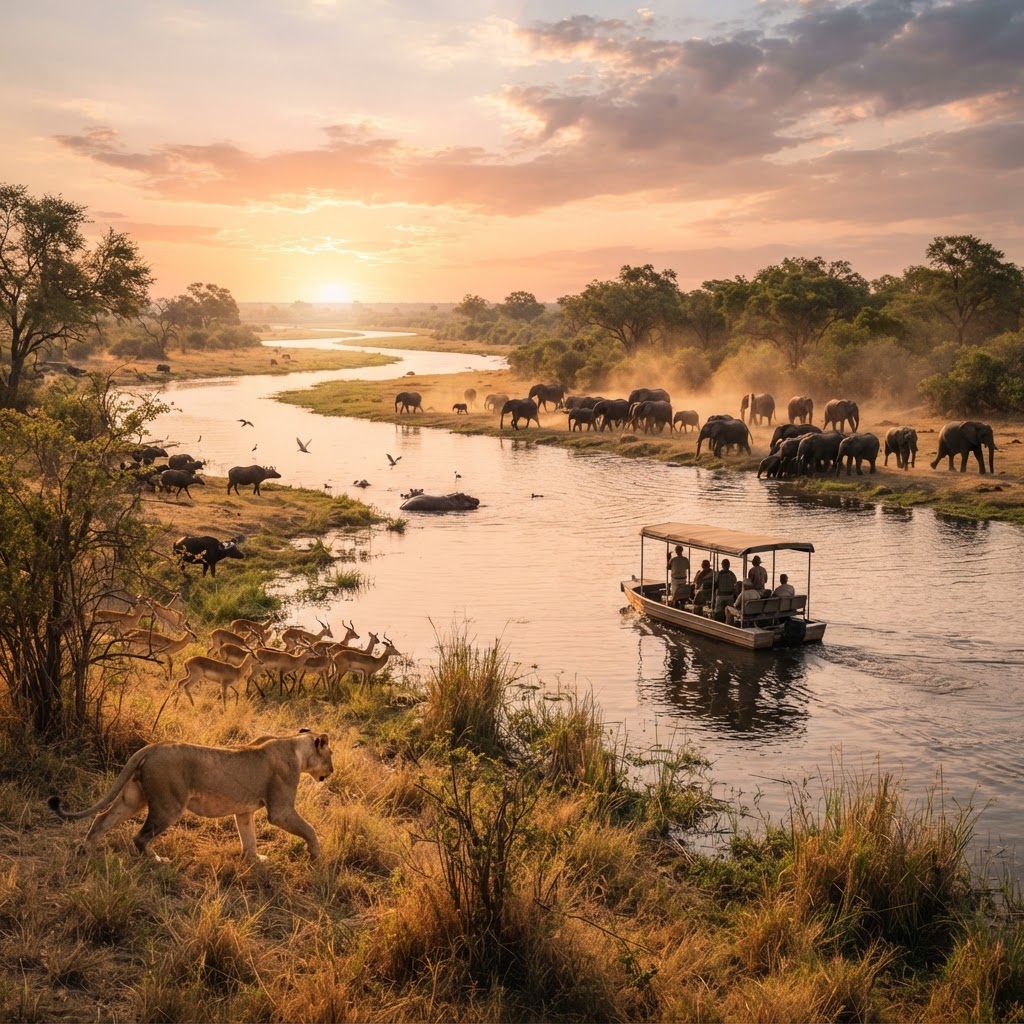
Perched at Botswana's northern border along the Zambezi four-corners region, Chobe National Park is home to one of Africa's highest concentrations of wild elephants. Unlike the flight-only luxury concessions of the Okavango Delta, Chobe combines land-based game drives with water safaris on the Chobe River, offering eye-level views of swimming herds, pods of hippos, and sunbathing crocodiles.
3 days
Best time
August to October delivers unmatched elephant density, dry skies, and clear river action.
Build your own trip with these prebuilt itineraries
Each one is a tested, day-by-day plan for Chobe National Park, Botswana — start here, then make it yours.
5 Days: Chobe & Savuti Wild 4x4 Expedition in Chobe National Park
Deep-sand wilderness adventure bridging the lush riverfront with the remote predator heartland of Savuti
3 Days: The Classic Chobe Safari in Chobe National Park
Balanced mix of land-based 4x4 game drives, water-level photographic boat cruises, and prime dawn and dusk predator tracking
2 Days: The Chobe Riverfront Express in Chobe National Park
River safaris, massive elephant herds, and accessible wildlife viewing ideal as an extension to Victoria Falls
Chobe provides one of Africa's most reliable and dramatic wildlife spectacles without the steep logistical friction or fly-in-only price tag of deeper delta concessions. The pairing of afternoon riverboat safaris on the Chobe River with open 4x4 game drives through the riparian forest lets you observe large elephant herds drinking and swimming at eye level, alongside Cape buffalo congregations and resident predator prides.
Where to stay
Getting there
Getting around
Food & drink
What it costs
Skip it if
Skip Chobe if you demand complete solitude and zero other safari vehicles in your sightline—the Serondela Riverfront can feel crowded near major lion sightings during peak dry season. Also skip it if you are looking for walking-only bush safaris or nightlife-driven urban escapes.
When to go
Dry winter conditions force thousands of elephants and cape buffalo directly onto the Chobe River and Savuti waterholes as inland pans dry up completely. You trade scorching October midday temperatures and higher park gate traffic for the easiest, most concentrated predator and megafauna sightings of the year.
Peak (July to October)
Bone-dry bush, cold mornings warming into intense October heat, high lodge rates, and peak vehicle density along the riverfront tracks.
Shoulder (May to June & November)
May brings cooler air and thinning vegetation; November sees the first dramatic afternoon thunderstorms and kicking off the zebra migration.
Low / Green (December to April)
Lush landscapes, intense afternoon rains, dispersed wildlife, exceptional birding with over 450 species, and the lowest lodge pricing.
Neighborhoods
Where you stay shapes the trip. Here's how to think about it.
Chobe Riverfront (Serondela)
Buzzing, accessible floodplain rimmed with safari skiffs and dense herds
Best for:First-timers, photographers, short stays, and Victoria Falls cross-trippers
Don't miss:Late afternoon boat cruise skirting Sedudu Island to watch elephant herds swim trunk-to-tail
Kasane Town Hub
Laid-back gateway town where warthogs graze street medians outside safari outfitters
Best for:Budget-conscious travelers, independent planners, and day-trip launchpads
Don't miss:Booking shared river cruises directly off the jetty from lodges near the Kazungula border
Savuti Marsh
Rugged, windswept wilderness dominated by dead camelthorn stands and predator drama
Best for:Experienced safari-goers, seasoned self-drivers, and lion-tracker enthusiasts
Don't miss:Tracking the Savuti lion prides hunting buffalo herds around the dry marsh and waterholes
Linyanti Swamp Concession
Secluded, ultra-private waterways echoing Okavango exclusivity without delta fly-in costs
Best for:Luxury travelers, honeymooners, and wild dog sightings
Don't miss:Off-road tracking in open game vehicles through private riverine woodlands
Nogatsaa / Mababe Wilderness
Arid, untamed claypans where waterholes draw immense solitude between Kasane and Savuti
Best for:Self-sufficient 4x4 overlanders avoiding crowds
Don't miss:Stationary afternoon game viewing from wooden hides over pumped pans like Kwikamba
Destination intelligence
Updated 9/14/2026The structured record we plan every Chobe National Park, Botswana itinerary from.
Walkability
Low. Wildlife roams freely between Kasane and the park borders; walking outside secured lodge grounds is unsafe and impractical.
Transit quality
Low. There is no public transit inside the reserve; exploration requires organized safari game drives, river skiffs, or rented 4x4s.
Car needed
Optional. Guided lodge game drives eliminate the need for a rental, but independent travelers traversing Savuti need an equipped 4x4.
Ideal duration
3 days
Minimum useful
1 day
Peak season
July to October (Dry winter season with massive wildlife concentrations along the riverfront, cool mornings, and thin brush)
Shoulder season
May to June and November (May brings thinning bush; November marks the arrival of rains and the zebra migration start)
Low season
December to April (Green season with afternoon rain, dense vegetation, dispersed herds, high bird density, and lower lodge rates)
Best for
Common mistakes
- Doing only a rushed 1-day day trip from Victoria Falls and missing early morning and late evening animal movement
- Attempting to self-drive from Kasane south to Savuti without a true 4x4, deep-sand driving experience, and recovery gear
- Failing to layer clothing for open-vehicle morning drives in winter (June–August), when temperatures drop near freezing before sunrise
- Relying on Kasane town tap water without filtering or sticking to treated camp supplies
Best nearby
See what a trip to Botswana actually costs. Travel Budget Co.
How to plan it
- Stay in Kasane if you want budget lodge flexibility and walk-on boat jetty access, but pick inside-the-park camps like Chobe Game Lodge to skip morning park-gate queues.
- Pair Chobe with a 2-night stay at Victoria Falls across the border via Kazungula Bridge rather than rushing it on a grueling single-day bus tour.
- Do not attempt to drive a rental two-wheel drive vehicle beyond the paved entrance gates; deep Kalahari sand immediately traps non-4x4 vehicles in the Serondela and Savuti loops.
- Reserve dedicated photographic boats with swivel gimbal mounts 3 to 4 months ahead if low-angle wildlife imagery is your trip priority.
Questions
Readymade itineraries
Start from a tested template — then make it yours.
Ready to book
Lock in your Chobe National Park, Botswana trip
Everything in one place. We may earn a small commission — it never costs you more.
Plan a trip to Chobe National Park, Botswana
Pick a length and we'll build a day-by-day plan around how you travel — neighborhoods clustered, budget-aware, and editable.
Get better at planning trips like this
Occasional notes on planning smarter — no spam, unsubscribe anytime.
Plan a trip to Chobe National Park, Botswana
Turn this guide into a day-by-day plan built around your pace, your group, and your budget.
Build my Chobe National Park, Botswana trip