Mexico
Cabo San Lucas Itinerary: How Many Days + Sample Plans
Dramatic granite headlands, swimmable desert coves, and high-octane coastal escapes.
Traveler rating
Loved by pelagic scuba divers and whale watchers.
Plan & book
Sort your Cabo San Lucas trip in one place.
We point you to the booking tools we'd actually use — live prices, no markup. Or let us build the day-by-day plan around you first, then book.
Pick your trip length
How many days do you need in Cabo San Lucas?
Each of these opens a full day-by-day plan you can make your own.
- 2 days — Two days — the essentials, no rushing.
- 3 days — Three days — the icons plus one neighborhood.
- 4 days — Four days — a full city without sprinting.
- 5 days — Five days — room for a day trip.
- 7 days — A week — the city at a human pace.
- With Kids trip — Shorter days, earlier dinners, what to skip.
- For Couples trip — Two-person pacing with evenings built in.
- Solo trip — A plan that works well on your own.
- Food trip — Meals and markets as the anchors.
- Outdoors trip — Nature, walks and open air.
- Culture trip — History, museums and the streets around them.
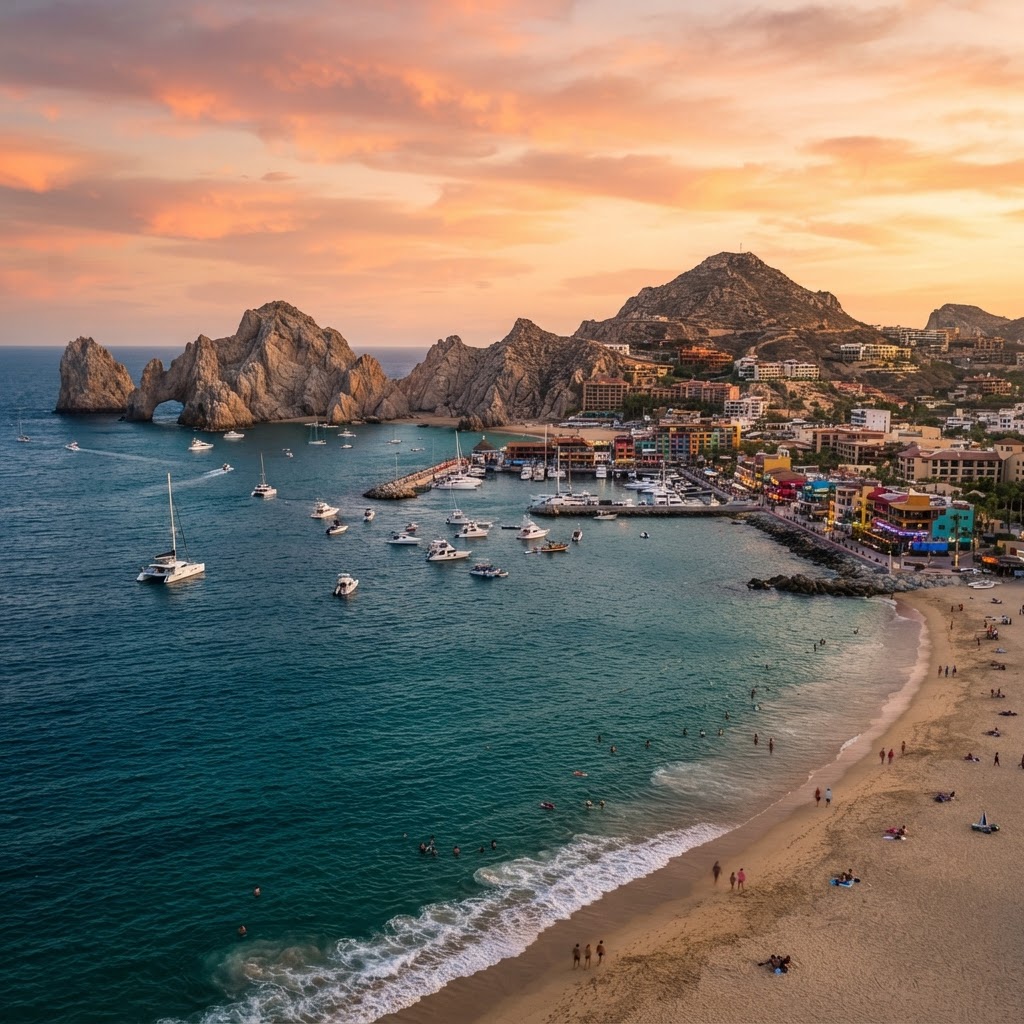
Perched at the southern tip of the Baja California Peninsula where the Sea of Cortez meets the Pacific Ocean, Cabo San Lucas is defined by rugged coastal geography and relentless kinetic energy. Once an isolated fishing hamlet, it has transformed into a dual-personality hub: one half is centered around high-energy beach clubs and marina nightlife, while the other features cliffside enclaves, world-class pelagic diving, and accessible desert shorelines.
4-5 days
Best time
May to June, or late November to early December.
Build your own trip with these prebuilt itineraries
Each one is a tested, day-by-day plan for Cabo San Lucas — start here, then make it yours.
7 Days of Baja Coastal Road Tripping and Luxury in Cabo San Lucas
Expansive road-trip itinerary with a rental car, balancing cliffside luxury with day trips along Highway 1 to San José del Cabo, Todos Santos, and East Cape surf breaks
5 Days of Pelagic Ocean and Desert Adventure in Cabo San Lucas
Active outdoors itinerary focused on marine wildlife encounters, Corridor cove snorkeling, sportfishing charters, and off-road desert trail exploration
3 Days of Coastal Energy and Marine Life in Cabo San Lucas
Classic highlights featuring Land's End boat excursions, Médano Beach clubs, downtown dining, and vibrant nightlife without needing a rental car
Cabo San Lucas offers instant access to rare marine encounters, dramatic geological landmarks like El Arco, and prime deep-sea fishing right out of a compact harbor. Unlike sleepy coastal retreats, it pairs reliable dry desert sunshine with swimmable coves such as Playa El Médano and Chileno Bay, supported by a polished culinary scene extending well beyond resort walls.
Where to stay
Getting there
Getting around
Food & drink
What it costs
Things to do
Book tours & tickets in Cabo San LucasSkip it if
Skip Cabo San Lucas if you are looking for an authentic, colonial Mexican town with quiet plazas, cobblestone art walks, and low-key charm; for that experience, San José del Cabo, Todos Santos, or Loreto are vastly better fits.
When to go
These shoulder windows give you comfortable temperatures in the low-to-mid 80s°F and calm seas while skipping the suffocating summer humidity and peak winter crowds. Winter offers peak whale watching, but shoulder seasons deliver significantly better room rates and uncrowded beaches.
Peak (December to April)
Crisp desert evenings, daytime highs around 78–82°F, and thousands of migrating humpback whales. Tradeoffs are peak hotel rack rates, busy marina slips, and spring break crowds flooding Downtown in March and April.
Shoulder (May to June & October to November)
May to June offers quiet beaches and warm, clear waters before storms roll in. Late October and November bring prime underwater visibility for pelagic diving and the high-energy Bisbee's fishing tournaments.
Low (July to September)
Intense desert heat, high humidity, and the core of the Eastern Pacific tropical storm season, particularly in September. Great resort discounts, but frequent afternoon downpours and humid conditions make outdoor midday exploration draining.
Neighborhoods
Where you stay shapes the trip. Here's how to think about it.
Playa El Médano
High-octane, open-air beach club strip with non-stop music, vendors, and prime water views.
Best for:First-timers wanting swimmable beach access, social energy, and walk-to-everything convenience.
Don't miss:Snagging a beachfront table for midday ceviche and Pacificos before the live DJ sets peak in the afternoon.
The Marina & Downtown (Centro)
Bustling yacht harbor lined with charter slips, dive shops, casual cantinas, and rowdy late-night bars.
Best for:Anglers, scuba divers, boat-trippers, and nocturnal revelers wanting to bypass taxi queues.
Don't miss:The early-morning charter fleet departure along the boardwalk, followed by fish tacos inland off Plaza Amelia Wilkes.
Pedregal
Gated, cobblestone-draped cliffside enclave of luxury villas and dramatic Pacific-facing lookouts.
Best for:Luxury travelers, families, and private groups demanding seclusion, cliff views, and high-end residential calm.
Don't miss:Sunset cocktails on the oceanfront cliffs, listening to the crushing surf on the unswimmable Pacific beach.
Tourist Corridor (Corredor Turístico)
Sprawling 20-mile desert-meets-ocean highway flanked by self-contained ultra-luxury resorts and golf links.
Best for:Resort-centric travelers, honeymooners, and golfers wanting polished tranquility over street noise.
Don't miss:Packing your own snorkel gear for an early morning swim at Bahía Santa María before catamaran excursions arrive.
Destination intelligence
Updated 10/6/2026The structured record we plan every Cabo San Lucas itinerary from.
Walkability
Moderate within the Marina and central downtown grid, but poor across outer cliff neighborhoods and the expansive Tourist Corridor.
Transit quality
Basic. Public buses (Ruta del Desierto) reliably connect Cabo San Lucas to San José del Cabo along Highway 1, but most travelers rely on Uber, private transfers, or rental cars.
Car needed
Optional if you remain based around the Marina and Playa El Médano; essential if you plan to visit outlying Corridor coves, Todos Santos, or East Cape surf spots.
Ideal duration
4-5 days
Minimum useful
3 days
Peak season
December to April (cooler, dry desert weather, peak humpback whale migration, and high winter crowd volume).
Shoulder season
May to June and October to November (warm waters, lighter shoulder crowds, and active sportfishing seasons).
Low season
July to September (intense summer heat, elevated humidity, and peak tropical storm/hurricane potential).
Best for
Common mistakes
- Assuming every beach is safe for swimming; powerful Pacific undertows and shorebreaks make beaches like Playa Solmar and Sunset Beach dangerous for swimming.
- Stopping to talk to the aggressive timeshare reps inside the airport arrivals corridor before reaching the actual transport curb.
- Relying solely on street taxis, which charge steep fixed cash rates often double or triple the cost of Uber or pre-arranged shuttles.
- Staying strictly on an all-inclusive resort meal plan and missing the independent regional culinary scene in downtown Cabo and the Corridor.
Best nearby
See what a trip to Mexico actually costs. Travel Budget Co.
How to plan it
- Stay in the Marina or Médano perimeter if you prioritize walking to dinners and avoiding 20-minute highway cab rides every evening.
- Pair high-energy Cabo San Lucas with a quiet, culinary-focused overnight in San José del Cabo or Todos Santos instead of spending all five days in one resort.
- Do not try to combine an offshore scuba charter and a Todos Santos day trip on the same day; highway driving after heavy morning diving is exhausting.
- Book dinner at clifftop venues like Sunset Monalisa or El Farallon two to four weeks out if you want a table timed exactly for the Pacific sunset.
- Take an early morning water taxi to El Arco and Land's End before 9:00 AM to beat the wake from large party catamarans and cruise tenders.
Questions
Readymade itineraries
Start from a tested template — then make it yours.
Ready to book
Lock in your Cabo San Lucas trip
Everything in one place. We may earn a small commission — it never costs you more.
Plan a trip to Cabo San Lucas
Pick a length and we'll build a day-by-day plan around how you travel — neighborhoods clustered, budget-aware, and editable.
Get better at planning trips like this
Occasional notes on planning smarter — no spam, unsubscribe anytime.
Plan a trip to Cabo San Lucas
Turn this guide into a day-by-day plan built around your pace, your group, and your budget.
Build my Cabo San Lucas trip