French Polynesia
Bora Bora
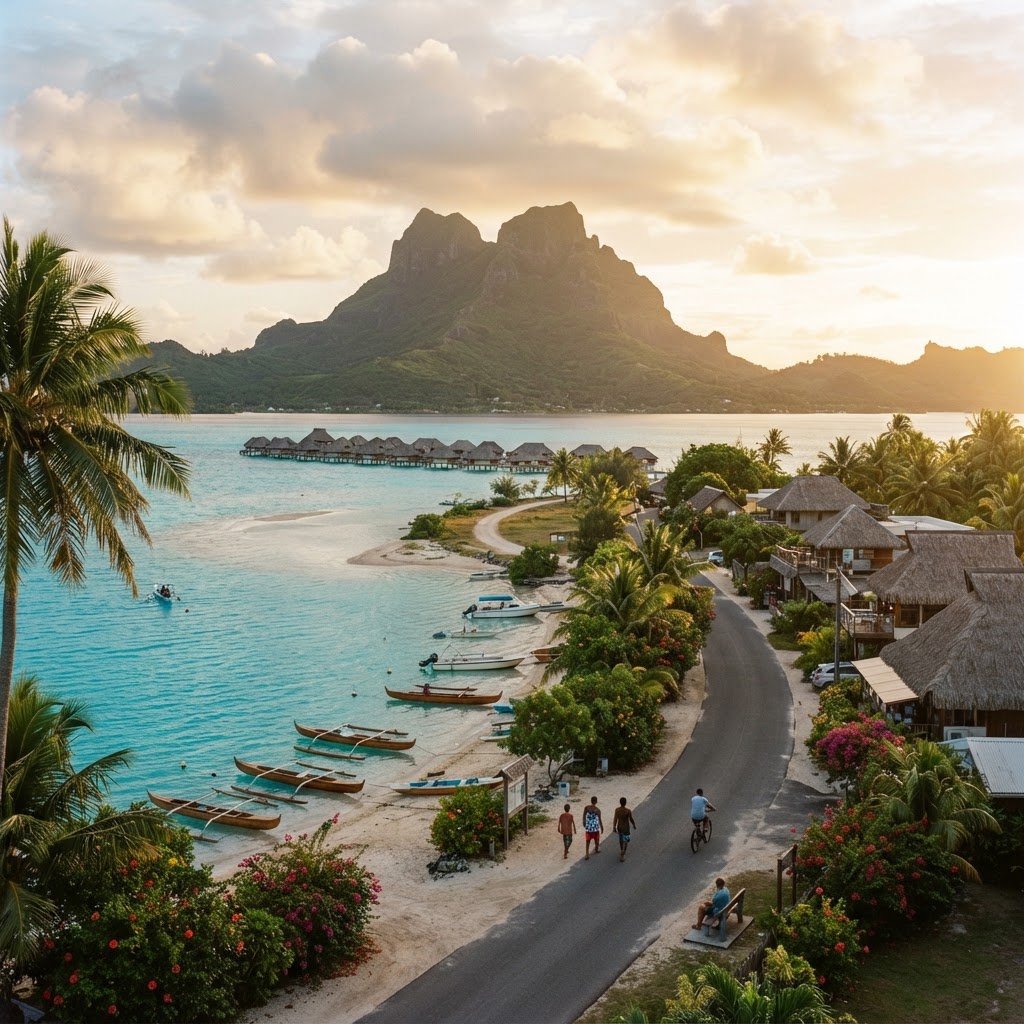
A dramatic volcanic caldera fringed by electric turquoise lagoons and motu sanctuaries.
Plan & book
Sort your Bora Bora trip in one place.
We point you to the booking tools we'd actually use — live prices, no markup. Or let us build the day-by-day plan around you first, then book.
Bora Bora is an iconic South Pacific destination anchored by the jagged basalt tower of Mount Otemanu and circled by a ring of barrier reef motus. While known globally for luxury overwater bungalows, its true draw is one of the clearest and most biologically active lagoons on earth. It is an intentional, slow-paced sanctuary designed for water-centric seclusion rather than bustling nightlife or urban sightseeing.
5 to 6 days
Best time
May to October for dry air and flawless underwater visibility; November or April if balancing budget and crowd density.
Build your own trip with these prebuilt itineraries
Each one is a tested, day-by-day plan for Bora Bora — start here, then make it yours.
7 Days Slow-Paced Lagoon Immersion in Bora Bora
Relaxed and immersive dual-stay splitting time between main island local life and an isolated outer motu sanctuary
5 Days of Marine Adventures & Island Culture in Bora Bora
Comprehensive first-timer itinerary balancing coral garden diving, ray encounters, and mainland exploration around Vaitape and Matira Beach
Go for the marine topography: a sheltered, multi-hued lagoon where you can swim alongside stingrays, blacktip reef sharks, and eagle rays within a natural amphitheater framed by dramatic volcanic spires. The motu-based geography provides total retreat from vehicular traffic and urban stress, offering an unmatched standard of water-focused hospitality.
Where to stay
Getting there
Getting around
Food & drink
What it costs
Things to do
Book tours & tickets in Bora BoraSkip it if
Budget backpackers, travelers craving walkable historic towns, and those who need bustling nightlife or varied daily urban culture. If you get restless without road trips, hiking options, and diverse street food, base yourself on Moorea or Tahiti instead.
When to go
The dry winter season brings consistent trade winds, minimal rainfall, and crisp 80-foot lagoon clarity, but resort villa pricing reaches its absolute ceiling. The shoulder months of April and November shave 20–30% off high room rates while avoiding the persistent, heavy tropical downpours and oppressive humidity of mid-summer.
Peak (May to October)
Crisp sunny weather, low humidity, and excellent diving conditions; expect peak rack rates and required 6- to 9-month advance bookings.
Shoulder (April & November)
Transitional weather featuring warm water, occasional passing showers, noticeably lower villa rates, and calmer resort decks.
Low (December to March)
Tropical summer marked by high humidity, midday cloudbursts, and mosquito activity; the sharpest discounts, though water visibility can suffer.
Neighborhoods
Where you stay shapes the trip. Here's how to think about it.
Eastern Outer Motus (Motu Tehotu to Motu Piti Aau)
Ultra-exclusive overwater enclave with front-row caldera panoramas.
Best for:Honeymooners, luxury spenders, and travelers prioritizing postcard views of Mount Otemanu.
Don't miss:Watching the sunset shift the basalt face of Mount Otemanu into deep violet straight from your resort deck.
Matira Point & Southern Tip
Lively coastal shelf with soft public sands and genuine barefoot island charm.
Best for:Independent travelers, beach walkers, and those looking to dine off-resort without water taxi fees.
Don't miss:Wading out across the shallow sandbars of Plage Matira at low tide before an unpretentious poisson cru lunch at Snack Matira.
Vaitape
Sleepy administrative hub and harbor center driven by local rhythms.
Best for:Practical errands, ferry arrivals, sourcing local snacks, and certified black pearl shopping.
Don't miss:The Sunday morning roadside stands selling fresh hot firi firi (Tahitian donuts) near the municipal boat dock.
Northern Motus (Motu Mute & Motu Tane)
Remote lagoon frontier ringed by quiet barrier reefs and translucent shallows.
Best for:Seclusion seekers, private island buyouts, and travelers wanting swift transfers right off the airstrip.
Don't miss:Snorkeling the shallow pass flats near the airport reef where spotted eagle rays glide across white sand patches.
Anau & the East Coast
Quiet, untouristed residential fringe tucked beneath sheer green cliffs.
Best for:Cultural travelers and scuba divers targeting reef passes rather than manicured resort beaches.
Don't miss:An early-morning dive at the Anau manta ray cleaning station inside the protected lagoon basin.
Destination intelligence
Updated 9/14/2026The structured record we plan every Bora Bora itinerary from.
Walkability
Very Low (Resorts are isolated on islets; the main island requires bikes, scooters, or vehicle hire to navigate).
Transit quality
None (No municipal bus system; logistics rely purely on resort shuttle boats, water taxis, and pre-booked taxis).
Car needed
Optional (Helpful for a half-day island loop via scooter or small rental car, but unnecessary if staying on a motu resort).
Ideal duration
5 to 6 days
Minimum useful
3 days
Peak season
May to October (Dry winter season with minimal rainfall, breezy trade winds, and prime underwater visibility; highest hotel pricing).
Shoulder season
April and November (Transitional weather with moderate rainfall risk, lower crowd density, and better room availability).
Low season
December to March (Warm, humid summer with frequent tropical rain showers and occasional storms; best pricing for villa bookings).
Best for
Common mistakes
- Assuming you can easily walk into town from your luxury resort; motu properties require scheduled boat transfers that cost steep round-trip fees after daytime hours.
- Failing to factor in food, beverage, and boat transfer costs when booking room rates, which often double your daily spend.
- Booking the rainy season (December to March) solely for lower hotel rates without preparing for tropical squalls, prolonged cloud cover, and choppy lagoon conditions.
- Spending your entire stay inside the resort compound and missing the public culture, food trucks, and history around Vaitape and Matira.
Best nearby
How to plan it
- Split your stay: spend 2 nights in a garden pension near Matira Beach to explore local food and dive spots cheaply, then splurge on 3 nights in an overwater villa on an eastern motu.
- Book overwater villas 8 to 11 months in advance if targeting peak dry season (June to September), especially for Mount Otemanu view categories.
- Do not book a full-board meal plan upfront; lock in daily breakfast with your room rate, then retain the freedom to lunch casually on excursions or book dinner transfers to mainland tables.
- Dedicate one full day to a guided motorized outrigger lagoon tour that covers both the reef pass shark encounters and coral garden drifts outside the motus.
- Pair Bora Bora with a contrasting high island like Moorea (for hiking and road trips) or an atoll like Rangiroa (for drift diving) rather than spending 10 days solely on Bora Bora.
Questions
Readymade itineraries
Start from a tested template — then make it yours.
Ready to book
Lock in your Bora Bora trip
Everything in one place. We may earn a small commission — it never costs you more.
Plan a trip to Bora Bora
Pick a length and we'll build a day-by-day plan around how you travel — neighborhoods clustered, budget-aware, and editable.
Get better at planning trips like this
Occasional notes on planning smarter — no spam, unsubscribe anytime.
Plan a trip to Bora Bora
Turn this guide into a day-by-day plan built around your pace, your group, and your budget.
Build my Bora Bora trip