Kyrgyzstan
Bishkek
The leafy Soviet grid where alpine expeditions gear up and Central Asian café culture thrives.
Plan & book
Sort your Bishkek trip in one place.
We point you to the booking tools we'd actually use — live prices, no markup. Or let us build the day-by-day plan around you first, then book.
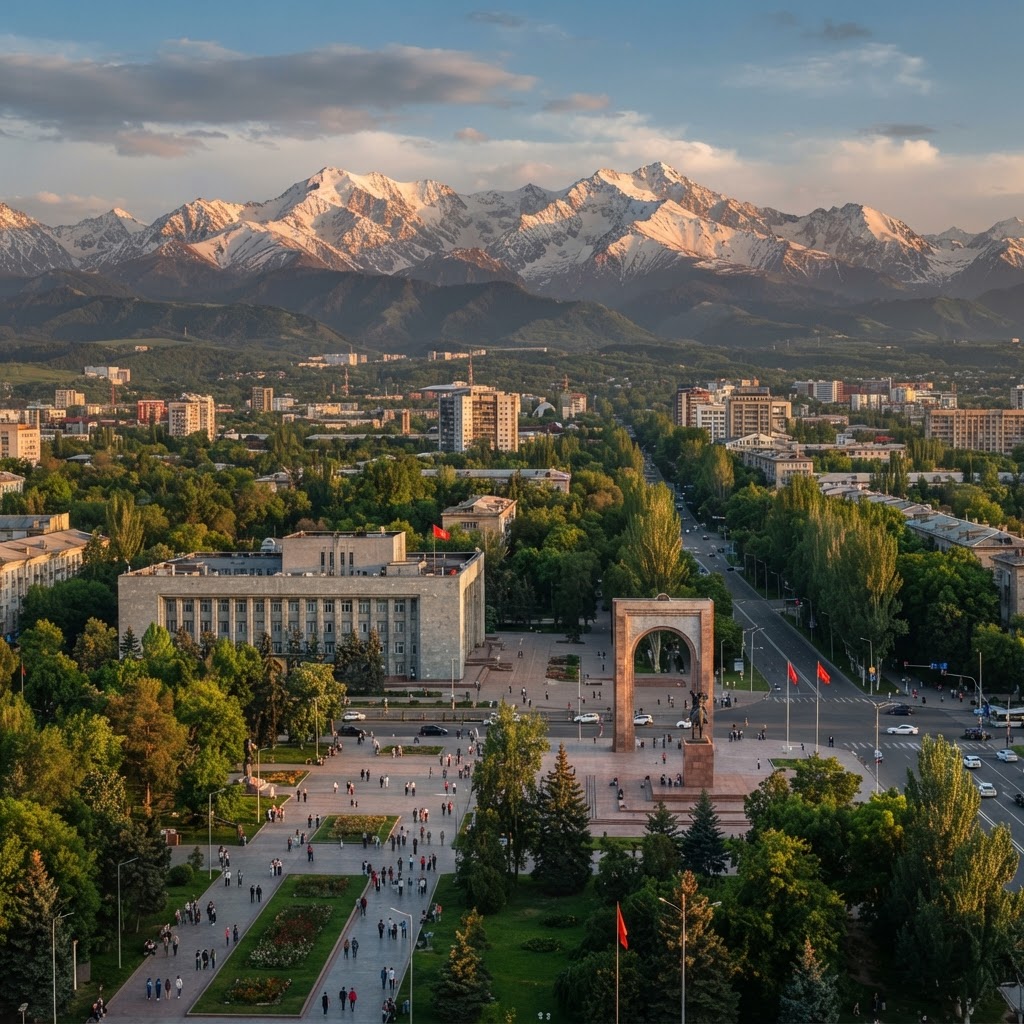
Framed by the snowcapped ridges of the Kyrgyz Ala-Too range rising abruptly behind its southern skyline, Bishkek is Central Asia's greenest, most relaxed launchpad. Planned along a wide Soviet grid crisscrossed by irrigation canals and heavy canopy trees, the Kyrgyz capital does not posture with hyper-modern vanity projects. Instead, it offers monumental brutalist plazas, sprawling bazaars piled high with dried apricots and smoked horsemeat, a thriving craft coffee scene, and immediate trail access to 4,000-meter peaks less than an hour south of the city center.
How long
2 to 3 days (ideal for orientation, gear provisioning, and an Ala-Archa day hike before heading deeper into the country)
Build your own trip with these prebuilt itineraries
Each one is a tested, day-by-day plan for Bishkek — start here, then make it yours.
Go for the unfiltered transition between high-Soviet urbanism and Central Asian nomadic culture. Bishkek is not a passive sightseeing stop; it is the logistical and cultural anchor where you buy trekking provisions at Osh Bazaar, arrange private 4WD transfers or marshrutkas, eat steaming manty alongside Kyrgyz craft lagers, and acclimatize along tree-lined avenues before disappearing into the high Tian Shan.
Where to stay
Getting there
Getting around
Food & drink
What it costs
Things to do
Book tours & tickets in BishkekSkip it if
Skip spending more than an overnight transit here if your travel style demands world-class historical monuments, high-gloss pedestrian zones, or pristine baroque architecture. Bishkek is a functional, gritty, Soviet-planned administrative hub whose main asset is proximity to untamed wilderness.
Destination intelligence
Updated 9/12/2026The structured record we plan every Bishkek itinerary from.
Walkability
High in the core center. Broad sidewalks and shaded park corridors make walking between Ala-Too Square, Oak Park, and Erkindik very pleasant, though broken pavement requires attention.
Transit quality
Moderate. Navigating marshrutkas requires the 2GIS offline map app; most foreign travelers find point-to-point app taxis (Yandex Go) faster and significantly less congested.
Car needed
Not within the city. For alpine excursions into Ala-Archa or transfers to Issyk-Kul, hire a car with an experienced local driver or rent a capable 4WD if heading into unpaved mountain passes.
Ideal duration
2 to 3 days (ideal for orientation, gear provisioning, and an Ala-Archa day hike before heading deeper into the country)
Minimum useful
1 day (enough to handle cash exchange, local SIM setup, Osh Bazaar, and an evening stroll along Erkindik Boulevard)
Peak season
July to August (warm city days, ideal high-altitude mountain trekking temperatures, and open yurt camps across the country).
Shoulder season
May to June and September to October (crisp alpine air, vibrant park foliage, and fewer crowds, though high-altitude passes may close with snow).
Low season
November to March (freezing temperatures, heavy smog trapped against the mountains from coal heating, and limited rural tourism infrastructure).
Best for
Common mistakes
- Treating Bishkek as an extended city-break destination rather than allocating those days to the Tian Shan mountain lakes like Song-Kul or Issyk-Kul.
- Hailing unmarked street cabs instead of using Yandex Go, resulting in heavy tourist markups.
- Failing to carry cash in Kyrgyz Som for bazaars, marshrutkas, and park entry fees, as card readers outside central Bishkek are sporadic.
- Carelessly photographing sensitive police posts, military buildings, or currency-exchange booths inside Osh Bazaar.
Best nearby
See what a trip to Kyrgyzstan actually costs. Travel Budget Co.
Readymade itineraries
Start from a tested template — then make it yours.
Ready to book
Lock in your Bishkek trip
Everything in one place. We may earn a small commission — it never costs you more.
Plan a trip to Bishkek
Pick a length and we'll build a day-by-day plan around how you travel — neighborhoods clustered, budget-aware, and editable.
Get better at planning trips like this
Occasional notes on planning smarter — no spam, unsubscribe anytime.
Plan a trip to Bishkek
Turn this guide into a day-by-day plan built around your pace, your group, and your budget.
Build my Bishkek trip