Serbia
Belgrade, Serbia
Brutalist monoliths, historic kafana culture, and late-night river life at the confluence of empires.
Plan & book
Sort your Belgrade, Serbia trip in one place.
We point you to the booking tools we'd actually use — live prices, no markup. Or let us build the day-by-day plan around you first, then book.
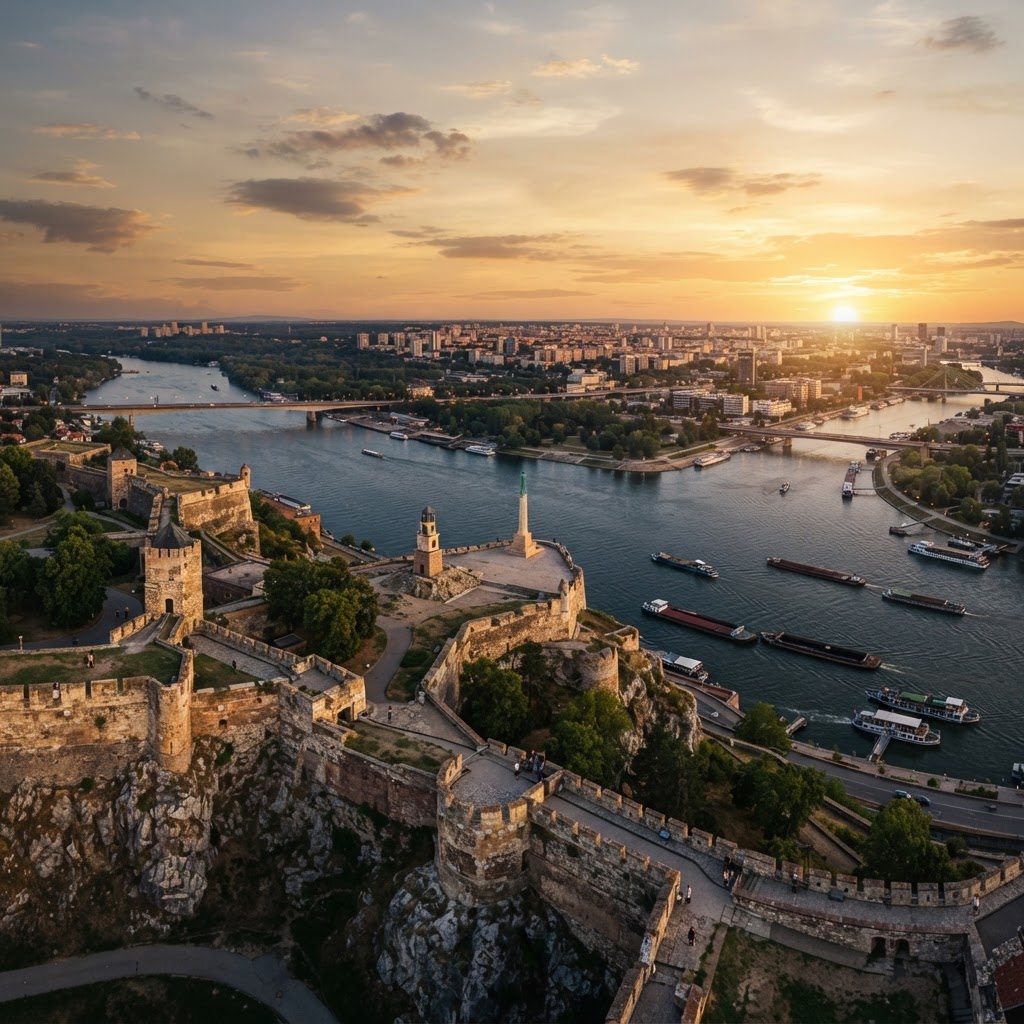
Belgrade sits on 32 hills overlooking the confluence of the Danube and Sava rivers, bearing the scars and swagger of a capital razed and rebuilt dozens of times. Often stereotyped narrowly for its floating club barges, the city is actually one of Europe's most layered architectural crucibles. Here, 19th-century neoclassical boulevards and Ottoman alleyways sit directly across from the colossal socialist modernism of New Belgrade and the Austrian Austro-Hungarian village feel of Zemun. It is an unvarnished, intensely social metropolis running on espresso, grilled meat, and stubborn vitality.
4 days
Build your own trip with these prebuilt itineraries
Each one is a tested, day-by-day plan for Belgrade, Serbia — start here, then make it yours.
2 Days Belgrade Intro in Belgrade
Kalemegdan Fortress, Knez Mihailova pedestrian boulevard, and Skadarlija bohemian quarter
3 Days Culture & Nightlife in Belgrade
Saint Sava Temple, Museum of Contemporary Art, Dorćol cafes, and Danube river barges
5 Days Complete Belgrade & Novi Sad in Belgrade
Urban exploration combined with Zemun's Austro-Hungarian charm and a fast-train day trip to Novi Sad
Belgrade provides an uncompromising look at 20th-century European history without the sterile museum varnish of Central European capitals. You come to experience an authentic café society that spills out onto cobblestones at 11:00 AM, walk through Yugoslavia's daring architectural experiments in Novi Beograd, and spend long evenings inside traditional taverns (kafanas) listening to live acoustic starogradska music while eating grilled ćevapi. It offers the rare European urban break that has not surrendered its character to global chains.
Where to stay
Getting there
Getting around
Food & drink
What it costs
Things to do
Book tours & tickets in Belgrade, SerbiaSkip it if
Skip Belgrade if your ideal European break requires pristine fairy-tale architecture, manicured medieval alleys, strictly pedestrianized central city centers, or quiet nights by 10:00 PM. It is a working, gritty Balkan capital with visible urban decay, aggressive city driving, and persistent indoor smoking culture in traditional venues.
Destination intelligence
Updated 9/12/2026The structured record we plan every Belgrade, Serbia itinerary from.
Walkability
Moderate. Central districts like Stari Grad and Dorćol are walkable, but steep hills and broken pavements require solid footwear. Crossing the Sava requires transit.
Transit quality
Moderate. An extensive, low-cost network of trams, trolleybuses, and buses blankets the city, though rush-hour congestion on bridges slows services.
Car needed
No. A rental car is an expensive headache in central Belgrade due to chaotic traffic and zoned parking; reserve a car only for excursions outside the capital.
Ideal duration
4 days
Minimum useful
2 days
Peak season
May to June and September to October: warm, pleasant temperatures without punishing summer humidity, ideal for walking and open-air riverside dining.
Shoulder season
April and November: cooler, variable weather with thin crowds, great for museum hopping and indoor kafana music nights.
Low season
December to February: cold, grey Balkan winter with occasional snow; good value and lively indoor nightlife, but heavy smog can trap city air.
Best for
Common mistakes
- Hailing rogue street taxis outside Republic Square or the train station instead of booking via CarGo or using Pink Taxi dispatchers.
- Assuming Skadarlija is the only place for traditional food; while picturesque, its restaurants charge inflated prices compared to neighborhood kafanas in Dorćol or Vračar.
- Staying across the river in Novi Beograd when visiting for leisure, which adds daily transit friction across congested bridges.
- Assuming vegetarian dining is effortless; traditional Serbian menus revolve around grilled pork and beef, though bakeries and modern bistros bridge the gap.
- Ignoring the high-speed Soko train link to Novi Sad, which takes only 36 minutes and makes an effortless day trip.
Best nearby
Readymade itineraries
Start from a tested template — then make it yours.
Ready to book
Lock in your Belgrade, Serbia trip
Everything in one place. We may earn a small commission — it never costs you more.
Plan a trip to Belgrade, Serbia
Pick a length and we'll build a day-by-day plan around how you travel — neighborhoods clustered, budget-aware, and editable.
Get better at planning trips like this
Occasional notes on planning smarter — no spam, unsubscribe anytime.
Plan a trip to Belgrade, Serbia
Turn this guide into a day-by-day plan built around your pace, your group, and your budget.
Build my Belgrade, Serbia trip