New Zealand
Bay of Islands, New Zealand Itinerary: How Many Days + Sample Plans
Subtropical coastal waters, maritime history, and island hopping
Traveler rating
Loved by sailing and boating enthusiasts.
Plan & book
Sort your Bay of Islands, New Zealand trip in one place.
We point you to the booking tools we'd actually use — live prices, no markup. Or let us build the day-by-day plan around you first, then book.
Pick your trip length
How many days do you need in Bay of Islands, New Zealand?
Each of these opens a full day-by-day plan you can make your own.
- 2 days — Two days — the essentials, no rushing.
- 3 days — Three days — the icons plus one neighborhood.
- 4 days — Four days — a full city without sprinting.
- 5 days — Five days — room for a day trip.
- 7 days — A week — the city at a human pace.
- With Kids trip — Shorter days, earlier dinners, what to skip.
- For Couples trip — Two-person pacing with evenings built in.
- Solo trip — A plan that works well on your own.
- Food trip — Meals and markets as the anchors.
- Outdoors trip — Nature, walks and open air.
- Culture trip — History, museums and the streets around them.
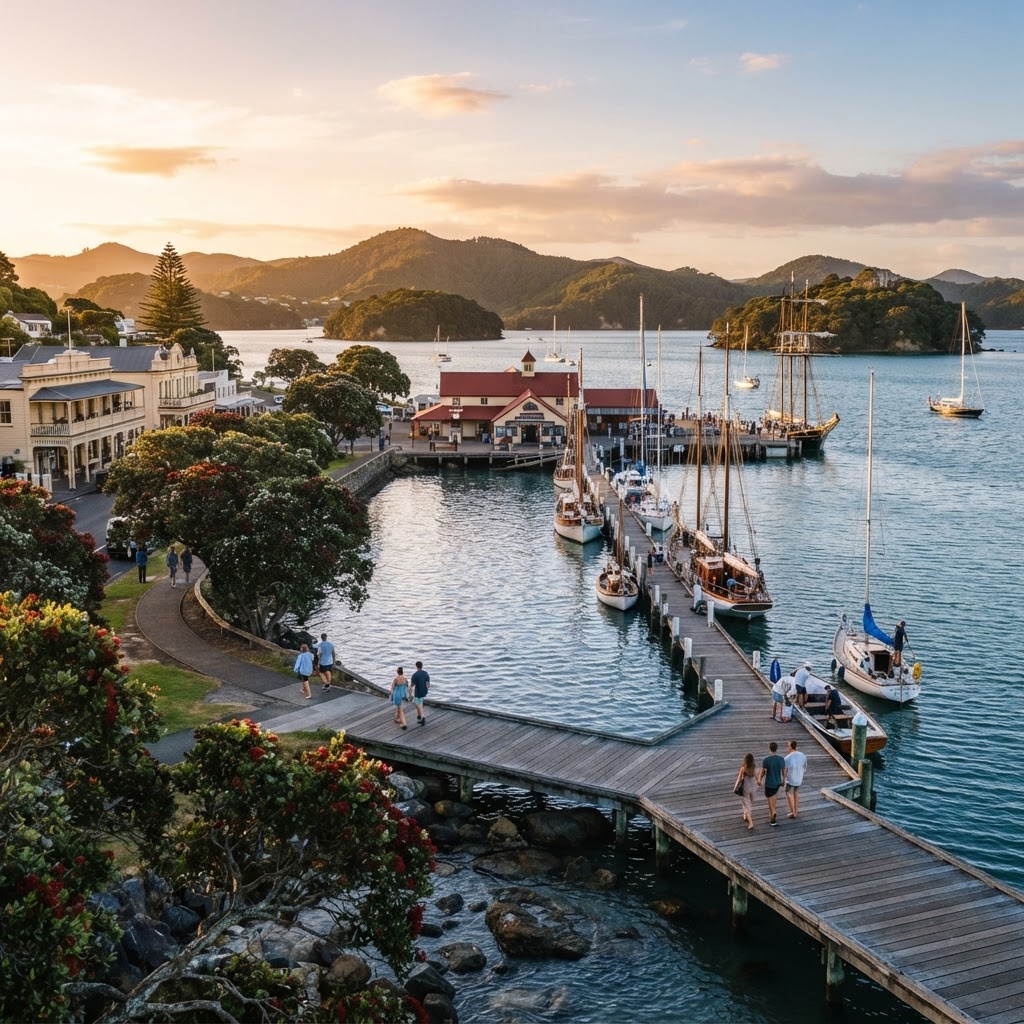
Encompassing 144 subtropical islands off Northland's east coast, the Bay of Islands centers around the historical hub of Russell, the bustling marina wharf of Paihia, and the lush agricultural inland of Kerikeri. Famous for marine sanctuaries, secluded coves, and significant early Maori-European treaty grounds, it is New Zealand's premier warm-water aquatic escape.
3 to 4 days
Best time
February to April brings settled, warm water with manageable crowds.
Build your own trip with these prebuilt itineraries
Each one is a tested, day-by-day plan for Bay of Islands, New Zealand — start here, then make it yours.
3 Days of Coastal Highlights & Island Cruising in Bay of Islands
Classic first-timer maritime essentials featuring the Hole in the Rock, Russell heritage, and Urupukapuka Island
4 Days of Māori Heritage & Historical Northland in Bay of Islands
Culture and history deep-dive centered on the Waitangi Treaty Grounds, colonial missions, and historic harbor settlements
5 Days of Maritime Adventure & Coastal Trails in Bay of Islands
Active outdoors itinerary focusing on coastal day hikes, diving, sailing charters, and secluded outer bay exploration
It offers the most concentrated marine exploration on the North Island alongside seminal historic sites. Whether ferrying across the harbor to colonial Russell, hiking the protected trails of Urupukapuka Island, or visiting the Waitangi Treaty Grounds, the maritime access here is unmatched in the country.
Where to stay
Getting there
Getting around
Food & drink
What it costs
Skip it if
Skip it if your New Zealand itinerary is under 10 days and focused on alpine or geothermal landscapes, or if you do not plan on getting out onto the water.
When to go
Summer offers ideal ocean conditions, but late December and January fill up fast with domestic holiday crowds and peak room rates. February through April keeps water temperatures around 20°C with clearer hiking days and less pressure on marina tours.
Peak (December to February)
Subtropical heat, busy boat excursions, and full motels. Advance reservations for lodging and cruises are mandatory.
Shoulder (March to May & September to November)
March and April are golden for ocean swims and hikes without peak traffic; spring brings blossoms but occasional coastal fronts.
Low (June to August)
Mild maritime winter with temperatures around 16°C. Some charter operations run reduced timetables, but historic sites remain quiet and atmospheric.
Neighborhoods
Where you stay shapes the trip. Here's how to think about it.
Paihia Waterfront
Bustling transit hub with casual seaside motels and boat docks
Best for:First-timers without a car and travelers focused on boat departures
Don't miss:The 15-minute foot ferry across to Russell leaving directly from Paihia Wharf
Russell (Kororāreka)
Historic colonial charm, quiet heritage lanes, and seaside dining
Best for:Couples, history lovers, and relaxed romantic getaways
Don't miss:A long lunch at Sage at Paroa Bay Winery or drinks along The Strand
Waitangi
Sprawling native parkland and profound national cultural heritage
Best for:History buffs, walkers, and travelers seeking coastal green space
Don't miss:The Te Kōngahu Museum of Waitangi and the carved meeting house Te Whare Rūnanga
Kerikeri
Lush citrus orchards, artisan food markets, and early stone architecture
Best for:Foodies, boutique shoppers, and road-trippers who prefer staying inland
Don't miss:The historic Stone Store and Kemp House basin walk followed by the Old Packhouse Market
Opua
Working maritime marina and yachtie harbor basin
Best for:Boaters, coastal walkers, and travelers catching the car ferry
Don't miss:Walking a section of the scenic Opua to Paihia coastal trail
Destination intelligence
Updated 10/6/2026The structured record we plan every Bay of Islands, New Zealand itinerary from.
Walkability
Town centers like Paihia and Russell are easily walkable on foot, but transit between settlements and inland attractions requires a car or ferry.
Transit quality
Limited regional bus connectivity; harbor transit relies primarily on dedicated passenger and car ferry networks.
Car needed
Yes, a car is strongly recommended for exploring the broader Northland region beyond the Paihia waterfront.
Ideal duration
3 to 4 days
Minimum useful
2 days
Peak season
December to February (warmest water, high crowds, peak domestic summer holidays)
Shoulder season
March to May and September to November (mild temperatures, fewer crowds, excellent hiking conditions)
Low season
June to August (coolest months, occasional winter squalls, quietest tourist operations)
Best for
Common mistakes
- Driving around the bay between Paihia and Russell instead of using the car ferry at Opua or the passenger ferry at Paihia.
- Confining the entire stay to the main beach strip in Paihia without taking a boat out to the outer islands like Urupukapuka.
- Attempting a day trip from Auckland; the round-trip drive is 7 to 8 hours, leaving almost no meaningful time on the water.
- Visiting in late December through mid-January without bookings made months in advance, when domestic holiday traffic saturates roads and accommodations.
Best nearby
See what a trip to New Zealand actually costs. Travel Budget Co.
How to plan it
- Stay in Russell if you want historic charm and quiet evenings; stay in Paihia if you want to walk straight out of your room onto morning island charters.
- Do not try to combine a full day out on the water with a driving trip to Cape Reinga in one day; Cape Reinga requires a dedicated 10-hour return day trip.
- Take the passenger ferry from Paihia to Urupukapuka Island and hike the ridgeline tracks for views of the 144 islands without paying for an expensive private charter.
- Book your summer accommodation in Russell or Paihia at least 3 to 4 months ahead if visiting between Christmas and Waitangi Day in early February.
Questions
Readymade itineraries
Start from a tested template — then make it yours.
Ready to book
Lock in your Bay of Islands, New Zealand trip
Everything in one place. We may earn a small commission — it never costs you more.
Plan a trip to Bay of Islands, New Zealand
Pick a length and we'll build a day-by-day plan around how you travel — neighborhoods clustered, budget-aware, and editable.
Get better at planning trips like this
Occasional notes on planning smarter — no spam, unsubscribe anytime.
Plan a trip to Bay of Islands, New Zealand
Turn this guide into a day-by-day plan built around your pace, your group, and your budget.
Build my Bay of Islands, New Zealand trip