Ecuador
Baños de Agua Santa, Ecuador
The dramatic mountain crossroads where the high Andes plunge into Amazon cloud forests and thermal springs.
Plan & book
Sort your Baños de Agua Santa, Ecuador trip in one place.
We point you to the booking tools we'd actually use — live prices, no markup. Or let us build the day-by-day plan around you first, then book.
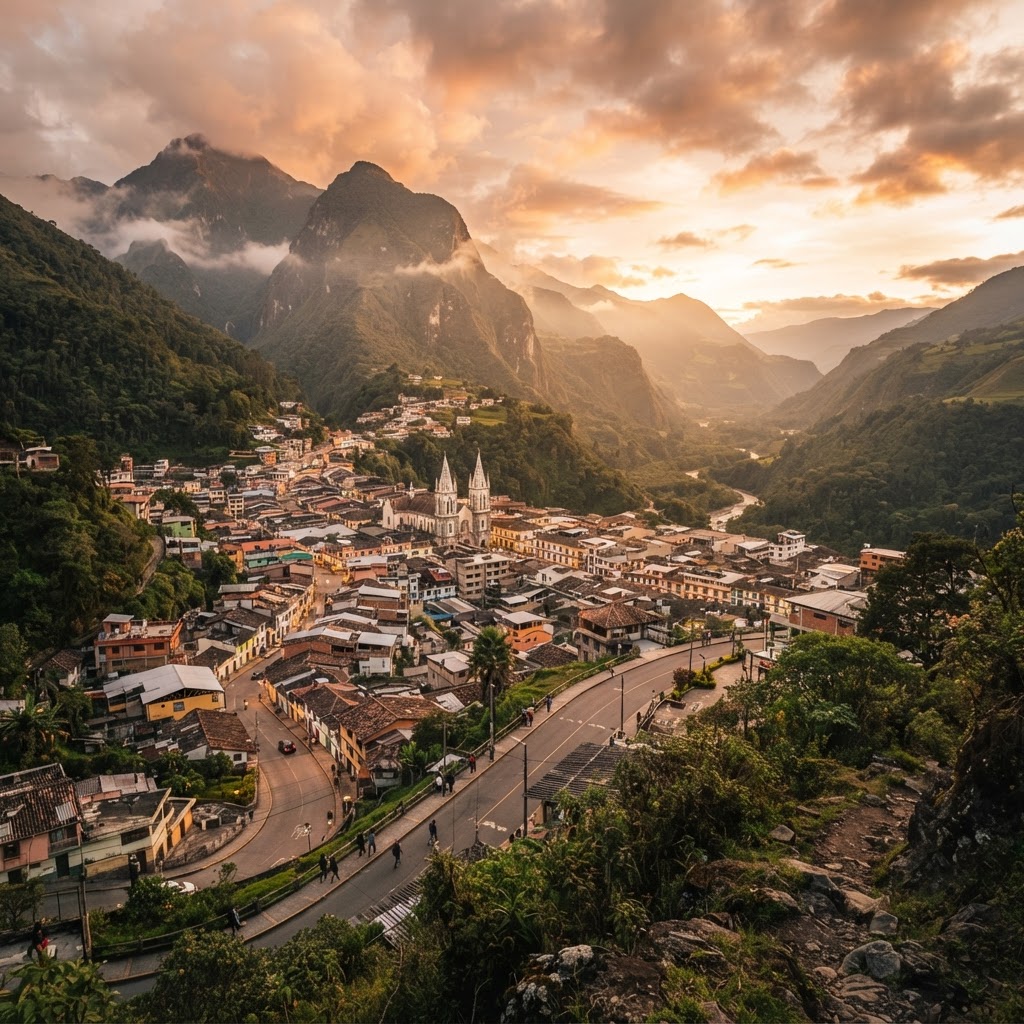
Perched beneath the smoking shadow of the active Tungurahua Volcano, Baños de Agua Santa marks Ecuador's most dramatic geographical transition point. Within a 30-minute radius, high-altitude Andean crags give way to roaring subtropical river canyons. Known globally for its thermal mineral baths, roaring waterfalls along the Pastaza River corridor, and an endless array of active mountain pursuits, Baños balances backpacker energy with genuine natural drama.
3 days
Best time
July through August or October through December for the clearest skies and crispest mountain mornings.
Build your own trip with these prebuilt itineraries
Each one is a tested, day-by-day plan for Baños de Agua Santa, Ecuador — start here, then make it yours.
4 Days of High-Adrenaline Adventure in Baños
Intense outdoor sports focus featuring Pastaza whitewater rafting, canyoning, zipline circuits, and downhill waterfall biking.
3 Days in Baños: The Classic Route in Baños
First-time overview covering the Ruta de las Cascadas down to Pailón del Diablo, town strolls, local cafes, and essential canyon viewpoints.
2 Days of Thermal Relaxation & Scenic Highlights in Baños
Slow-paced mountain scenery, cloud-forest vistas, Casa del Árbol, and timing visits to the natural thermal springs away from crowds.
Baños delivers an accessible, high-reward collision of Andean mountain scenery and Amazonian cloud forest ecology. You can cycle downhill past half a dozen roaring waterfalls along the Ruta de las Cascadas in the morning, hike to the base of the thundering Pailón del Diablo by afternoon, and soak in mineral-rich volcanic hot springs like Termas de la Virgen at night fall, all within a compact, budget-friendly valley.
Where to stay
Getting there
Getting around
Food & drink
What it costs
Skip it if
Skip Baños if you demand silent, tranquil luxury without tourist infrastructure, or if your priority is intact colonial architecture and deep cultural heritage (head to Cuenca or Quito instead).
When to go
Baños sits in an Andean-Amazonian microclimate where afternoon cloudbursts can hit anytime, but June-August offers dry alpine footing, while late autumn brings reliable river levels for rafting without the summer holiday crowds.
Peak (June–August & mid-December–mid-January)
Clear mornings with the highest hotel rates and crowded thermal pools; book canyoning and weekend lodgings 2 to 3 weeks ahead.
Shoulder (September–November & February–April)
Unpredictable afternoon rain balanced by lush Pastaza canyon greenery, lower prices, and uncrowded trails.
Low (May–early June)
Heaviest rainfall along the canyon; waterfall flows are thunderous, but mountain biking roads require rain gear and mountain vistas remain fogged in.
Neighborhoods
Where you stay shapes the trip. Here's how to think about it.
Centro Histórico & Parque Central
Buzzing backpacker and local crossroads packed with outfitters, candy makers, and evening foot traffic.
Best for:First-timers, dining variety, and booking last-minute adventure tours
Don't miss:Watching melcocha artisans pull warm sugarcane taffy from wooden wall pegs along Calle Ambato.
Barrio El Salado
Mellow riverside enclave tucked behind the western hills, away from nightlife noise.
Best for:Quiet stays, thermal soaking without the downtown crush, and slow mornings
Don't miss:Early morning mineral baths at Termas El Salado before day-trippers arrive from Ambato.
Santa Ana & La Cascada
Steep eastern base beneath towering rock faces and the roar of the Virgin Waterfall.
Best for:Night owls, budget hostels, and travelers prioritizing thermal baths on foot
Don't miss:Late-evening hot-to-cold immersion cycles under floodlights at Termas de la Virgen.
Runtún Ridge
Dramatic high-altitude perch 1,000 meters above the valley overlooking smoking Tungurahua.
Best for:Romantic splurges, photography buffs, and travelers wanting serene mountain isolation
Don't miss:Taking the morning swing over the abyss at Casa del Árbol before the 11:00 AM tour chivas arrive.
Destination intelligence
Updated 9/14/2026The structured record we plan every Baños de Agua Santa, Ecuador itinerary from.
Walkability
High
Transit quality
Moderate
Car needed
No
Ideal duration
3 days
Minimum useful
2 days
Peak season
June to August and mid-December to mid-January, when sunny days coincide with North American/European holidays and Ecuadorian family vacations.
Shoulder season
September to November and February to April, featuring fewer crowds on adventure trails mixed with intermittent cloudbursts.
Low season
May to early June and late October, which see the heaviest cloud cover and sustained afternoon rains along the Pastaza canyon.
Best for
Common mistakes
- Trying to ride a rented bicycle all the way back up from Pailón del Diablo to Baños instead of flagging down a cheap pickup truck ($2-$3) for the steep return climb.
- Visiting Termas de la Virgen on weekend mornings when regional day-trippers crowd the pools; go instead at off-peak night hours or early weekday dawn.
- Assuming the weather is always warm and tropical—cloud forest rain moves fast, and evenings get chilly quickly.
Best nearby
See what a trip to Ecuador actually costs. Travel Budget Co.
How to plan it
- Stay in Centro if you want to walk to dinner and agencies, but stay up on Runtún Ridge if you need mountain silence and views.
- Never pay full price for a packaged swing tour; catch the $1 municipal bus running up Calle Pastaza directly to Casa del Árbol.
- Rent mountain bikes in town by 9:00 AM to tackle the Ruta de las Cascadas before tour buses crowd the narrow tunnels and overlooks.
- Pair your trip with either Quilotoa to the north or Tena/Puyo to the east—Baños is the natural, logical gateway down into the Amazon basin.
Questions
Readymade itineraries
Start from a tested template — then make it yours.
Ready to book
Lock in your Baños de Agua Santa, Ecuador trip
Everything in one place. We may earn a small commission — it never costs you more.
Plan a trip to Baños de Agua Santa, Ecuador
Pick a length and we'll build a day-by-day plan around how you travel — neighborhoods clustered, budget-aware, and editable.
Get better at planning trips like this
Occasional notes on planning smarter — no spam, unsubscribe anytime.
Plan a trip to Baños de Agua Santa, Ecuador
Turn this guide into a day-by-day plan built around your pace, your group, and your budget.
Build my Baños de Agua Santa, Ecuador trip