Myanmar
Bagan, Myanmar
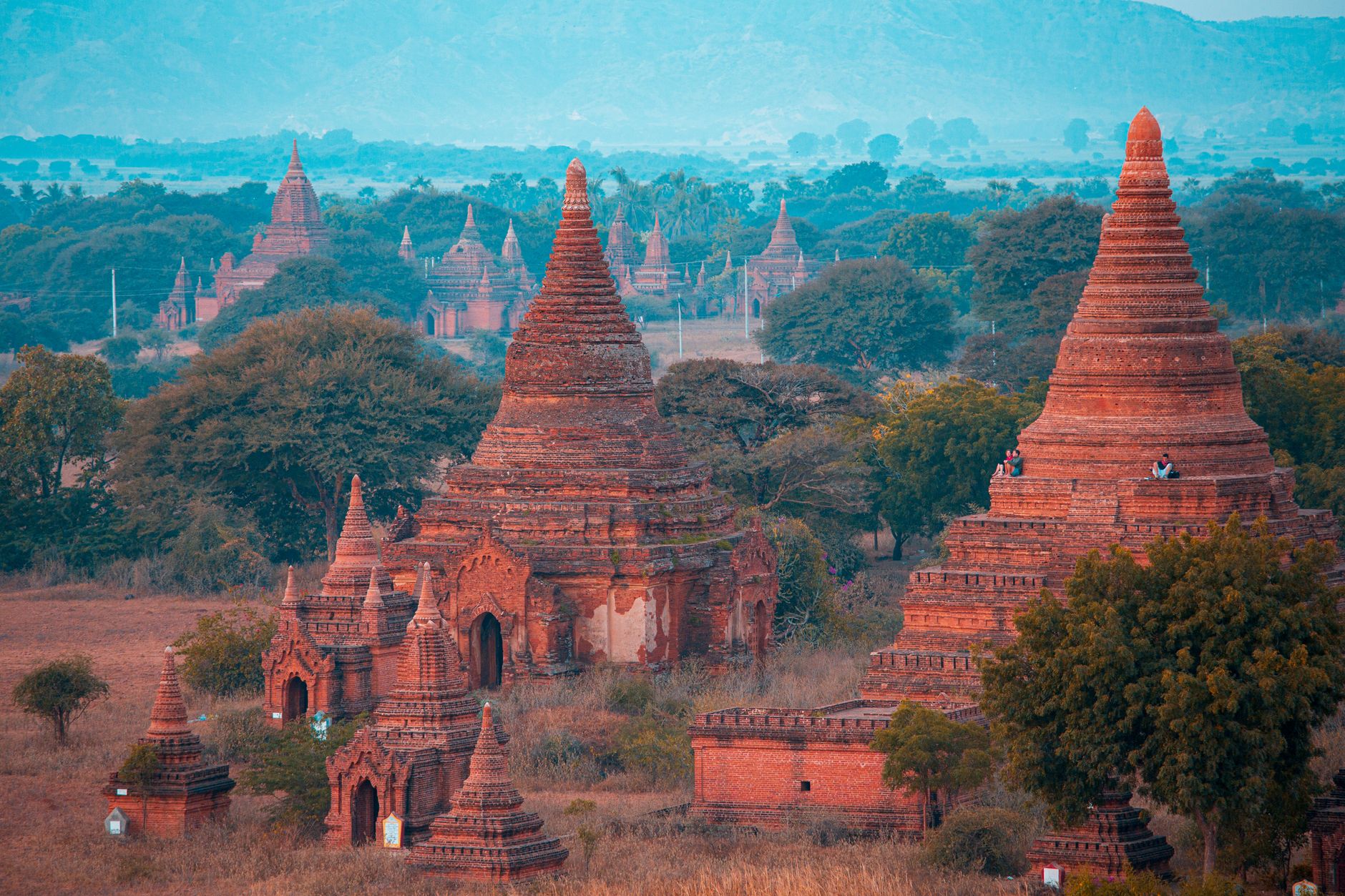
Two thousand ancient stupas scattered across an arid floodplain navigated by electric bike
Plan & book
Sort your Bagan, Myanmar trip in one place.
We point you to the booking tools we'd actually use — live prices, no markup. Or let us build the day-by-day plan around you first, then book.
Bagan is an open-air archaeological landscape spanning 10,000 hectares along the Ayeyarwaddy River, where more than 2,000 brick temples and gilded pagodas survive from the 11th to 13th centuries. Visiting today feels like stepping onto an unrestrained frontier: travelers rent silent electric scooters to trace sandy dirt tracks between towering monuments like Ananda and secluded ruins without tour buses blocking the view. While Myanmar's ongoing political instability requires careful logistical planning, Bagan's local hospitality community remains welcoming, self-reliant, and eager to host conscientious travelers.
3 days
Best time
November to February for crisp, clear mornings, comfortable riding temperatures, and operational hot-air balloons.
Build your own trip with these prebuilt itineraries
Each one is a tested, day-by-day plan for Bagan, Myanmar — start here, then make it yours.
4 Days in Bagan: Slow E-Bike Exploration & Mount Popa in Bagan
An immersive, slow-paced exploration featuring obscure dirt-track stupas, serene riverside sunsets, and a scenic day trip to the sacred volcanic peak of Mount Popa.
3 Days in Bagan: Ancient Monuments & Local Crafts in Bagan
The definitive comprehensive experience balancing grand temple architecture, hidden mural sanctuaries, village lacquerware traditions, and mid-day heat respites.
2 Days in Bagan: Sunrise, Sunsets & Icons in Bagan
An action-packed introduction covering the most legendary stupas, authorized sunrise viewing mounds, and essential e-bike cruising across the central plains.
No other archaeological zone in Asia offers this degree of independent exploration. In Angkor, you are bound to tuk-tuks, paved circuits, and dense checkpoints; in Bagan, you rent an e-bike from your guesthouse door and navigate narrow paths through dusty acacia groves to find 900-year-old vaulted brick sanctuaries completely to yourself. Sunrise over the misty plains—especially when hot-air balloons lift into the cool dawn sky—remains one of the world's singular travel vistas.
Where to stay
Getting there
Getting around
Food & drink
What it costs
Things to do
Book tours & tickets in Bagan, MyanmarSkip it if
Skip Bagan if you are risk-averse regarding traveling to countries experiencing political volatility or government travel advisories. It is also poorly suited for travelers with severe heat sensitivity or reduced mobility, as visiting temples requires walking barefoot on rough, uneven stone, climbing steep steps, and navigating unpaved sandy tracks under strong sun.
When to go
This peak window guarantees dry, mild weather (18°C–30°C / 64°F–86°F), which is essential for riding open e-bikes across sandy trails. Visiting during the shoulder months brings brutal heat exceeding 38°C (100°F), while the summer low season features monsoon mud and suspended balloon flights.
Peak (November to February)
Comfortable weather, calm river breezes, and morning hot-air balloon flights; hotel rates peak and early booking is advised.
Shoulder (October & March)
October brings lush, green landscapes post-monsoon; March sees soaring daytime heat above 38°C (100°F), making midday e-bike exploration exhausting.
Low (April to September)
April and May bring blistering heat waves often topping 40°C (104°F), followed by monsoon downpours that turn sandy temple tracks into slippery mud.
Neighborhoods
Where you stay shapes the trip. Here's how to think about it.
Old Bagan
A quiet, heritage-focused riverside enclosure surrounded by ancient city walls and immediate monument access.
Best for:Luxury travelers, history enthusiasts, and travelers who want direct access to top-tier monuments without transit delays.
Don't miss:Watching the sunset hit the white spire of Ananda Temple or strolling past the terracotta plaques of Gawdawpalin Temple before day-trippers arrive.
Nyaung-U
A bustling, dusty transport and trade hub packed with lively street stalls, casual eateries, and local markets.
Best for:Backpackers, budget travelers, social dining, and easy access to the domestic airport.
Don't miss:Wandering Mani-Sithu Market in the early morning for fresh produce, followed by evening curries on Restaurant Row (Thi Ri Pyitsaya 4 Street).
New Bagan
A laid-back residential town built in the 1990s, offering dependable mid-range boutique hotels and traditional craft workshops.
Best for:Mid-range travelers, families, and craft shoppers seeking a calmer village tempo with plenty of dining spots.
Don't miss:Touring lacquerware workshops along Main Road to observe hand-etched resin and bamboo crafts being made.
Myinkaba
A sleepy, authentic artisan village sitting directly between Old and New Bagan along the central corridor.
Best for:Cultural travelers seeking intimate village life and independent temple explorations away from groups.
Don't miss:The 11th-century Mon-style mural paintings preserved inside Gubyaukgyi Temple, best examined with a small pocket torch.
Destination intelligence
Updated 9/14/2026The structured record we plan every Bagan, Myanmar itinerary from.
Walkability
Low. The archaeological park stretches across dozens of square kilometers. You cannot walk between major temple clusters; rely on e-bikes, bicycles, or private drivers.
Transit quality
Low. There is no municipal public transit network. Getting around relies entirely on rented e-bikes, chartered tuk-tuks, private taxis, or horse carts.
Car needed
No. A rental car is unnecessary and counterproductive, as the narrow, sandy temple tracks are best navigated by e-bike or chartered local tuk-tuk.
Ideal duration
3 days
Minimum useful
2 days
Peak season
November to February. Dry, cool days (18°C–30°C / 64°F–86°F), clear blue skies, and active hot-air balloon operations, though with higher accommodation rates.
Shoulder season
October and March. October marks the end of the rains with lush green plains; March is dry but sees rapidly escalating temperatures reaching past 38°C (100°F).
Low season
April to September. Characterized by extreme pre-monsoon heat in April–May (often exceeding 40°C / 104°F) followed by southwest monsoon showers through summer; lowest hotel prices.
Best for
Common mistakes
- Climbing temples illegally: climbing the brick stupas has been strictly banned by heritage authorities since the 2016 earthquake to protect ancient masonry; only use designated earthen viewing mounds.
- Wearing inappropriate clothing: bare shoulders, short shorts, and knees above coverings are forbidden inside religious complexes; wear a traditional longyi or lightweight pants, and be ready to slip off shoes and socks constantly.
- Pushing through the midday heat: from 11:30 AM to 3:00 PM, temperatures can be punishing and the exposed brick radiates intense heat; retreat to your hotel pool or a shaded cafe before returning for late afternoon light.
- Attempting to see every temple: viewing dozens of stupas in rapid succession causes severe 'temple fatigue'; focus on five or six distinct monuments per day and spend remainder of time wandering quiet trails.
- Relying on foreign credit cards: card processing is erratic across Bagan; bring clean, uncreased US dollars for exchanging or ensure you withdraw sufficient local Kyat (MMK) at functioning Nyaung-U ATMs.
Best nearby
See what a trip to Myanmar actually costs. Travel Budget Co.
How to plan it
- Stay in Old Bagan for immediate walking access to headline ruins, or choose Nyaung-U if you want walkable restaurant diversity and budget guesthouses.
- Do not ride e-bikes through the central plains between 12:00 PM and 3:30 PM; retreat to your hotel pool or a shaded café to escape punishing midday heat.
- Book sunrise hot-air balloon flights at least four to six weeks in advance if traveling between November and January.
- Carry a lightweight headlamp or flashlight every day; many unlit temple interiors house intricate 12th-century murals that are otherwise invisible.
- Pair your temple exploration with a half-day excursion to the volcanic plug monastery of Mount Popa (Taung Kalat), located 50 kilometers southeast.
Questions
Readymade itineraries
Start from a tested template — then make it yours.
Ready to book
Lock in your Bagan, Myanmar trip
Everything in one place. We may earn a small commission — it never costs you more.
Plan a trip to Bagan, Myanmar
Pick a length and we'll build a day-by-day plan around how you travel — neighborhoods clustered, budget-aware, and editable.
Get better at planning trips like this
Occasional notes on planning smarter — no spam, unsubscribe anytime.
Plan a trip to Bagan, Myanmar
Turn this guide into a day-by-day plan built around your pace, your group, and your budget.
Build my Bagan, Myanmar trip