Egypt
Aswan
Granite boulders, ancient Nubian rhythm, and Egypt’s quietest Nile reach
Plan & book
Sort your Aswan trip in one place.
We point you to the booking tools we'd actually use — live prices, no markup. Or let us build the day-by-day plan around you first, then book.
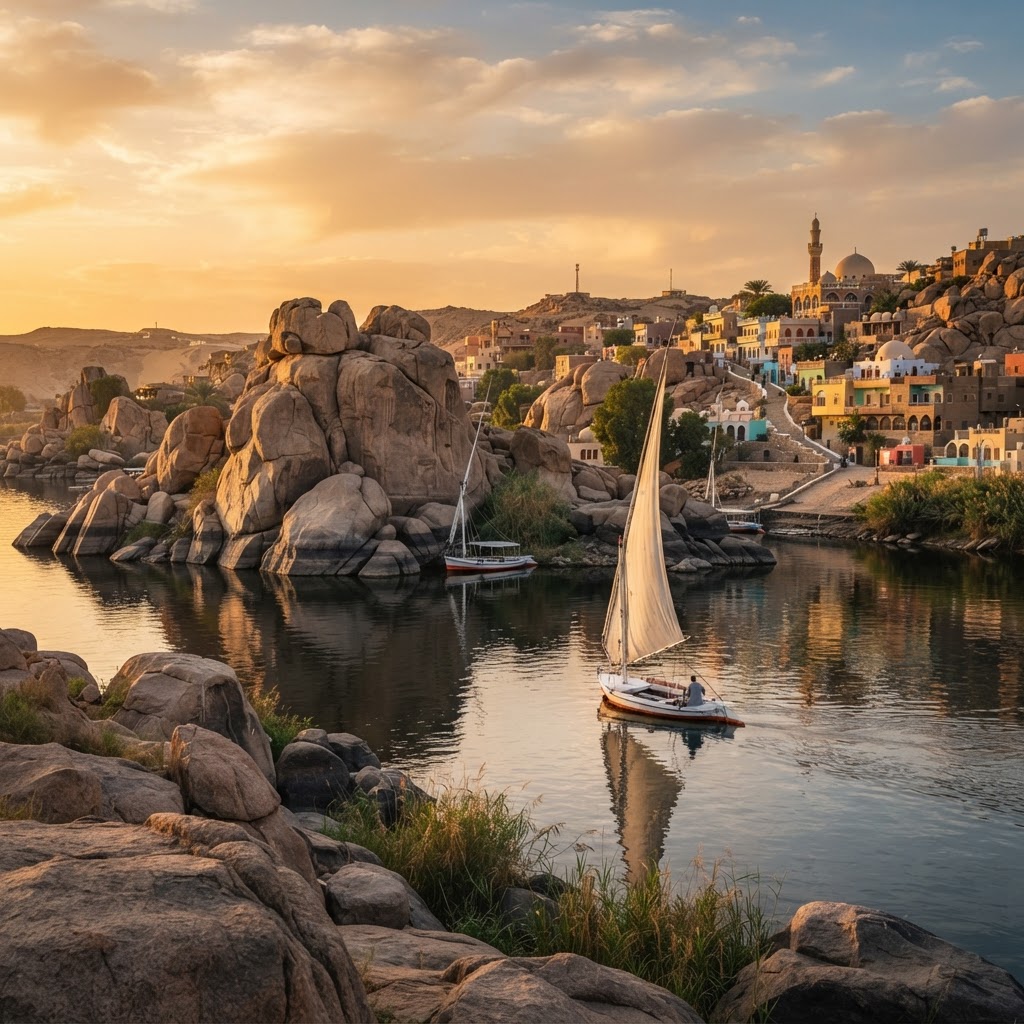
Perched where the Nile breaks through dark granite cataracts into Lower Nubia, Aswan offers an immediate drop in adrenaline compared to Cairo and Luxor. Life here tracks the river's slow sweep rather than frantic street hustles. It is a frontier city anchored by monumental stone engineering—both ancient and modern—vibrant Nubian culture, and the golden sandbanks of the West Bank.
3 days
Best time
November to February for crisp desert mornings, mild sunshine, and ideal river sailing conditions.
Build your own trip with these prebuilt itineraries
Each one is a tested, day-by-day plan for Aswan — start here, then make it yours.
4 Days in Aswan: Nubian Heritage & Abu Simbel Expedition in Aswan
Deep dive into local Nubian culture and architecture paired with a comfortable, unhurried overland or flight trip to Abu Simbel
2 Days in Aswan: The Quick Cultural Crossing in Aswan
An efficient express stop covering essential Ptolemaic monuments, the Unfinished Obelisk, and sunset river trade
3 Days in Aswan: Island Temples & Nile Rhythm in Aswan
Classic highlights and island exploration combining Philae, Elephantine Island, and peaceful felucca sailing
Go to Aswan for the atmospheric juxtaposition of the Nile at its most dramatic and serene. Unlike Luxor, where monument density demands relentless, structured site-hopping, Aswan allows you to chart private felucca rides around Elephantine Island, wander mudbrick Nubian villages, and inspect Ptolemaic temples reachable only by boat, all at a human pace.
Where to stay
Getting there
Getting around
Food & drink
What it costs
Things to do
Book tours & tickets in AswanSkip it if
Skip Aswan if your trip is under 5 days total and focused solely on Cairo's Pyramids and Luxor's dense West Bank tomb complexes, or if you require rapid rail-style urban transit and dislike bartering for river boats and local taxis.
When to go
Winter brings comfortable daytime highs around 24°C to 26°C (75°F to 79°F), making open-air quarry and temple visits painless, though hotel prices surge and Nile cruises pack the river. Shoulder months offer discounts and smaller tour groups, but temperatures jump sharply above 35°C (95°F) by late April.
Peak (November–February)
Comfortable 20°C–26°C daytime temperatures and crisp nights; expect crowded temple sites at Philae and premium prices for river-view hotels.
Shoulder (October & March–April)
Warm to hot (30°C–38°C); fewer tour buses at monuments, easier felucca charters, but midday desert heat requires dawn starts.
Low (May–September)
Brutal desert heat routinely exceeding 42°C (108°F); outdoor sites become unbearable after 9:30 AM, though luxury riverfront rooms drop dramatically in price.
Neighborhoods
Where you stay shapes the trip. Here's how to think about it.
Elephantine Island (Geziret Aswan)
Car-free river island sanctuary characterized by mudbrick alleys, palm groves, and unhurried Nubian village daily life.
Best for:Independent travelers seeking peace, low-noise evenings, and genuine Nubian village atmosphere away from traffic.
Don't miss:Wandering the village paths of Siou and Koti down to the ancient archaeological zone of Yebu and the Nilometer at the southern tip.
Corniche el-Nile (Downtown Aswan)
Active riverfront promenade lined with cruise moorings, outdoor cafés, carriage drivers, and classic administrative buzz.
Best for:First-timers who want immediate walking access to public ferry docks, bank ATMs, and local street dining.
Don't miss:The late-afternoon riverside walk between the train station pier and the Ferial Garden, watching feluccas catch the downriver breeze.
Sharia as-Souq (Aswan Bazaar District)
Lively, scented pedestrian spine stretching parallel to the river, loaded with spice merchants, textile stalls, and tea shops.
Best for:Shoppers, food lovers, and evening wanderers looking for regional spices, dried hibiscus, and local energy.
Don't miss:Buying loose dried karkadeh (hibiscus flowers) and Aswan-grown cumin from long-standing herb merchants like Makka Spices.
Gharb Soheil (West Bank Nubian Village)
High-color, tourism-oriented Nubian settlement draped over golden sands on the Nile's West Bank near the Old Dam.
Best for:Day-trippers, culture seekers, and travelers who want bright river guesthouses and direct access to desert sandbanks.
Don't miss:Sitting on a low-cushioned terrace overlooking the First Cataract's granite boulders with a cup of spiced Nubian coffee (jebena).
Qubbet el-Hawa & West Bank Dunes
Sparse, sun-baked sandstone ridge rising directly out of the river with ancient rock-cut tombs and sprawling desert vistas.
Best for:Hikers, archaeology enthusiasts, and photographers chasing sunset views over the entire granite cataract archipelago.
Don't miss:Climbing the steep stone staircase from the West Bank ferry landing to the Old Kingdom Tombs of the Nobles for the panoramic Nile overlook.
Destination intelligence
Updated 9/14/2026The structured record we plan every Aswan itinerary from.
Walkability
Moderate within contained zones (Corniche, Elephantine villages, Sharia as-Souq), but low between scattered archaeological sites that require boat or vehicle transport.
Transit quality
Limited formal municipal transit; primarily relies on public cross-river ferries, shared microbuses, and negotiated street taxis.
Car needed
No. Self-driving is neither recommended nor useful given the island/river geography and accessible private drivers.
Ideal duration
3 days
Minimum useful
2 days
Peak season
November through February (mild desert days, crisp evenings, peak river cruising volume).
Shoulder season
October and March to April (warmer weather, manageable crowds, longer daylight hours).
Low season
May through September (extreme desert heat often exceeding 40°C/104°F; sights must be visited at dawn).
Best for
Common mistakes
- Treating Aswan as just a 4-hour technical cruise stop rather than staying overnight to explore Elephantine Island and Philae at an unrushed pace.
- Booking the 3:00 AM group minibus day trip to Abu Simbel without realizing the 7-hour round-trip van ride in the desert is grueling; fly or arrange a private car with an overnight in Abu Simbel instead.
- Failing to agree explicitly on boat fares (total vs. per-person, Egyptian pounds vs. foreign currency) with felucca and launch captains before stepping aboard.
- Visiting Philae Temple in the dead of the afternoon when reflective stone surfaces amplify midday desert heat.
Best nearby
See what a trip to Egypt actually costs. Travel Budget Co.
How to plan it
- Stay on Elephantine Island if you want mudbrick village calm and car-free nights; stay along the mainland Corniche if you prioritize quick taxi pickups for early-morning site tours.
- Don't attempt Abu Simbel and Philae Temple on the same morning; Abu Simbel requires a 3.5-hour drive each direction through the Western Desert, leaving you drained before handling Philae's island boat transfers.
- Book historic Nile-view rooms at the Sofitel Legend Old Cataract at least 4 to 6 months ahead for peak winter travel (December to February); it sells out well in advance.
- Hire an unmotorized traditional felucca from the Corniche late in the afternoon (3:30 PM in winter) rather than booking a motor launch; the silent drift through the granite boulders of the First Cataract cannot be replicated under engine noise.
- Visit the Nubian Museum between 5:00 PM and 8:00 PM when it is illuminated and cool, leaving daylight hours free for Philae and the outdoor granite quarries.
Questions
Readymade itineraries
Start from a tested template — then make it yours.
Ready to book
Lock in your Aswan trip
Everything in one place. We may earn a small commission — it never costs you more.
Plan a trip to Aswan
Pick a length and we'll build a day-by-day plan around how you travel — neighborhoods clustered, budget-aware, and editable.
Get better at planning trips like this
Occasional notes on planning smarter — no spam, unsubscribe anytime.
Plan a trip to Aswan
Turn this guide into a day-by-day plan built around your pace, your group, and your budget.
Build my Aswan trip