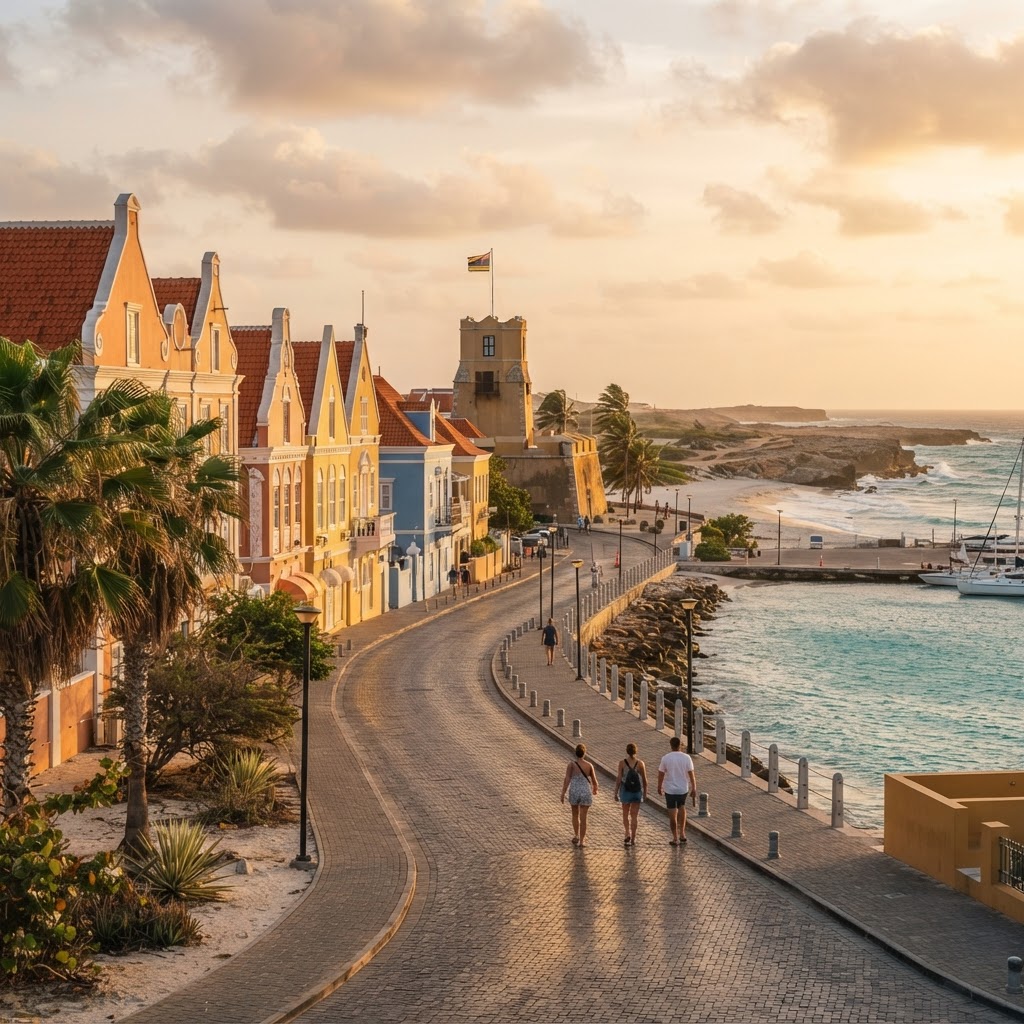
Aruba
Aruba
Hurricane-free white sand, constant trade winds, and arid desert coves.
Plan & book
Sort your Aruba trip in one place.
We point you to the booking tools we'd actually use — live prices, no markup. Or let us build the day-by-day plan around you first, then book.
Aruba sits safely south of the Caribbean hurricane belt, just off the coast of Venezuela. Unlike lush tropical islands, Aruba pairs arid cactus landscapes and limestone coastlines with powdery turquoise bays. It functions with straightforward Western infrastructure, high culinary safety, and easy public transit along its main hotel strips. The tradeoff is clear: it can feel heavily commercialized, but it delivers absolute weather reliability and effortless logistics.
6 to 7 days
Build your own trip with these prebuilt itineraries
Each one is a tested, day-by-day plan for Aruba — start here, then make it yours.
7 Days of Active Island Adventure & Hidden Coasts in Aruba
Outdoor rugged focus featuring 4WD excursions across Arikok National Park, windsurfing on the North Shore, and southern explorations to Baby Beach and San Nicolas murals
6 Days Slower Family Beach & Cultural Discovery in Aruba
Kid-friendly and relaxed pace prioritizing calm, shallow swimming lagoons, downtown tram rides, off-resort seafood in Savaneta, and easy logistics
5 Days of Classic Sun, Snorkeling & Beach Highlights in Aruba
First-timer highlights balancing Eagle and Palm Beach resort relaxation with catamaran snorkeling and sunset dining without needing a full-week car rental
Aruba solves the Caribbean weather risk. With barely 15 to 20 inches of rainfall annually and a location outside the hurricane belt, you rarely lose a day of vacation to bad weather. The beaches—particularly Eagle Beach and Arashi—rank among the widest, calmest, and cleanest in the region. Combine this with safe tap water, low crime, and straightforward dining, and it provides an exceptionally friction-free beach trip.
Where to stay
Getting there
Getting around
Food & drink
What it costs
Things to do
Book tours & tickets in ArubaSkip it if
Skip Aruba if you are searching for verdant rainforests, towering mountain waterfalls, or deep historical colonial immersion—the landscape is arid desert and limestone, and development is heavily tailored to tourism comfort.
Destination intelligence
Updated 9/13/2026The structured record we plan every Aruba itinerary from.
Walkability
Moderate; highly walkable within Palm Beach and downtown Oranjestad, but reaching natural parks and remote southern beaches requires transit or a car.
Transit quality
High along the tourist strip; the Arubus operates frequently and reliably connecting major hotel zones to Oranjestad.
Car needed
Optional; rent a car for 1-2 days to tour Arikok National Park and the southern coast, but unnecessary if staying resort-side on Palm or Eagle Beach.
Ideal duration
6 to 7 days
Minimum useful
4 days
Peak season
Mid-December through April; peak weather escape with minimal rain, lower humidity, and the highest hotel rates.
Shoulder season
May through August; warmer conditions with fewer crowds, reliable trade winds, and solid hotel value.
Low season
September through November; winds die down slightly making it feel hotter, with occasional short rain showers, but lowest accommodation rates.
Best for
Common mistakes
- Renting a compact economy sedan to reach the Natural Pool in Arikok, where extreme rock crawls require dedicated high-clearance 4WD vehicles.
- Underestimating the relentless trade winds; hats and umbrellas blow away quickly, and the cooling breeze masks severe UV sun exposure.
- Staying confined entirely to Palm Beach resort compounds and missing local dining in Savaneta and mural art in San Nicolas.
- Failing to arrive early for return flights; US pre-clearance requires clearing both Aruban security and US border control, demanding at least three hours lead time.
Best nearby
Readymade itineraries
Start from a tested template — then make it yours.
Ready to book
Lock in your Aruba trip
Everything in one place. We may earn a small commission — it never costs you more.
Plan a trip to Aruba
Pick a length and we'll build a day-by-day plan around how you travel — neighborhoods clustered, budget-aware, and editable.
Get better at planning trips like this
Occasional notes on planning smarter — no spam, unsubscribe anytime.
Plan a trip to Aruba
Turn this guide into a day-by-day plan built around your pace, your group, and your budget.
Build my Aruba trip