Peru
Arequipa, Peru
Volcanic sillar colonial beauty, picantería dining, and the natural high-altitude stepping stone.
Plan & book
Sort your Arequipa, Peru trip in one place.
We point you to the booking tools we'd actually use — live prices, no markup. Or let us build the day-by-day plan around you first, then book.
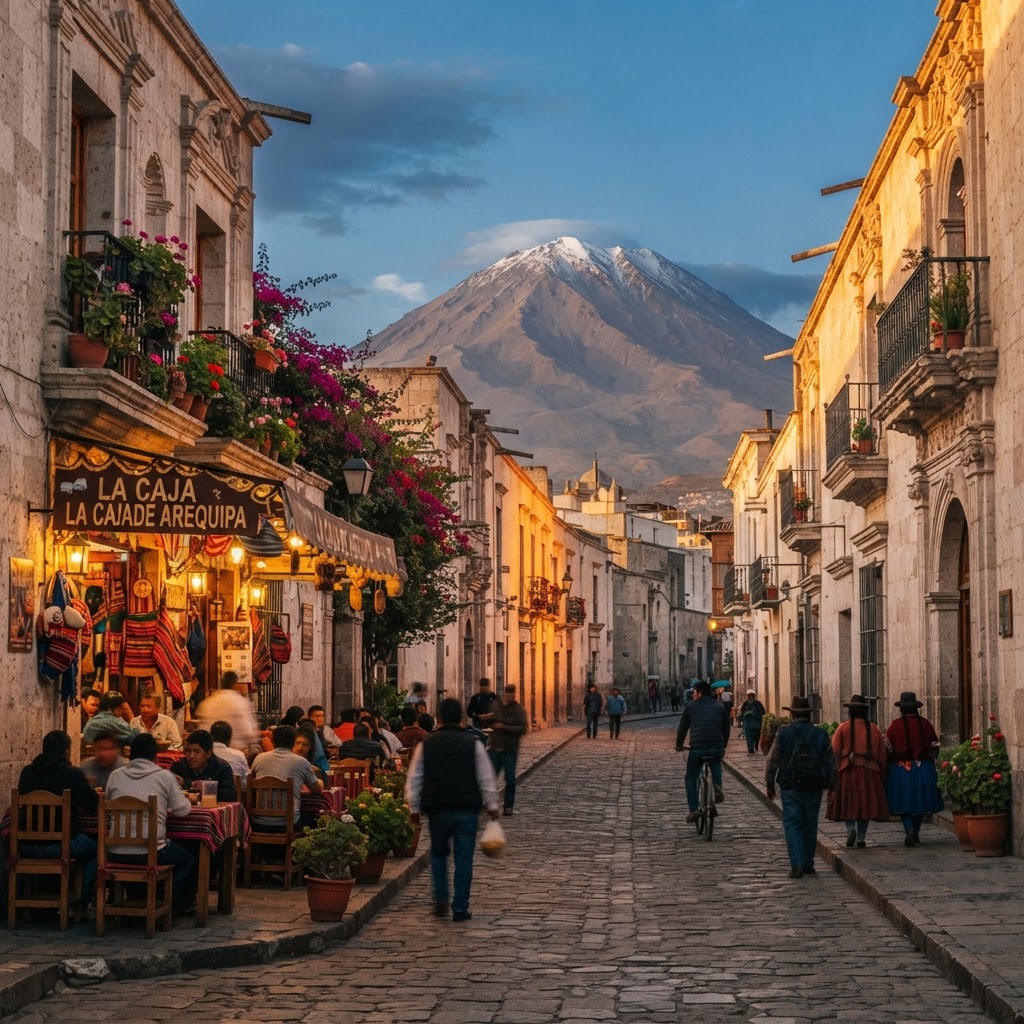
Set beneath the jagged cone of El Misti at 2,325 meters, Arequipa is Peru’s architectural and culinary counterweight to Lima and Cusco. Built primarily of white volcanic sillar stone, its compact historic core holds some of South America’s most intact colonial monasteries and vibrant courtyard life, paired with an intensely proud, wood-fired regional food culture distinct from the rest of the Andes.
How long
3 to 4 days (including a 1- to 2-day excursion into Colca Canyon)
Best time
May to October for crisp, cloudless Andean skies and unobstructed volcano views.
Build your own trip with these prebuilt itineraries
Each one is a tested, day-by-day plan for Arequipa, Peru — start here, then make it yours.
3 Days in Arequipa: Southern Andean Culinary Heritage in Arequipa
A food-forward exploration prioritizing traditional rural picanterías, local market tours, volcanic terroir, and regional cooking traditions beyond Lima.
4 Days in Arequipa & Overnight Colca Canyon in Arequipa
The definitive southern highlands experience pairing urban exploration with an unhurried, overnight excursion into Colca Canyon to see Andean condors and terraced valleys.
2 Days in Arequipa: White City Highlights & Acclimatization in Arequipa
First-time architectural and cultural highlights centered on the UNESCO-listed Centro Histórico, sillar monuments, and gradual altitude adjustment.
Arequipa delivers an ideal stepping stone for high-altitude acclimatization before heading to Cusco or Lake Titicaca, while offering genuine independent substance. Rather than feeling like a transit hub, it anchors southern Peru with the massive, miniature citadel of Santa Catalina Monastery, world-class traditional picanterías, and immediate access to Colca Canyon treks.
Where to stay
Getting there
Getting around
Food & drink
What it costs
Things to do
Book tours & tickets in Arequipa, PeruSkip it if
Skip Arequipa if your itinerary is under 7 days and focused strictly on the Sacred Valley and Machu Picchu; the extra regional logistics will cannibalize your limited time.
When to go
This winter window delivers dry, 70°F days and negligible rain, essential for mountain viewpoints and canyon descents. June to August brings peak foreign foot traffic and colder nights, while the shoulder months of May and September offer the ideal balance of empty cloisters and crystal-clear horizons.
Dry Winter Peak (June – August)
Crisp sunny days, chilly nights dipping into the 40s°F, and full tourist volume; reserve monastery tours and Colca transport weeks ahead.
Shoulder Months (April – May & September – November)
Warm afternoons, minimal rainfall, lush green valleys post-rains, and significantly thinner crowds in the historic center.
Rainy Season (December – March)
Frequent afternoon deluges, overcast skies blocking El Misti, and potential mudslides along steep roads into Colca Canyon.
Neighborhoods
Where you stay shapes the trip. Here's how to think about it.
Centro Histórico
Colonial civic power built in pale sillar ashlar, centered on palm-shaded arcades and bustling courtyard cafes.
Best for:First-timers, architecture buffs, and walkability purists
Don't miss:Monasterio de Santa Catalina, an intensely painted cloistered citadel covering a full city block.
San Lázaro
Cobblestone alleys, geranium-filled volcanic stone nooks, and a quiet village tempo just five minutes from the main square.
Best for:Couples, photographers, and travelers seeking quiet boutique stays
Don't miss:Wandering the narrow alleyway of Callejón del Violín before ducking into an intimate courtyard coffee bar.
Yanahuara
Elevated residential suburb with leafy 19th-century charm, panoramic volcano terraces, and classic Sunday family promenades.
Best for:Slow travelers, families, and sunset landscape seekers
Don't miss:Mirador de Yanahuara, framing the conical peak of El Misti through carved sillar arches.
Vallecito
Leafy, residential pocket just south of the center with mid-century houses and modern dining alternatives.
Best for:Longer stays and travelers wanting distance from plaza tour operators
Don't miss:A peaceful stroll along Avenida Bolognesi for upscale, contemporary Peruvian bistros tucked away from tour crowds.
Cayma
High-ridge historic village overlooking the Chili River, transitioning from colonial tradition into modern corporate Arequipa.
Best for:Culinary purists chasing classic Sunday lunch traditions
Don't miss:Sampling adobo arequipeño at a multi-generational picantería near the Plaza de Cayma before 9:00 AM.
Destination intelligence
Updated 9/14/2026The structured record we plan every Arequipa, Peru itinerary from.
Walkability
High within the Centro Histórico and San Lázaro; hilly and car-dependent for outer viewpoints and rural picanterías.
Transit quality
Fair; urban minibuses (combis) are crowded and chaotic for visitors, making licensed taxis and app rides the sensible choice.
Car needed
No. Driving in the central city is counterproductive and mountain roads to Colca require experienced local drivers.
Ideal duration
3 to 4 days (including a 1- to 2-day excursion into Colca Canyon)
Minimum useful
2 full days
Peak season
June through August (dry Andean winter with crisp blue skies and peak international tourism).
Shoulder season
April to May and September to November (warm daytime temperatures, clear views, and manageable visitor counts).
Low season
December through March (rainy season in the southern highlands; volcano peaks are frequently obscured by cloud cover).
Best for
Common mistakes
- Treating Arequipa as a pure 12-hour layover en route to Colca Canyon without exploring the city center
- Booking a rushed 1-day Colca Canyon tour that requires departure at 3:00 AM instead of doing an overnight trip
- Forgetting the modest dress code (covered shoulders and knees) required to access the cathedral and religious sites
- Scheduling heavy picantería feasts or strenuous walking on the first afternoon before adjusting to the 2,325-meter elevation
Best nearby
See what a trip to Peru actually costs. Travel Budget Co.
How to plan it
- Base yourself within a 6-block radius of the Plaza de Armas or in San Lázaro to avoid spending time in morning commuter gridlock.
- Pair Arequipa between Lima and Cusco: flying Lima-to-Arequipa gives you a gentle 2,325-meter altitude stepping stone that prevents Cusco's immediate altitude sickness.
- Do not book a 1-day Colca Canyon tour unless pressed for time; spend one night in the valley so you see the Andean condors at Cruz del Cóndor without rushing.
- Time your picantería excursion for a leisurely lunch between 12:30 PM and 3:00 PM; traditional wood-fired houses close down by late afternoon.
- Schedule your visit to the Museo Santuarios Andinos around the exhibition status of the Juanita mummy, which goes into conservation storage from January through April.
Questions
Readymade itineraries
Start from a tested template — then make it yours.
Ready to book
Lock in your Arequipa, Peru trip
Everything in one place. We may earn a small commission — it never costs you more.
Plan a trip to Arequipa, Peru
Pick a length and we'll build a day-by-day plan around how you travel — neighborhoods clustered, budget-aware, and editable.
Get better at planning trips like this
Occasional notes on planning smarter — no spam, unsubscribe anytime.
Plan a trip to Arequipa, Peru
Turn this guide into a day-by-day plan built around your pace, your group, and your budget.
Build my Arequipa, Peru trip