Turkey
Alanya, Turkey
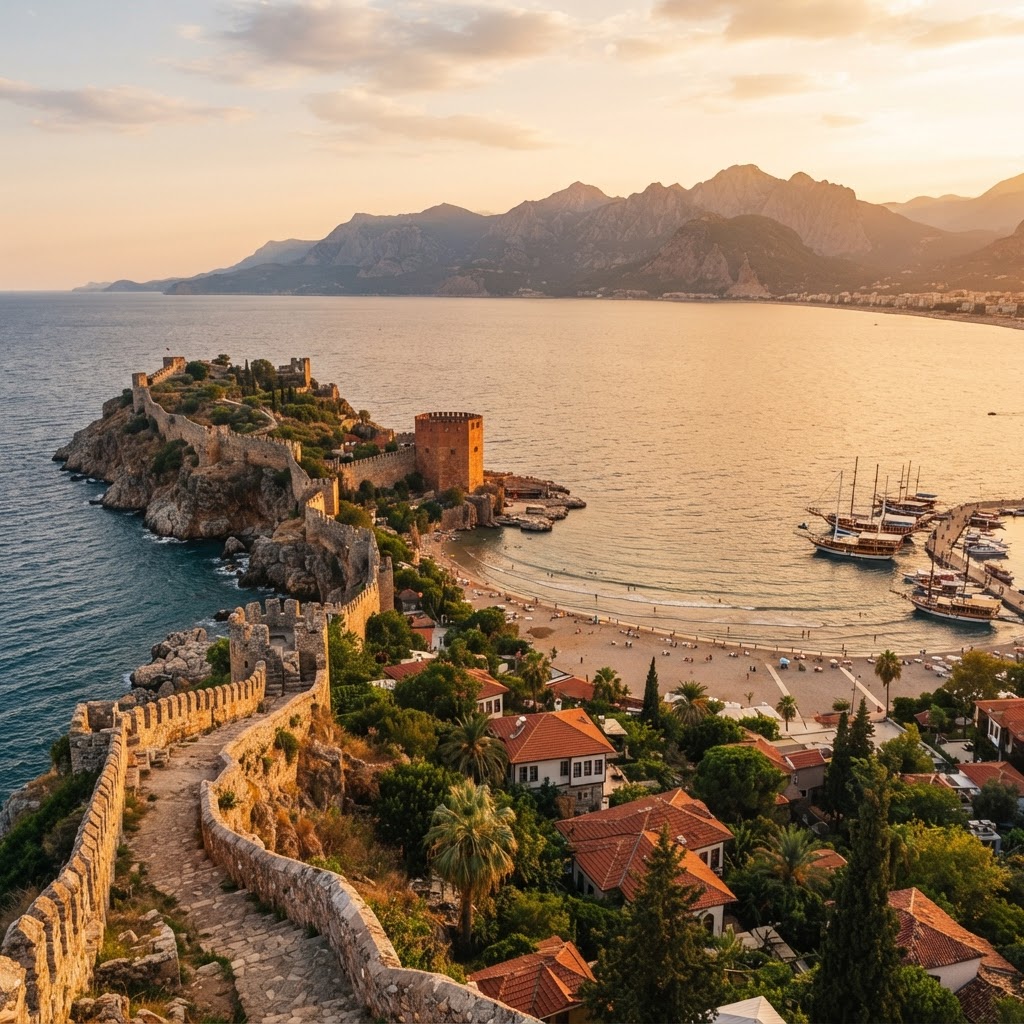
Seljuk stone fortresses meet sweeping Mediterranean sands under the Taurus ridge.
Plan & book
Sort your Alanya, Turkey trip in one place.
We point you to the booking tools we'd actually use — live prices, no markup. Or let us build the day-by-day plan around you first, then book.
Alanya anchors the eastern tip of Turkey's Mediterranean coast, dominated by a towering rocky peninsula crowned by a massive 13th-century Seljuk citadel. Flanked on either side by extensive beaches—most famously Kleopatra Beach to the west and the expansive Keykubat Beach to the east—the town balances seaside resort tourism with deep-rooted Mediterranean maritime history. Beyond the beach strips and cable car, mountain canyons, cool rivers, and cliffside ramparts define an energetic coastal base.
3 to 4 days
Best time
May to June and September to mid-October provide the optimal balance of warm sea temperatures and manageable heat.
Build your own trip with these prebuilt itineraries
Each one is a tested, day-by-day plan for Alanya, Turkey — start here, then make it yours.
4 Days in Alanya: Mountain Canyons & Coastal Adventures in Alanya
Active exploration featuring paragliding over the Mediterranean, river swimming at Dim Çayı, and day trips to Sapadere Canyon
2 Days in Alanya: Sun, Sea & Harbor Relaxation in Alanya
A relaxed weekend getaway focused on iconic beach lounging, scenic teleferik sunset rides, and lively seaside dining
3 Days in Alanya: Historic Coast & Fortress Highlights in Alanya
First-time classic highlights combining the Seljuk harbor citadel, Cleopatra Beach, and local cave explorations without needing a rental car
Go for the dramatic juxtaposition of raw Seljuk military architecture against the turquoise Mediterranean. The 13th-century castle complex, the octagonal Red Tower (Kızıl Kule), and the historic Tersane (medieval shipyard) provide substantial historical grit that generic resort towns lack. Pair that with accessible natural landmarks like Damlataş Cave, canyon dining on the Dim River, and the Alanya Teleferik rising straight off the sand.
Where to stay
Getting there
Getting around
Food & drink
What it costs
Things to do
Book tours & tickets in Alanya, TurkeySkip it if
Skip Alanya if you are seeking pristine, untouched fishing hamlets or exclusive quiet boutique retreats—look to Kaş, Kalkan, or Çıralı instead. Also reconsider if you dislike high-volume beachfronts or tourist corridors packed with souvenir stands and loud harbor cruise vessels.
When to go
Summer pushes temperatures past 35°C with heavy humidity and crowded shores, making the fortress climb exhausting. Spring and early autumn deliver 24–28°C weather ideal for hiking ruins and comfortable swimming without resort-peak accommodation rates.
Peak (July–August)
Scorching heat, high humidity, packed beach clubs, and peak hotel prices; sightseeing is best limited to mornings and air-conditioned caves.
Shoulder (May–June & September–October)
Warm sea water, comfortable evenings for outdoor dining, thinner crowds at historical sites, and cheaper room rates.
Low (November–April)
Mild coastal winters (14–19°C) with occasional heavy rain; quiet streets and slashed lodging prices, though beach concessions and seasonal boat tours are closed.
Neighborhoods
Where you stay shapes the trip. Here's how to think about it.
Damlataş & Kleopatra
Paved beachfront promenade humming with swimmers, beach clubs, and the lower cable car terminal.
Best for:First-timers, beach walkers, and families wanting direct sand access and flat navigation
Don't miss:Damlataş Cave at the base of the promontory, followed by the Alanya Teleferik ride directly up to the fortress
Tophane & Castle Peninsula
Steep cobblestone alleys, ancient Seljuk ramparts, quiet stone houses, and panoramic gulf viewpoints.
Best for:History buffs, photographers, and independent travelers seeking character guesthouses away from resort blocks
Don't miss:Walking the restored timber walkway connecting the Red Tower (Kızıl Kule) to the medieval Tersane shipyard
Çarşı (Harbor & Downtown)
Energetic commercial core dense with bazaars, gulet cruise berths, and open-air nightlife.
Best for:Night owls, bazaar shoppers, and travelers who want walkable access to transit and dining
Don't miss:Browsing the produce and spice stalls at the Friday Bazaar (Cuma Pazarı) before grabbing street gözleme
Oba
Low-rise residential sprawl with pedestrianized café corridors, citrus groves, and a calmer beach strip.
Best for:Long-stay travelers, families, and anyone wanting a relaxed residential pace east of the center
Don't miss:Biking along the waterfront cycle path and driving inland to riverside picnic platforms along the Dim River (Dimçayı)
Destination intelligence
Updated 9/14/2026The structured record we plan every Alanya, Turkey itinerary from.
Walkability
Moderate: the harbor, Damlataş, and Cleopatra Beach strip are exceptionally walkable on flat promenades; ascending the citadel peninsula requires a cable car, taxi, or steep hike.
Transit quality
Good: frequent municipal buses and dolmuş routes run along the primary coastal avenues, supplemented by the Alanya Teleferik.
Car needed
Not required for city stays, castle exploration, and central beaches; strongly recommended for exploring the Taurus Mountains, Syedra, Dim Cave, and Sapadere Canyon.
Ideal duration
3 to 4 days
Minimum useful
2 days
Peak season
July to August: hot (frequently exceeding 35°C), packed beaches, buzzing nightlife, and high accommodation rates.
Shoulder season
May to June and September to October: warm sea temperatures, pleasant hiking weather, thinner crowds, and comfortable outdoor dining.
Low season
November to April: mild Mediterranean winter with rain showers, shuttered beach concessions, but peaceful sightseeing and low lodging rates.
Best for
Common mistakes
- Flying into Antalya Airport (AYT) without factoring in the 2.5-hour ground transfer when Gazipaşa Airport (GZP) is right next door
- Attempting to walk the steep, sun-baked road up to Alanya Castle in the heat of a summer midday instead of taking the Teleferik or an early morning taxi
- Booking an isolated all-inclusive mega-resort out in Türkler or Konaklı, which isolates you from Alanya's walkable harbor and historic core
- Skipping the interior Taurus day trips like Dim Çayı when coastal summer temperatures peak above 36°C
- Relying entirely on cash exchange booths along the tourist strip rather than standard bank ATMs using local currency (TRY)
Best nearby
See what a trip to Turkey actually costs. Travel Budget Co.
How to plan it
- Stay in Damlataş or along Kleopatra Beach if you prioritize walkability, daily swims, and instant cable-car access.
- Do not climb the fortress peninsula on foot in midday heat; take the Alanya Teleferik up to the Ehmedek gate in the late afternoon and walk down toward the Red Tower as the sun sets.
- Pair Alanya with Side or Antalya on a broader Mediterranean road trip rather than treating it as an isolated fly-and-flop stay.
- Book Gazipaşa Airport (GZP) arrivals well in advance during shoulder months, as flight frequencies are limited compared to Antalya (AYT).
- Escape summer coastal humidity by taking a 30-minute taxi inland to Dimçayı, where restaurants have tables built directly over running mountain snowmelt.
Questions
Readymade itineraries
Start from a tested template — then make it yours.
Ready to book
Lock in your Alanya, Turkey trip
Everything in one place. We may earn a small commission — it never costs you more.
Plan a trip to Alanya, Turkey
Pick a length and we'll build a day-by-day plan around how you travel — neighborhoods clustered, budget-aware, and editable.
Get better at planning trips like this
Occasional notes on planning smarter — no spam, unsubscribe anytime.
Plan a trip to Alanya, Turkey
Turn this guide into a day-by-day plan built around your pace, your group, and your budget.
Build my Alanya, Turkey trip