South Africa
Addo Elephant National Park
Unfiltered elephant herds and accessible self-drive bush terrain at the end of the Garden Route
Plan & book
Sort your Addo Elephant National Park trip in one place.
We point you to the booking tools we'd actually use — live prices, no markup. Or let us build the day-by-day plan around you first, then book.
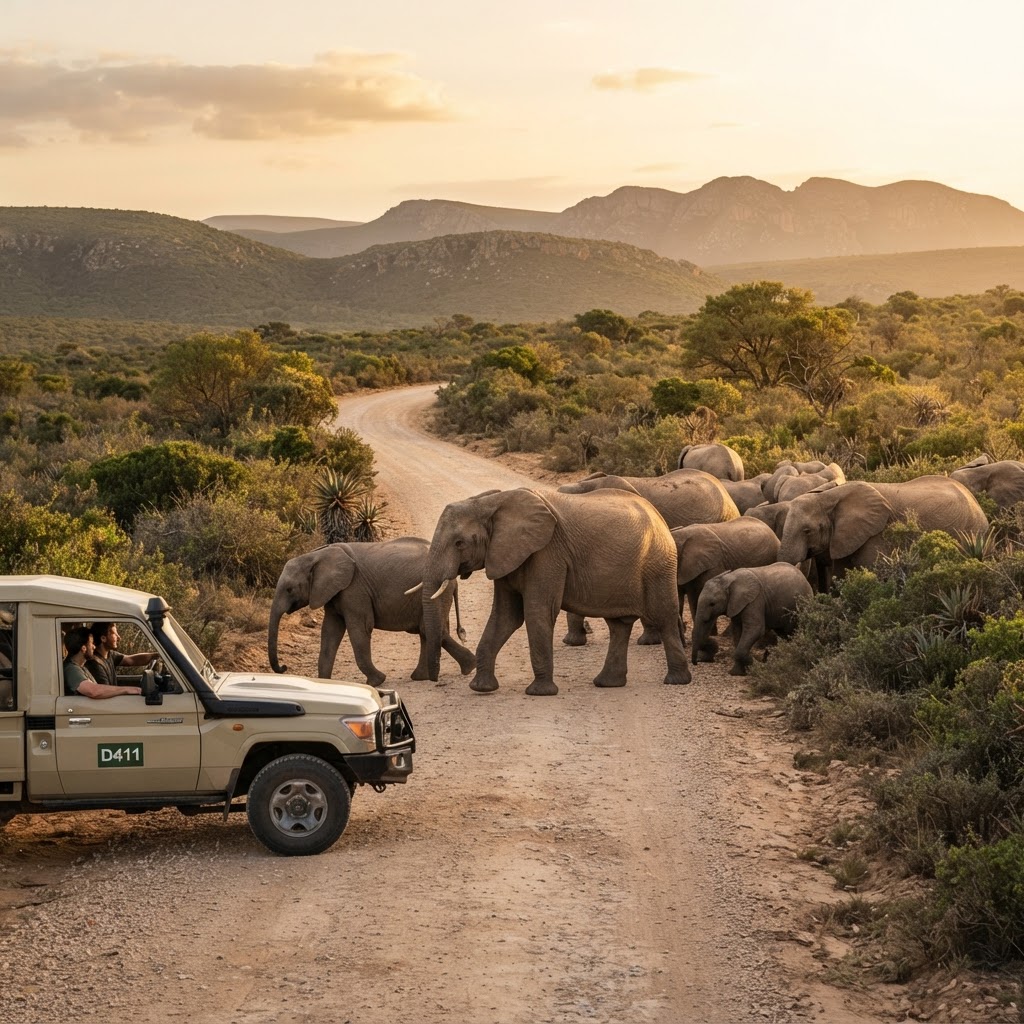
Covering over 1,600 square kilometers across the Sundays River Valley, Addo Elephant National Park is Africa's premier self-drive elephant sanctuary. It eliminates the usual safari barriers—requiring neither antimalarial medication, a specialized 4x4, nor high-end guided safari pricing. Visitors drive standard compact rental cars on graded gravel routes, pulling alongside swimming herds, buffalo, and flightless dung beetles.
2 days
Best time
May to September for peak wildlife viewing at waterholes; November to March for warm summer road-tripping and newborn calves.
Addo houses one of the densest wild elephant populations on Earth—over 600 individuals roaming free across thick spekboom thickets. Because it is completely malaria-free and sits just 45 minutes from Gqeberha (Port Elizabeth), it offers an effortless, high-yield safari finish to a Garden Route road trip without taking anti-malarial medication or booking thousands of dollars worth of private concessions.
Where to stay
Getting there
Getting around
Food & drink
What it costs
Skip it if
Skip Addo if your standard of an African safari is open savannah plains with constant big-cat tracking; lions and leopards are present here but elusive in the thick, dense subtropical thicket.
When to go
Winter (May to September) is dry and cool, thinning the dense Spekboom thicket and forcing hundreds of elephants to cluster around permanent waterholes like Hapoor Dam. Summer (October to April) brings afternoon warmth, baby animals, and lush greenery, but thick bush makes lions and black rhinos far harder to spot.
Peak (October to April)
Warm temperatures (up to 35°C) and heavy domestic holiday traffic in December–January. Sightings require more patience through dense thicket, but birding peaks and newborn elephants are active.
Shoulder (May and September)
The sweet spot of mild daytime weather, sparse crowds, and dropping rainfall. Animals begin congregating reliably around open dams during midday.
Low / Winter (June to August)
Crisp sunny days and cold nights (often dropping near freezing). Superb game viewing as drought conditions drive massive herds directly to the Main Camp waterhole and southern dams.
Neighborhoods
Where you stay shapes the trip. Here's how to think about it.
Addo Main Rest Camp
Buzzing national park nerve center with thatched chalets, an active floodlit waterhole, and dawn gate access.
Best for:First-timers, families with young children, and travelers wanting to self-cater inside the park gates.
Don't miss:The underground game viewing hide overlooking the waterhole, which puts you at eye level with drinking elephants and buffalo.
Matyholweni & Colchester
Relaxed estuary riverfront near the southern coast, set away from central tourist density and heavy tour buses.
Best for:Garden Route road-trippers arriving late from Plettenberg Bay or Tsitsikamma who want a quiet southern entry.
Don't miss:Starting an early-morning northbound transit drive along Ngulube Loop straight through to the central game area.
Sundays River Valley (Sunland & Kirkwood)
Expansive citrus groves, historic farm homesteads, and luxury private safari lodges tucked along scenic river bends.
Best for:Couples, food-focused travelers, and visitors wanting high-end safari hospitality or full-board guided game drives.
Don't miss:Sampling local Sundays River Valley citrus preserves and craft gin at an orchard-side estate farmstall.
Zuurberg Mountain Section
Misty, elevated Afro-montane ridgetops with panoramic wilderness passes, cooler alpine air, and zero elephant traffic.
Best for:Hikers, trail runners, and nature lovers seeking dramatic scenery away from the vehicle-restricted plains.
Don't miss:Hiking the Doringnek Trail through natural fynbos ravines and ancient cycad groves overlooking the reserve.
Destination intelligence
Updated 9/14/2026The structured record we plan every Addo Elephant National Park itinerary from.
Walkability
No (Strictly forbidden to exit vehicles on game drive routes; walking is confined to fenced camps and designated day-walk trails).
Transit quality
None (No public transit networks reach or operate within the park).
Car needed
Yes (A self-drive rental car or pre-booked guided private game vehicle is mandatory).
Ideal duration
2 days
Minimum useful
1 full day
Peak season
October to April (Warm summer weather, higher domestic holiday traffic, newborn animals, and lush vegetation).
Shoulder season
May and September (Mild temperatures, thinning vegetation, and quiet midday game loops).
Low season
June to August (Chilly mornings and nights, but exceptional waterhole viewing as drought conditions concentrate animals).
Best for
Common mistakes
- Driving the interior roads too fast—animals blend into dense spekboom bush, and speeding endangers endemic flightless dung beetles
- Staying outside the park without pre-purchasing permits, causing long wait times when entry queues form at gate opening
- Leaving the park during midday heat instead of staking out permanent waterholes like Hapoor or Marion Baree where herds gather
- Using the R335 through Motherwell when navigating from Gqeberha instead of taking the safer N2/Colchester route
Best nearby
See what a trip to South Africa actually costs. Travel Budget Co.
How to plan it
- Position your vehicle at Hapoor Dam between 11:00 and 14:00 on warm days to watch family herds submerge and bathe.
- Pair Addo directly with the eastern terminus of a Garden Route drive instead of booking domestic flights into Kruger.
- Do not try to traverse from Addo Main Camp down to the Colchester section and back on a half-day stop; low park speed limits (40 km/h) make this a full 4- to 5-hour commitment.
- Book an official SANParks open-vehicle sunset or night drive at reception upon arrival to access nocturnal predators closed to self-drivers after gate hours.
- Pay attention to the road surface to avoid crushing protected flightless dung beetles, which have right of way park-wide.
Questions
Readymade itineraries
Start from a tested template — then make it yours.
Ready to book
Lock in your Addo Elephant National Park trip
Everything in one place. We may earn a small commission — it never costs you more.
Plan a trip to Addo Elephant National Park
Pick a length and we'll build a day-by-day plan around how you travel — neighborhoods clustered, budget-aware, and editable.
Get better at planning trips like this
Occasional notes on planning smarter — no spam, unsubscribe anytime.
Plan a trip to Addo Elephant National Park
Turn this guide into a day-by-day plan built around your pace, your group, and your budget.
Build my Addo Elephant National Park trip