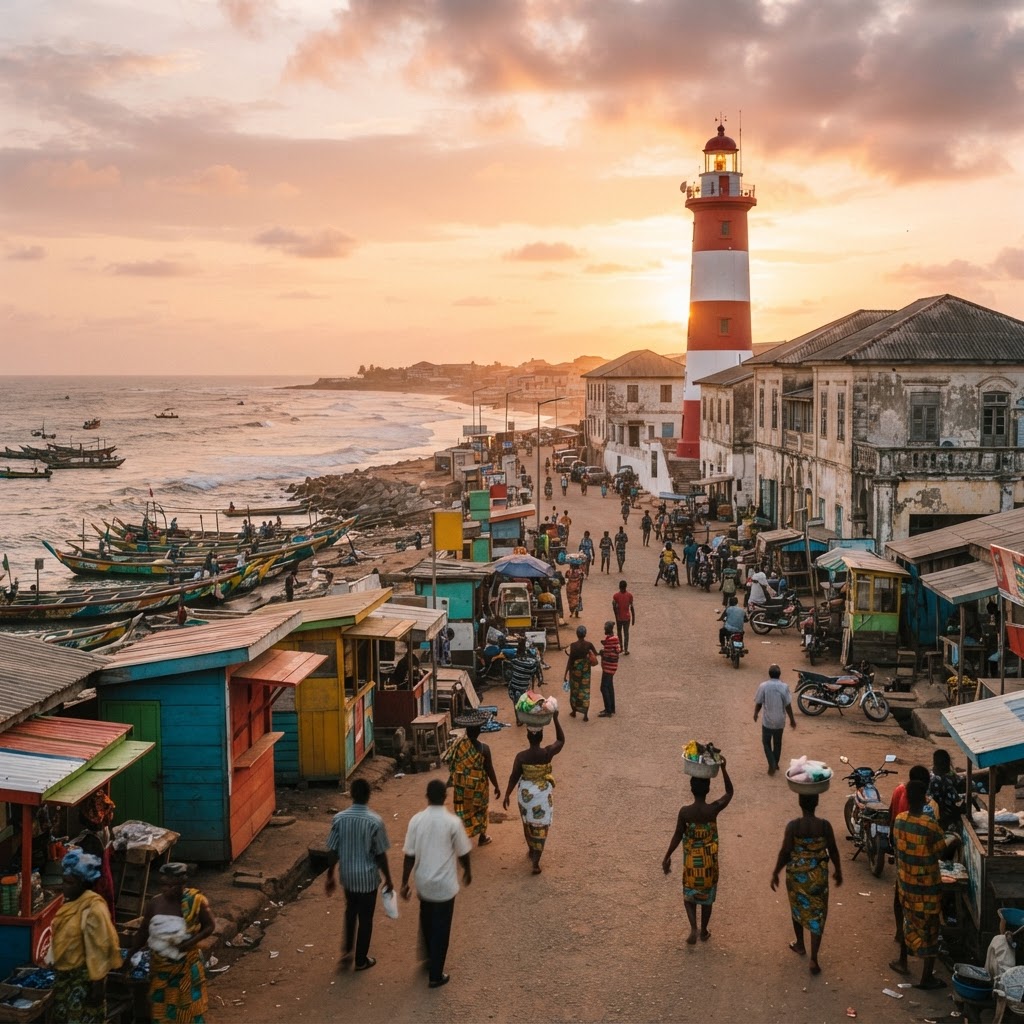
Ghana
Accra, Ghana
West Africa's cultural epicenter of highlife beats, coastal energy, and living pan-African history
Plan & book
Sort your Accra, Ghana trip in one place.
We point you to the booking tools we'd actually use — live prices, no markup. Or let us build the day-by-day plan around you first, then book.
Accra is an unapologetic, fast-paced coastal capital that rewards travelers who lean into its rhythms rather than trying to tame them. Built on the shores of the Gulf of Guinea, the city bridges centuries of history—from historic Ga fishing settlements in Jamestown to post-colonial independence architecture and a contemporary design and music explosion. While traffic can test patience and sidewalks vanish without warning, Accra balances its kinetic street life with world-class contemporary galleries, exceptional seafood, and welcoming hospitality.
4 to 5 days
Best time
November to February offers the best balance of dry weather, festive energy, and manageable conditions.
Build your own trip with these prebuilt itineraries
Each one is a tested, day-by-day plan for Accra, Ghana — start here, then make it yours.
5 Days in Accra: Diaspora Heritage & Coastline in Accra
Comprehensive first-time exploration covering historic landmarks, cultural heritage, and dedicated coastal day trips
4 Days of West African Food, Markets & Music in Accra
Immersive sensory route highlighting bustling open-air markets, street food, cooking workshops, and live highlife music
3 Days of Art, Nightlife & Modern Culture in Accra in Accra
Contemporary art galleries, high-energy nightlife, and buzzing culinary hotspots in the city core
Go to experience the modern creative pulse of West Africa firsthand. Accra is the epicenter of contemporary African art, culinary innovation, and nightlife, offering an unfiltered dive into history and culture without being preserved under museum glass. From the legacy of Kwame Nkrumah to the bustling workshops of Fantasy Coffins in Teshie and the vibrant beats of Afrochella and highlife in Osu, it delivers an authentic, electrifying sense of place.
Where to stay
Getting there
Getting around
Food & drink
What it costs
Things to do
Book tours & tickets in Accra, GhanaSkip it if
Skip Accra if you require tranquil, pedestrian-friendly cityscapes, spotless urban infrastructure, and predictable transit schedules. Travelers seeking a quiet resort escape will find the urban sensory overload, heat, and persistent gridlock challenging.
When to go
December features 'Detty December' festivities and global diaspora celebrations, but hotel prices double and reservations require months of advance planning. Visiting in November or late January to February gives you the dry skies and open-air nightlife without peak holiday crowds.
Peak (November–January)
Massive cultural festivals, world-class nightlife, and dry Harmattan winds; book accommodations and events 3 to 6 months in advance.
Shoulder (February–April & July–August)
February brings lingering dry weather with lighter crowds; July and August offer a welcome dip in humidity and great conditions for coastal travel.
Low (May–June)
Heavy tropical rains lead to frequent localized road flooding and severe traffic snarls, though flight and hotel rates drop noticeably.
Neighborhoods
Where you stay shapes the trip. Here's how to think about it.
Osu
Buzzing commercial spine packed with open-air bars, cocktail lounges, live music, and street food carts running deep into the night.
Best for:Nightlife lovers, solo travelers, and dining enthusiasts
Don't miss:Strolling Cantonments Road (Oxford Street) for late-night kelewele, drinks at Front/Back, and artisanal shops like Christie Brown.
Labone
Leafy, residential pocket balancing quiet boutique streets with artsy cafes, design studios, and neighborhood bistros.
Best for:Creatives, couples, and food-focused travelers wanting calm near the action
Don't miss:Browsing contemporary coffee shops and galleries along Labone Crescent, followed by dinner at Bistro 22.
Airport Residential Area
Polished, tranquil diplomatic and expat enclave featuring broad tree-lined avenues, luxury hotels, and high-end dining.
Best for:First-timers, business travelers, and families seeking security and predictable comfort
Don't miss:Weekend brunch and pastry stops at mid-century cafes around Senchi Street and upscale dining at Santoku.
Jamestown
Historic Ga fishing community steeped in raw coastal character, colonial architecture, street boxing gyms, and community art.
Best for:Heritage travelers, street photography, and architecture buffs accompanied by a local guide
Don't miss:Climbing to the base of the red-and-white Jamestown Lighthouse and watching the artisanal fishing fleets launch at dawn.
Cantonments
Gated, high-security embassy district characterized by walled compounds, elite residences, and serene leafy streets.
Best for:Families, diplomats, and travelers wanting maximum peace and manicured surroundings
Don't miss:Visiting the W.E.B. Du Bois Memorial Centre for Pan-African Culture along 1st Circular Road.
Destination intelligence
Updated 9/14/2026The structured record we plan every Accra, Ghana itinerary from.
Walkability
Low. Sidewalks are intermittent, heat and humidity are intense during mid-day, and sprawling layout necessitates ride-hailing or cars.
Transit quality
Fair. Informal trotro network is dense but complex; visitors rely predominantly on Uber, Bolt, or hired private drivers.
Car needed
Hired car with driver recommended for day trips; ride-hailing suffices within central districts.
Ideal duration
4 to 5 days
Minimum useful
3 days
Peak season
November to January ('Detty December' festivities, Afrofuture, drier weather, lively diaspora return).
Shoulder season
February to April and July to August (manageable humidity, lower accommodation rates, less crowd density).
Low season
May to June (heaviest rainfall, frequent localized flooding, lower tourist numbers).
Best for
Common mistakes
- Underestimating Accra traffic: cross-town journeys during rush hour can take two hours for trips covering under 10 kilometers.
- Arriving without a yellow fever vaccination certificate, which is mandatory for border entry.
- Assuming the city is walkable: open gutters, missing sidewalks, and tropical humidity make walking between distinct neighborhoods exhausting and impractical.
- Trying to visit Cape Coast or Kakum National Park as a casual morning jaunt instead of dedicating a full day or overnight stay.
Best nearby
How to plan it
- Stay in Labone or Airport Residential if you want quiet retreats with great dining; stay in Osu only if you want loud nightlife outside your door.
- Never attempt a day trip to Cape Coast Castle and Kakum National Park on a tight schedule without building in 4 to 5 hours each way for highway bottlenecks.
- Schedule sprawling, intense sites like Makola Market and the historic Jamestown shoreline for early morning before the midday sun and traffic peak.
- If traveling during 'Detty December,' secure your hotel, festival tickets, and rental car drivers by August at the absolute latest.
- Pair Accra with a 2-night stay in Cape Coast or a relaxing weekend along the Volta River estuary at Ada Foah to decompress from city traffic.
Questions
Readymade itineraries
Start from a tested template — then make it yours.
Ready to book
Lock in your Accra, Ghana trip
Everything in one place. We may earn a small commission — it never costs you more.
Plan a trip to Accra, Ghana
Pick a length and we'll build a day-by-day plan around how you travel — neighborhoods clustered, budget-aware, and editable.
Get better at planning trips like this
Occasional notes on planning smarter — no spam, unsubscribe anytime.
Plan a trip to Accra, Ghana
Turn this guide into a day-by-day plan built around your pace, your group, and your budget.
Build my Accra, Ghana trip