New Zealand
Abel Tasman, New Zealand Itinerary: How Many Days + Sample Plans
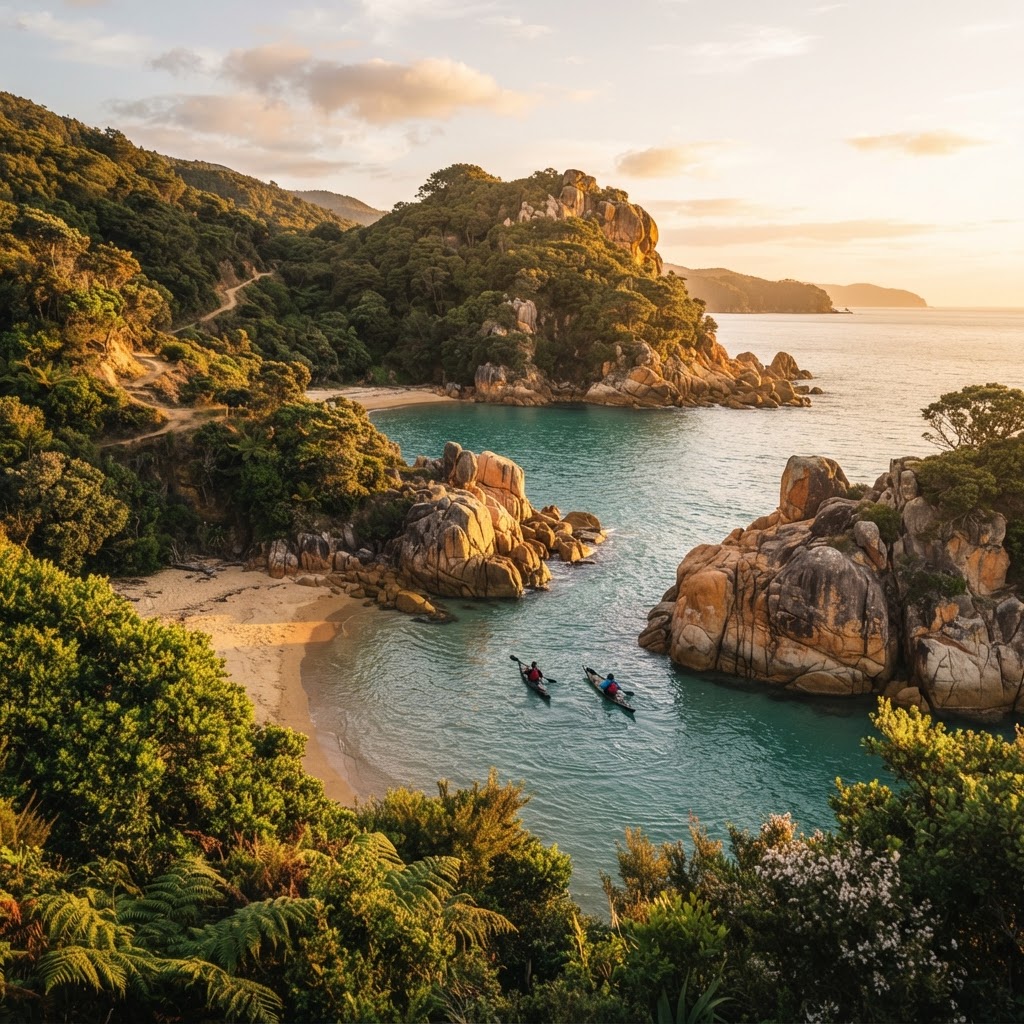
Golden granite coves, sea-kayak passages, and bush tracks accessible only by tide and boat.
Traveler rating
Loved by active hikers seeking well-graded trails and scenic coastal views.
Plan & book
Sort your Abel Tasman, New Zealand trip in one place.
We point you to the booking tools we'd actually use — live prices, no markup. Or let us build the day-by-day plan around you first, then book.
Pick your trip length
How many days do you need in Abel Tasman, New Zealand?
Each of these opens a full day-by-day plan you can make your own.
- 2 days — Two days — the essentials, no rushing.
- 3 days — Three days — the icons plus one neighborhood.
- 4 days — Four days — a full city without sprinting.
- 5 days — Five days — room for a day trip.
- 7 days — A week — the city at a human pace.
- With Kids trip — Shorter days, earlier dinners, what to skip.
- For Couples trip — Two-person pacing with evenings built in.
- Solo trip — A plan that works well on your own.
- Food trip — Meals and markets as the anchors.
- Outdoors trip — Nature, walks and open air.
- Culture trip — History, museums and the streets around them.
Perched on the northern fringe of the South Island, Abel Tasman National Park is New Zealand’s smallest national park, yet its coastal geography is among the country's most accessible wilderness experiences. There are no vehicle roads slicing through the park interior; exploration happens along the undulating Abel Tasman Coast Track or across turquoise bays powered by sea kayak and scheduled water taxi. Between the relaxed southern gateway villages of Marahau and Kaiteriteri and the remote northern beaches accessed from Totaranui, the park delivers native coastal bush, granite boulders, seal colonies, and sun-warmed golden sand.
3 days
Best time
March to April is the definitive sweet spot for calm waters, warm swimming temperatures, and manageable trail crowds.
Build your own trip with these prebuilt itineraries
Each one is a tested, day-by-day plan for Abel Tasman, New Zealand — start here, then make it yours.
2 Days in Abel Tasman: Paddle & Camp Adventure in Abel Tasman
Active sea kayaking, seal sanctuary paddling, and beachfront camping
3 Days in Abel Tasman: The Classic Coast & Hike in Abel Tasman
First-time coastal highlights combining day walks and water taxis
5 Days in Abel Tasman & Golden Bay: Coast to Wilderness in Abel Tasman
Extended full-track hike paired with Golden Bay road trip exploration
Go for the rare balance of self-guided coastal hiking, sea kayaking, and boat-accessible comfort. Because water taxis stop at nearly half a dozen key anchorages like Anchorage, Bark Bay, and Awaroa, you can dial your trek to any endurance level, pairing a rigorous 15-kilometer bush tramp with a quiet boat ride back to dinner.
Where to stay
Getting there
Getting around
Food & drink
What it costs
Things to do
Book tours & tickets in Abel Tasman, New ZealandSkip it if
Skip it if you require urban nightlife, luxury road touring with vehicle-to-hotel convenience, or dramatic alpine crags and snowfields, which are better experienced further south in Mount Cook or Fiordland.
When to go
Peak summer brings baking midday heat, fully booked DOC huts months in advance, and buzzing watercraft in every cove. Early autumn retains stable coastal sunshine and warm sea temperatures while trail traffic drops off sharply.
Peak (December to February)
Hottest days, warmest water, and active marine wildlife, but DOC huts book out on opening day and anchorages are crowded with water taxis and private boats.
Shoulder (March to May & October to November)
Crisp mornings, settled sea conditions, and wide availability for hut bookings. March is ideal for sea kayaking; October brings spring rains and cooler water.
Low (June to August)
Sparkling clear days and empty tracks, but water taxis run on heavily reduced timetables, trailside cafes close, and cold water restricts swimming.
Neighborhoods
Where you stay shapes the trip. Here's how to think about it.
Mārahau
Unpretentious, barefoot hiking hub right at the southern trailhead, where tractors launch water taxis straight into the tidal flats.
Best for:Independent hikers, sea kayakers, and anyone who wants to walk directly onto the trail without parking shuttles.
Don't miss:Starting the coastal track on foot right from the beach causeway or grabbing a craft beer at The Park Café after a long paddle.
Kaiteriteri
Lively coastal resort cove framed by bright golden sand, family campgrounds, water taxi docks, and waterfront dining.
Best for:Families, day-trippers taking large catamaran cruises, mountain bikers, and beach relaxers.
Don't miss:Kayaking out to Split Apple Rock (Tokangawhā) from neighboring Breaker Bay or riding the Kaiteriteri Mountain Bike Park trails.
Awaroa Inlet & Bay
Off-grid, roadless sanctuary where tide timetables dictate movement across vast mudflats and forested headlands.
Best for:Walkers seeking remote comfort, nature lovers wanting complete quiet, and pack-free luxury hikers.
Don't miss:Ordering wood-fired pizza and a flat white at Awaroa Lodge after crossing the wide tidal inlet on foot at dead low tide.
Tōtaranui & Golden Bay Gateway
Rugged, windswept northern boundary reached by gravel pass, surrounded by massive pohutukawa trees and wide uncrowded surf beaches.
Best for:Self-sufficient campers, solitude-seekers, and trampers wanting to tackle the wilder northern track away from water taxi hubs.
Don't miss:Walking north past Goat Bay to Whariwharangi Bay to explore the historic 1890s farm homestead.
Destination intelligence
Updated 10/6/2026The structured record we plan every Abel Tasman, New Zealand itinerary from.
Walkability
Trail-dependent: the park has zero urban roads and is 100% walkable via the coastal trail network, but gateway towns require driving between lodgings and trailheads.
Transit quality
Water-taxi network is exceptionally efficient along the coast, but public overland transit from Nelson is limited to private tourist shuttles.
Car needed
Yes, a rental vehicle is strongly recommended to get from Nelson to gateway hubs and to explore the surrounding Tasman and Golden Bay regions.
Ideal duration
3 days
Minimum useful
1 full day
Peak season
December to February: hot summer days, warmest sea temperatures, crowded anchorages, and heavily booked DOC huts.
Shoulder season
March to May and October to November: crisp autumn or spring mornings, calm waters, fewer crowds, and pleasant hiking conditions.
Low season
June to August: quiet tracks and crisp, clear days, but colder sea water, reduced water taxi schedules, and seasonal closures of coastal lodges.
Best for
Common mistakes
- Ignoring the tide tables at Awaroa Inlet and Torrent Bay, which can trap walkers or force multi-hour detours along the high-tide tracks
- Assuming you can drive through the park to cross from Kaiteriteri to Golden Bay, which requires a lengthy drive around Takaka Hill on SH60
- Not pre-booking Great Walk huts, DOC campsites, or summer water taxis months in advance
- Carrying heavy mountain-hiking boots when lightweight trail runners and water-friendly sandals are better suited for sandy beach landings and graded tracks
Best nearby
See what a trip to New Zealand actually costs. Travel Budget Co.
How to plan it
- Base yourself in Mārahau if you want direct foot access to the track; stay in Kaiteriteri if you want family-friendly resort amenities and protected swimming.
- Pair a morning sea kayak through the Astrolabe Roadstead to Anchorage with an unguided afternoon coastal walk back to Mārahau.
- Do not book your Awaroa Hut stay until you have verified the Awaroa Inlet low tide window for that exact calendar date.
- If you only have one day, take a water taxi north to Bark Bay and hike south across the Falls River swingbridge to Anchorage for an afternoon boat pickup.
- Book water taxi legs at least two to three weeks ahead during peak summer to secure departure times that match your hiking pace.
Questions
Readymade itineraries
Start from a tested template — then make it yours.
Ready to book
Lock in your Abel Tasman, New Zealand trip
Everything in one place. We may earn a small commission — it never costs you more.
Plan a trip to Abel Tasman, New Zealand
Pick a length and we'll build a day-by-day plan around how you travel — neighborhoods clustered, budget-aware, and editable.
Get better at planning trips like this
Occasional notes on planning smarter — no spam, unsubscribe anytime.
Plan a trip to Abel Tasman, New Zealand
Turn this guide into a day-by-day plan built around your pace, your group, and your budget.
Build my Abel Tasman, New Zealand trip